Folklore Collage Society is a project of Kolaj Institute that considers the role artists play in activating, transmitting, and celebrating folklore in communities as a form of cultural expression and a strategy for community resilience.
PROJECT OVERVIEW
Folklore Collage Society emerged through a series of artist residencies in Sanquhar, Scotland; Knoxville, Tennessee; and online, where artists considered how, during a time when folklore is devalued by economic systems and dismissed by political power, artists play an important role in calling attention to and celebrating these important elements that shape community identity and reinforce communal ties. In times of crisis and collective trauma, these stories can be key to a community’s sense of resilience and ultimate survival. These residencies resulted in the exhibitions, “Mythical Landscape: Secrets of the Vale” at the Knoxville Museum of Art and “Word of Mouth: Folklore, Collage, & Community” at A’ the Airts in Sanquhar, Scotland and the publication of Folklore of the Upper Nithsdale.
Other initiatives like the exhibition and book, Magic in the Modern World, propose a way to think about magic in the 21st century, what it means to communities, and how it negotiates itself in systems of power. Gain of Function: New Mutations/Old Traditions/Collective Effervescence speaks to the role of art, ritual, and resilience. The exhibition and book, Big Orange Monster, while conceived as part of Kolaj Institute’s Politics in Collage project, drew in a number of artists whose work was speaking to folklore.
In Fall 2025, Kolaj Institute published Volume One of Folklore Collage Society to create a space for documenting and sharing folklore and collage art about folklore. The printed, periodic journal takes inspiration from The Folklore Society (founded in London, England, 1878) and The American Folklore Society (founded in Cambridge, Massachusetts, 1888), whose century and a half of work have made it possible for 21st century artists to engage this subject. In addition to the periodic journal, Folklore Collage Society manifests as artist residencies; articles in Kolaj Magazine; programs at Kolaj Fest New Orleans and Kolaj LIVE Online; and exhibitions.
Current Activities
CALL TO ARTISTS
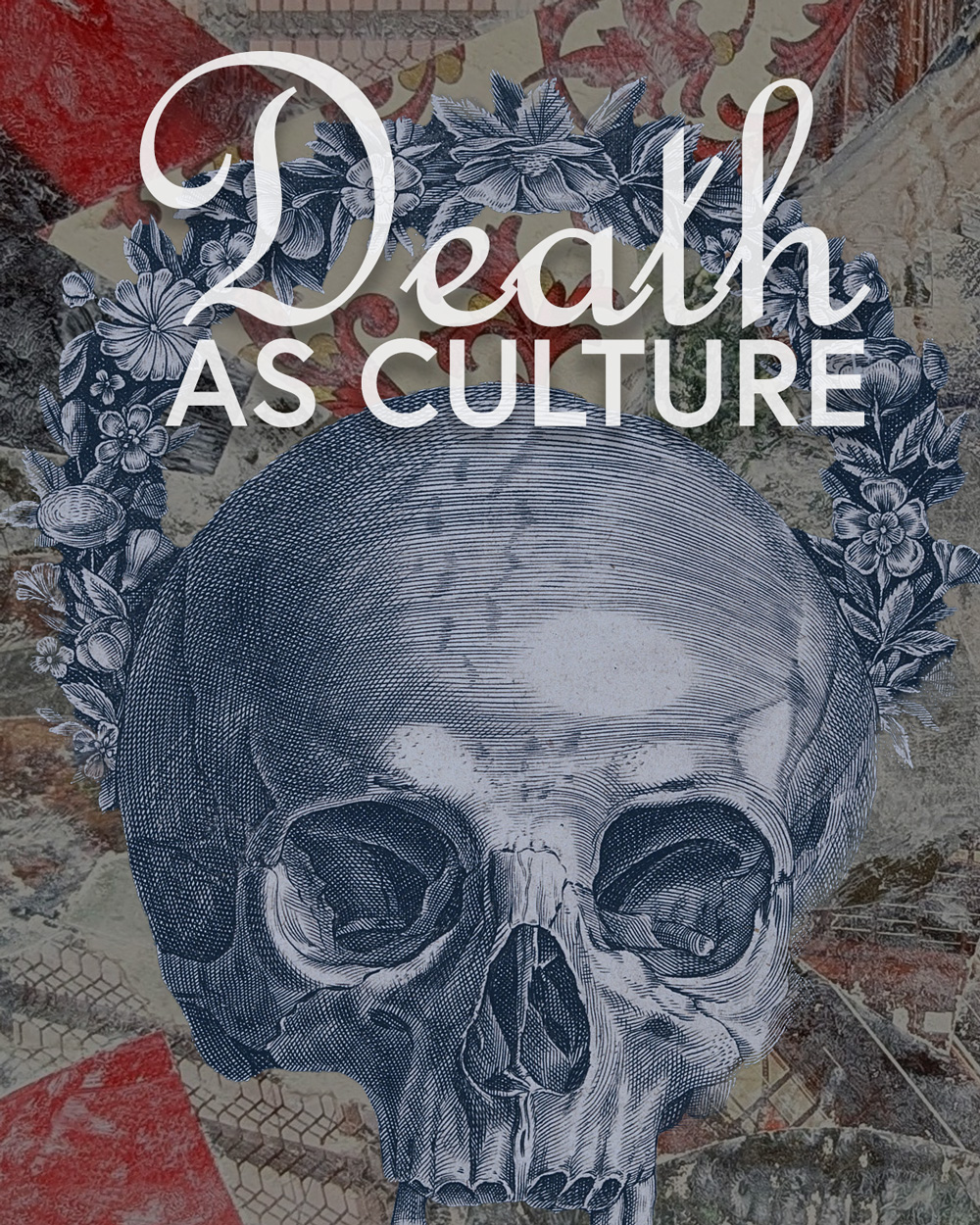
Death as Culture: In-person Artist Residency in New Orleans
Early Deadline to apply: Saturday, 3 October 2026. The inevitability, finality, and universality of Death as a human experience makes its presence in folklore ubiquitous and unsurprising. Kolaj Institute will investigate Death as Culture through two, week-long, in-person residencies during which we will research how death is expressed in a diverse array of cultures. Each group of collage artists will consider the death-related folklore that speaks to the origin of death, the afterlife, and those in the liminal spaces between life and death such as ghosts and spirits. Artists attending the residency from Tuesday, 27 October to Saturday, 31 October 2026 will experience New Orleans as it celebrates Halloween. Artists attending the residency from Sunday, 1 November to Thursday, 5 November 2026 will kick off their residency by observing Fet Gede celebrations of Haitian culture and ancestry on Day of the Dead at the New Orleans Healing Center. Each group will visit St. Roch Cemetery to witness first hand cultural expressions around death. The artwork made during and after the residency will be considered for a January 2027 exhibition at Kolaj Institute Gallery in New Orleans and an October 2027 exhibition at the New Orleans Healing Center in conjunction with Fet Gede Celebrations. Artwork and writing will be considered for Folklore Collage Society, a printed journal dedicated to artwork and artists who activate, transmit, and celebrate folklore as a form of cultural expression and a strategy for community resilience. LEARN MORE
NEW PUBLICATION
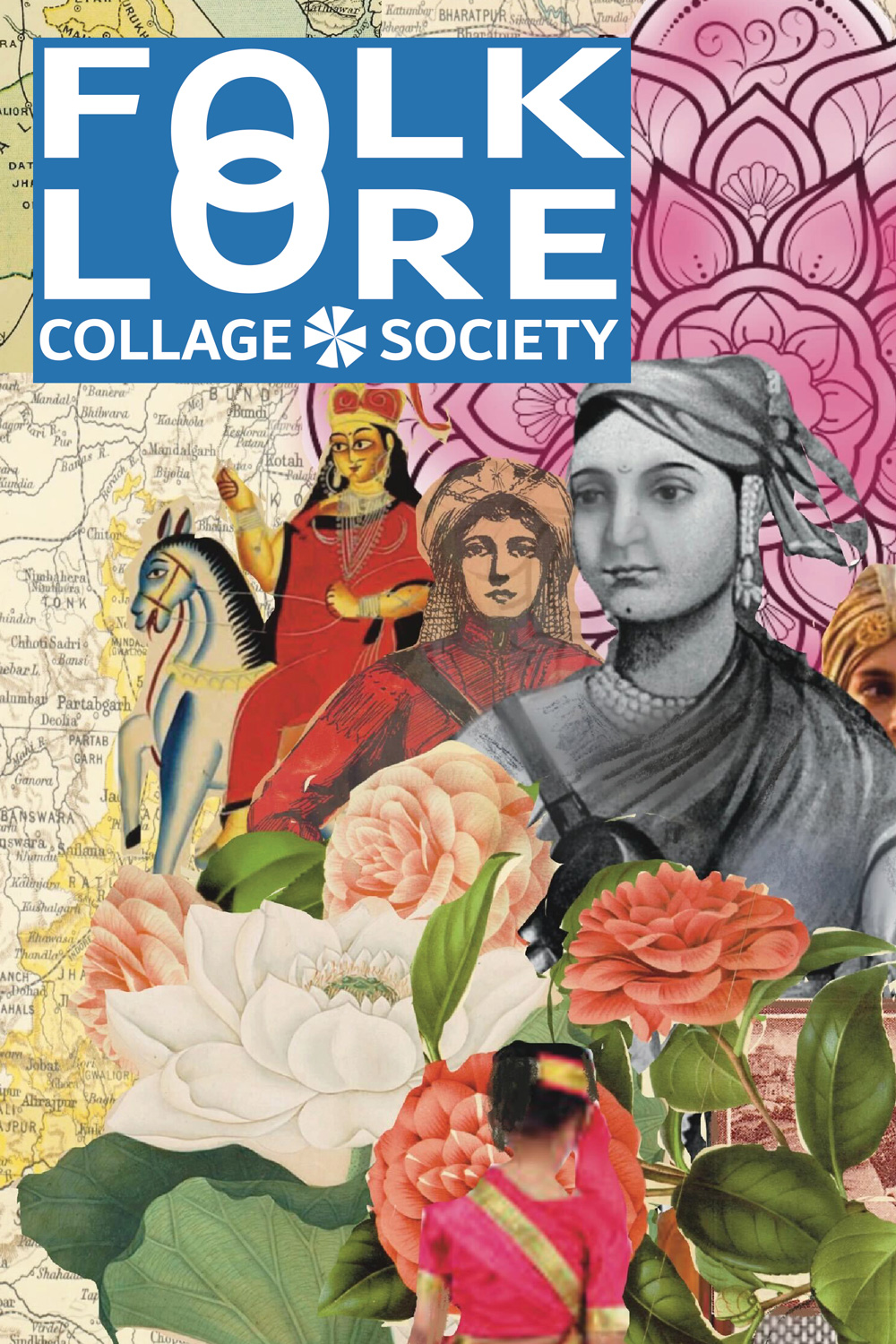
Folklore Collage Society, Volume One
Folklore Collage Society is a printed journal dedicated to artwork and artists who activate, transmit, and celebrate folklore as a form of cultural expression and a strategy for community resilience. In its pages, stories, statements, essays, field notes, poetry, and song lyrics mingle with collage art that shows how collage artists are thinking about the folklore. In Folklore Collage Society, Volume 1, editor Ric Kasini Kadour lays out the inspiration behind the project. Kate Sutherland and Bella LaMontagne share Celtic folklore. Indira Govindan considers the story of Lakshmibai. Jennifer Lentfer offers an example of counter folklore. Jacoub Reyes explores Taíno oral histories. We share Field Notes about crows and witches turning into hares. Sarah Cowling and Eli Craven make art of their own family folklore. Leanne Poellinger explores the symbolism and community of apple pie. Dean Reynolds offers us photographic evidence of gateways between realms. Natalie Vestin shares stories of Swedish smallfolk. And Verónica Poblete Villanueva takes us to Algeria and shows us the dance of Ouled Nail Tribe.
PROJECT
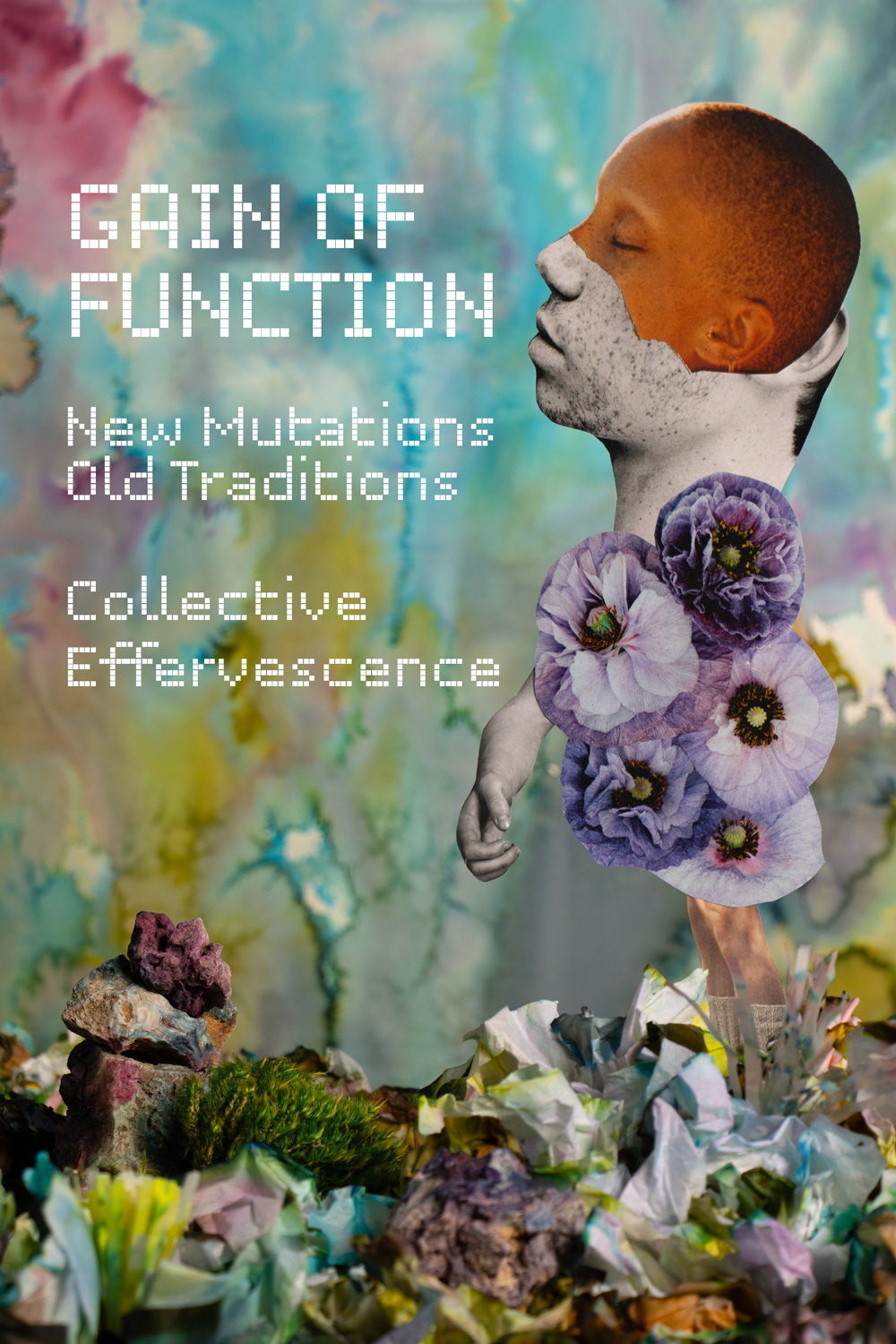
Gain of Function: New Mutations/ Old Traditions/ Collective Effervescence
This project led by Cape Girardeau, Missouri, USA-based artist Emily Denlinger speaks to the role of art, ritual, and resilience. Building on her own work, Denlinger engaged with thirty-nine artists at the 2025 edition of Kolaj Fest New Orleans to make locative collage photographs in an artist-created landscape inspired by global masking traditions. The resulting artworks are presented as a zine published by Kolaj Institute; a short film produced by Denlinger that will debut at Kolaj Fest New Orleans in 2026; and a collection of photographs available for exhibition. “The project functions as 21st century folklore with each character potentially representing a magical creature or masked performer in some yet-to-be-imagined ritual,” wrote Kolaj Institute Director Ric Kasini Kadour. “Like the odd, creature-like figures of early 20th century Surrealists, they, too, are a response to deeply troubled times and offer us the opportunity to find a collective effervescence to see us through them.”
EXHIBITION
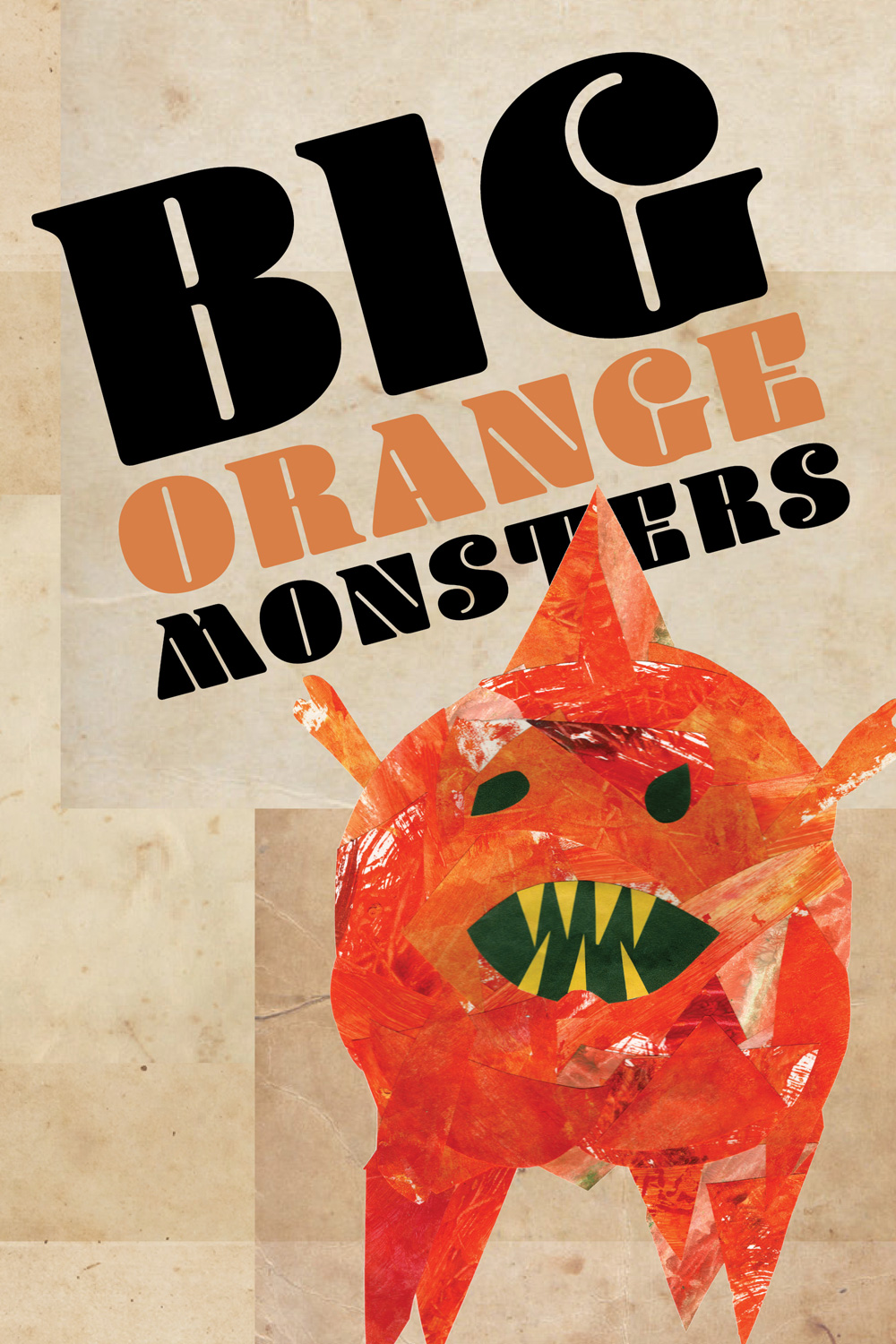
Big Orange Monster: An Emergency Collage Exhibition
10 September to 18 October 2025 at Kolaj Institute Gallery in New Orleans. At the heart of this exhibition at Kolaj Institute Gallery in New Orleans was collage made and sent to the gallery in response to an open call to artists: “You mix fear (yellow) and anger (red) and you get a Big Orange Monster. What’s the emergency? There are a lot of Big Orange Monsters on the loose. Monsters only have power if you are afraid of them. So let’s create a space where we can slay our fear of Big Orange Monsters. Art helps us exorcise our demons. Monsters can be glorious and wonderful or horrible and evil. Let’s not cast aside the good Big Orange Monsters because some other Big Orange Monsters are well…unpleasant.” Artists sent 128 collages from 13 countries: Australia, Austria, Brazil, Canada, France, Germany, Ireland, Italy, Kazakhstan, Mexico, The Netherlands, United Kingdom, and the United States. Nine artists from New Orleans contributed works to the exhibition. We asked visitors to the gallery to take care and not feed the monsters, some of which were installed behind a protective iron gate for everyone’s safety. We are now working to turn the Big Orange Monster Exhibition into a book.
PUBLICATION
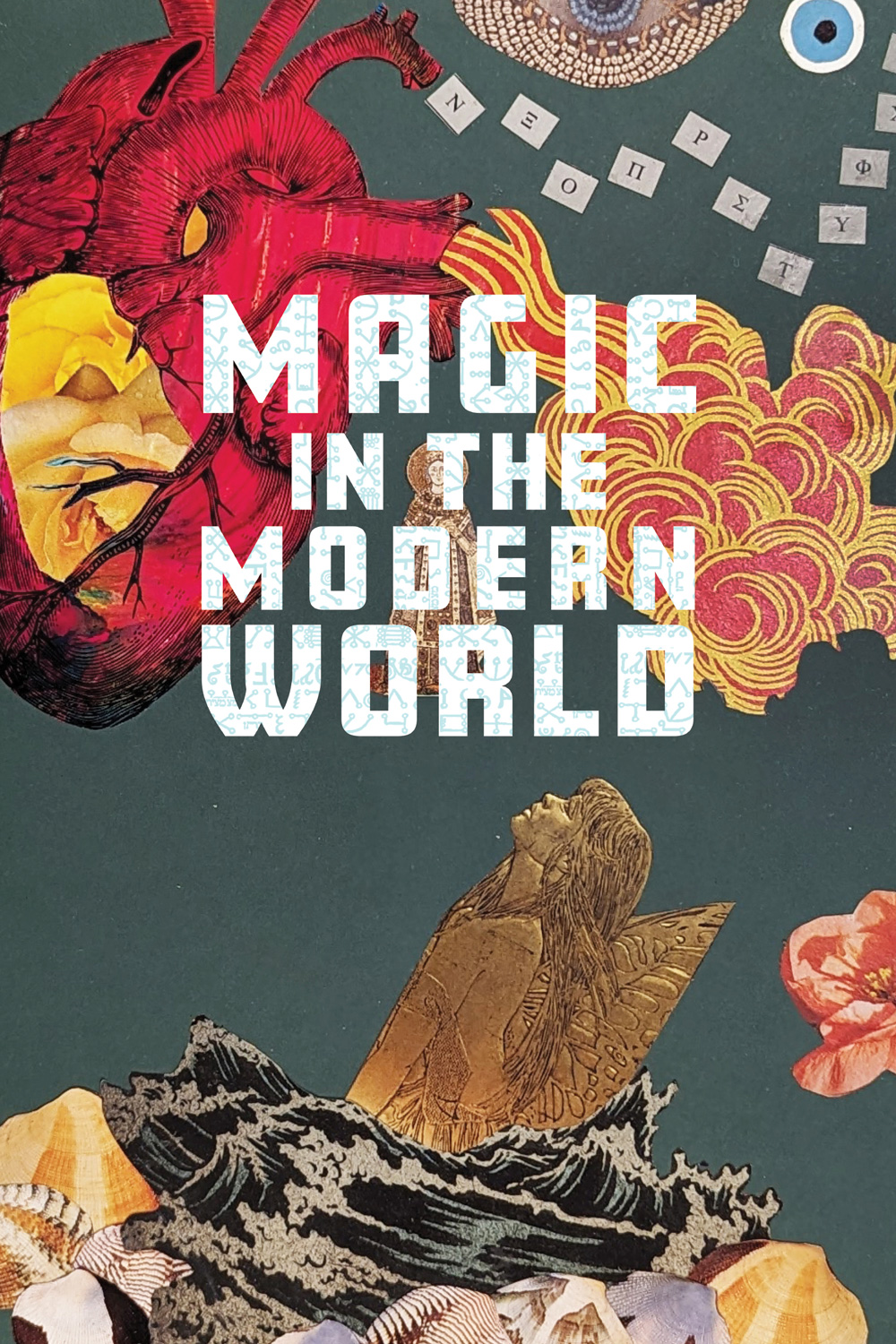
Magic in the Modern World
“In our scientifically-minded modern world, little room is left for the the mystical, the esoteric, and the magical, but we contend that such things, irrational as they may be, are fundamental to the human experience and necessary liminal spaces in which people experience joy, process trauma, or otherwise work through complicated emotions that a rationalistic society is not set up to handle, if it doesn’t actively reject them.” Taking a broad view of magic and drawing from multiple histories, Magic in the Modern World, proposes a way to think about magic in the 21st century, what it means to communities, and how it negotiates itself in systems of power. Generously illustrated, the book features the artwork of fifteen collage artists and dozens of historical images. The book asks, What role can artists play in nurturing and supporting magic traditions? Ric Kasini Kadour wrote, “Through our artwork, we can share stories, demystify histories, reinforce ancestral or community connections, and celebrate magical practices in ways that are safe, comfortable, and legible. We can make visible cosmologies other than those of the prevailing culture and hold space for alternative worldviews. At various times, such work can be profound acts of resistance, caring, or celebration. With its history of surrealism, collage in particular lends itself to this work.”
Past Activities
VIRTUAL ARTIST RESIDENCY
Folklore & Collage Virtual Artist Residency
Folklore & Collage Residency was a four-week program designed to support artists who wanted to develop a practice that included folklore in their artmaking. In four virtual meetings over four weeks and through ongoing, online discussion, we explored folklore as an idea, its role in culture, and influence on art. During the Residency, artists identified stories from communities and made art which activated these stories. Artists examined the work done previously by artists in Kolaj Institute’s Folklore Collage Society Project to develop a series of strategies for making collage that is in conversation with folklore relevant to their own community.
Participating Artists: Adetola Abatan (Seatac, Washington, USA) | Andrea Allen (East Lansing, Michigan, USA) | Melody Bellefeuille-Frost (Ottawa, Ontario, Canada) | Elena Blackmore (Machynlleth, Powys, United Kingdom) | Camaray Davalos (Temecula, California, USA) | Anjelika Deogirikar Grossman (Washington, DC, USA) |
Jennifer Evans (Denver, Colorado, USA) | Khaleelah I. L. Harris (Washington, DC, USA) | Bettina Homann (Berlin, Germany) | Kat Martin (Columbia, South Carolina, USA) | Anna J. McIntyre (Montreal, Quebec, Canada) | Kelley Nicole Palmer (Ancram, New York, USA) | Lynette Sifiso (Bethesda, Maryland, USA) | Holly Trent (Thousand Oaks, California, USA) | Tracy von Ahsen (New York, New York, USA) | Tiffany Wilson (Reston, Virginia, USA)
EVENT
Kolaj LIVE Online: Folklore
Tuesday, 18 November 2025 on Zoom
Kolaj Institute’s Folklore Project considers the role artists play in activating, transmitting, and celebrating folklore in communities as a form of cultural expression and a strategy for community resilience. At this Kolaj LIVE Online event, Ric Kasini Kadour introduced the project, shared its history, and where it is going. Kadour was joined by Emily Denlinger whose project, “Gain of Function: New Mutations/Old Traditions/Collective Effervescence” speaks to the role of art, ritual, and resilience. Kadour also previewed the upcoming Big Orange Monster book which, although it was conceived as part of Kolaj Institute’s Politics in Collage project, drew in a number of artists whose work was speaking to folklore. Those in the audience also got a sneak peek at Folklore Collage Society, a printed journal dedicated to diffusing collage and folklore.
IN-PERSON ARTIST RESIDENCY
Carnival as Folklore Artist Residency
Carnival as Folklore was a five-day, in-person collage artist residency at Kolaj Institute in New Orleans, 25-30 January 2026 OR 9-13 February 2026. Carnival’s traditions are rooted in ancient European festivals. Its 19th-century revival in the Americas parallels a time when people were rediscovering and reveling in Greek and Roman Mythology. As such, carnival is dripping with folklore. No place does Carnival like New Orleans, where the city comes alive in a mass display of collective effervescence. During this in-person Artist Residency, collage artists were invited to spend a week in New Orleans investigating Carnival as folklore and making art about it. Taking a broad view of collage and rooted in an understanding of Artist Practice, artists heard a working theory of folklore; what it is; how it functions in communities; and the role artists can play in activating, transmitting, and celebrating folklore in communities as a form of cultural expression and a strategy for community resilience.
Participating Artists: Carol M. Lynch (Metairie, Louisiana, USA) | Charulata Prasada (Ottawa, Ontario, Canada) | Emily Denlinger (Cape Girardeau, Missouri, USA) | Heidi Hickman (New Orleans, Louisiana, USA) | Jennifer Evans (Denver, Colorado, USA) | Julie Glass (Amite, Louisiana, USA) | Kayte Terry (Philadelphia, Pennsylvania, USA) | Liz Hamilton (Montevallo, Alabama, USA) | Trish Crapo (Leyden, Massachusetts, USA)
KOLAJ LIVE ONLINE
Kolaj LIVE Online: Folklore on Parade
26 March 2026
“Folklore on Parade” at Kolaj Institute Gallery in New Orleans, 14 February-11 April 2026, brought together the work of sixteen artists, each of whom spoke to ideas about carnival and folklore and its role in our communities. During this edition of Kolaj LIVE Online, curator Ric Kasini Kadour presented a virtual tour of the exhibition and the audience heard from some of the artists whose work was on view.
“Carnival in New Orleans could be considered the largest, ongoing folklore festival in the world,” wrote curator Ric Kasini Kadour. The audience heard from Jennifer Evans (Denver, Colorado, USA) whose collages juxtapose contemporary women of Carnival with their 19th century antecedents. Faith, Justice, Power by Charulata Prasada (Montreal, Quebec & Ottawa, Ontario, Canada) is based on the colors of Carnival and is part of a larger series that invites viewers to remember the economic, social, and political history from which Carnival arose.
Some of the artwork in the exhibition spoke to how the line between Folklore and History is often blurry. Tiffany Wilson (Reston, Virginia, USA) spoke about how her collage brought the story of Bluebeard into a 21st century context. Telling Tennessee Tales II by Atlanta, Georgia, USA artist CoCo Harris told the story of Nathan “Nearest” Green (1820–1880), the invisible, historical protagonist at the center of American Whiskey lore and history.
Artists in the exhibition made artwork that spoke to the folklore surrounding death and change. Kayte Terry (Philadelphia, Pennsylvania, USA) spent two weeks in New Orleans as a participant in Carnival as Folklore Artist Residency and as a Solo Artist in Residence at Kolaj Institute and was inspired by a quote from Rebecca Solnit and Rebecca Snedeker’s 2013 book, Unfathomable City: A New Orleans Atlas, “In most parts of New Orleans, if you plant your arm into the ground to the depths of your elbow, your fingertips will touch water. Your fingertips might also touch other fingertips…” The Passing Hour by Tracy von Ahsen (New York, New York, USA) did not reflect a single piece of folklore, but rather her broad research into “how thresholds function as moments of risk, pause, and irreversible change.”
Trish Crapo (Leyden, Massachusetts, USA) contributed to the exhibition a collection of eight collages that explored what it means for an artist to seek magic outside of their community and tradition.
“Folklore on Parade” is a beginning. Kadour spoke about upcoming forums, articles, residencies, and exhibitions and how artists can become involved with Kolaj Institute’s Folklore Collage Society.
EXHIBITION TOUR & CURATOR TALK
Folklore on Parade: Exhibition Tour & Curator Talk
14 March 2026 at Kolaj Institute Gallery in New Orleans
Curator Ric Kasini Kadour and two of the exhibiting artists presented a tour and talk on “Folklore on Parade” at Kolaj Institute Gallery in New Orleans, 14 February-11 April 2026. The exhibtion brought together the work of sixteen artists, each of whom spoke to ideas about carnival and folklore and its role in our communities. “Carnival in New Orleans could be considered the largest, ongoing folklore festival in the world,” wrote curator Ric Kasini Kadour. “When we look at culture through the lens of Folklore, we see culture shaping our sense of place, our relationship to communities, and a framework for how we exist in the world around us.” At this event, Kadour presented a tour of the exhibition and the audience heard from some of the artists whose work was on view.
Since 1998, Metairie artist Carol M. Lynch has been “heavily involved with the Mardi Gras culture of New Orleans, designing and creating costumes, headpieces, queens’ collars and trains, sequined appliques, graphic arts, centerpieces and shadow boxes to commemorate events.” She currently serves as a Board Member for the Joan of Arc Project. The suite of three collages featured in this exhibition each presented a different perspective on Carnival in New Orleans. She spoke about her three collages featured in the exhibition.
New Orleans artist Heidi Hickman offered a three-dimensional collage of a parade float behind a veil in which Hickman brought together three Carnival traditions: Uptown Parades, Black Masking Indians, and the Acadian tradition of Courir de Mardi Gras into a conversational “gumbo”.
Carnival is about making shared memories: among friends and family and among communities at large. Amite artist Julie Glass describes herself as an “eternal tourist” to New Orleans, someone who frequents the city, but doesn’t make it their home. As such, her experience of the city and carnival is that of a person on the street. Her collection of collage sculpture figures reminded us that during Carnival, the paradegoers, the people on the street, the walkers and watchers are as much part of the spectacle as the parades and second lines themselves. In this sense, the Folklore of Carnival is as much about the seeing and hearing as it is about the performance.
EXHIBITION
Folklore on Parade
14 February to 11 April 2026 at Kolaj Institute Gallery in New Orleans.
Kolaj Institute’s Folklore Collage Society project considers the role artists play in activating, transmitting, and celebrating folklore in communities as a form of cultural expression and a strategy for community resilience. In 2025 and 2026, Kolaj Institute hosted a series of virtual and in-person residencies during which artists researched folklore globally and carnival in New Orleans, specifically. The exhibition, “Folklore on Parade,” brings together the work of sixteen artists, each of whom are speaking to ideas about carnival and folklore and its role in our communities.
“Folklore is a broad category of culture distinguished by its method of transmission. When we look at culture through the lens of Folklore, we see culture shaping our sense of place, our relationship to communities, and a framework for how we exist in the world around us,” wrote curator Ric Kasini Kadour. “Carnival in New Orleans could be considered the largest, ongoing folklore festival in the world.”
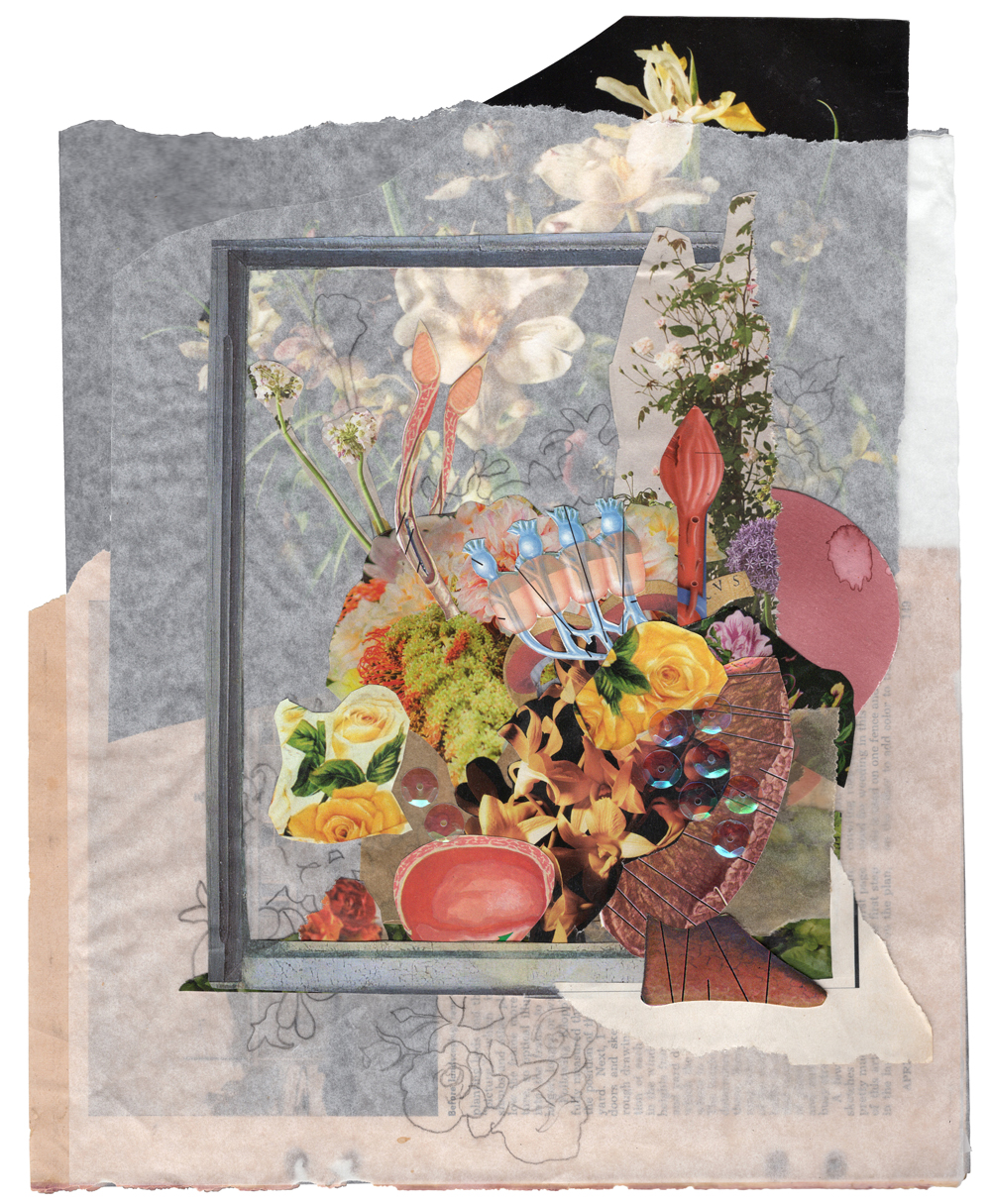
Image: Offerings from the City of the Dead (detail) by Kayte Terry
dimensions variable; grouping of 6 collages: found papers and photos, gold leaf, sequins, pencil, black clothing; 2026.
EXHIBITION
Magic in the Modern World
1 June to 11 August 2024 at Kolaj Institute Gallery in New Orleans.
The exhibition showed the work of collage artists who visited New Orleans and explored magic as a cultural idea, an ancestral tradition, a construct used by power to subjugate, and as a practice used by others to resist colonization and capitalism. Writer Arthur C. Clarke said, “Any sufficiently advanced technology is indistinguishable from magic.” While Clarke was looking backwards, the artwork in this exhibition considers the role of magic in our contemporary, modern communities and what role it may play in the future. Artwork in this exhibition speaks to honoring ancestors; tapping cultural magic; cosmology and life building; the power of womanhood; the quietude of modern magic; the practice of offerings and rituals; magical colors; spirit animals; magic in the diaspora; punishment of magic and the persecution of witches; and care for spiritual beings. Also included in this exhibition was the off-site installation, A Memorial to Witches of Dumfries by Jennifer Evans in the New Orleans Healing Center Great Hall.
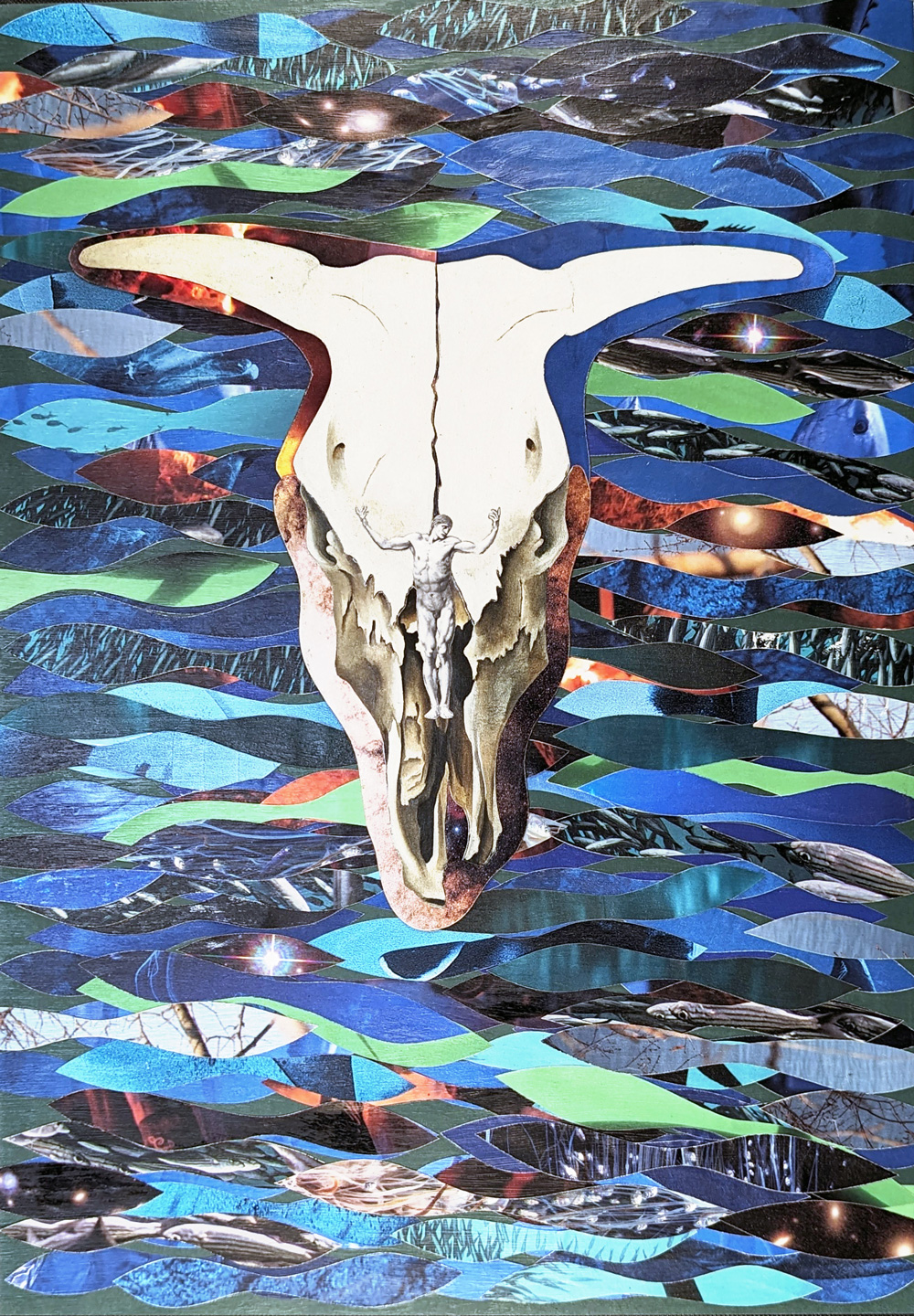
Image: Ritual on the Mississippi River by Ihosvany Plasencia (14.5″x10″; collage on book cover; 2023
RESIDENCY
Collage Magic
New Orleans. October & December 2023.
Collage Magic Artist Residency was a series of five-day, in-person collage artist residencies in New Orleans in which artists explored contemporary art that referenced magic, altar making, and ritual practice; took a walking tour of New Orleans; and explored the city as an archive of magic. Artists made artwork for an exhibition and book. The residencies took place in October and December 2023. Partcipating artists included: Alexandra Montclair (Astoria, New York, USA) | Alicia Zapata (Chicago, Illinois, USA) | Ariya Aladjem Wolf (New Orleans, Louisiana, USA) | Bridgette Bramlage (Chicago, Illinois, USA) | Caroline Alterman (New Orleans, Louisiana, USA) | Debi A Barton Haverly (Springfield, Vermont, USA) | Ihosvany Plasencia (Miami, Florida, USA) | Jenn Arras (Brooklyn, New York, USA) | Jennifer Lai (Brooklyn, New York, USA) | Johanna Merfeld (Great Barrington, Massachusetts, USA) | Julia Arredondo (Newcastle, Maine, USA) | Lela Goldstein (Scottsdale, Arizona, USA) | Marie-Pier Lopes-C (Montreal, Quebec, Canada) | Peace. (Houston, Texas, USA) | Rodney Boone (San Pedro, California, USA) | S. Erin Batiste (Brooklyn, New York, USA) | Tracy Casagrande Clancy (Cincinnati, Ohio, USA) | Vanessa L Moore (East Orange, New Jersey, USA)
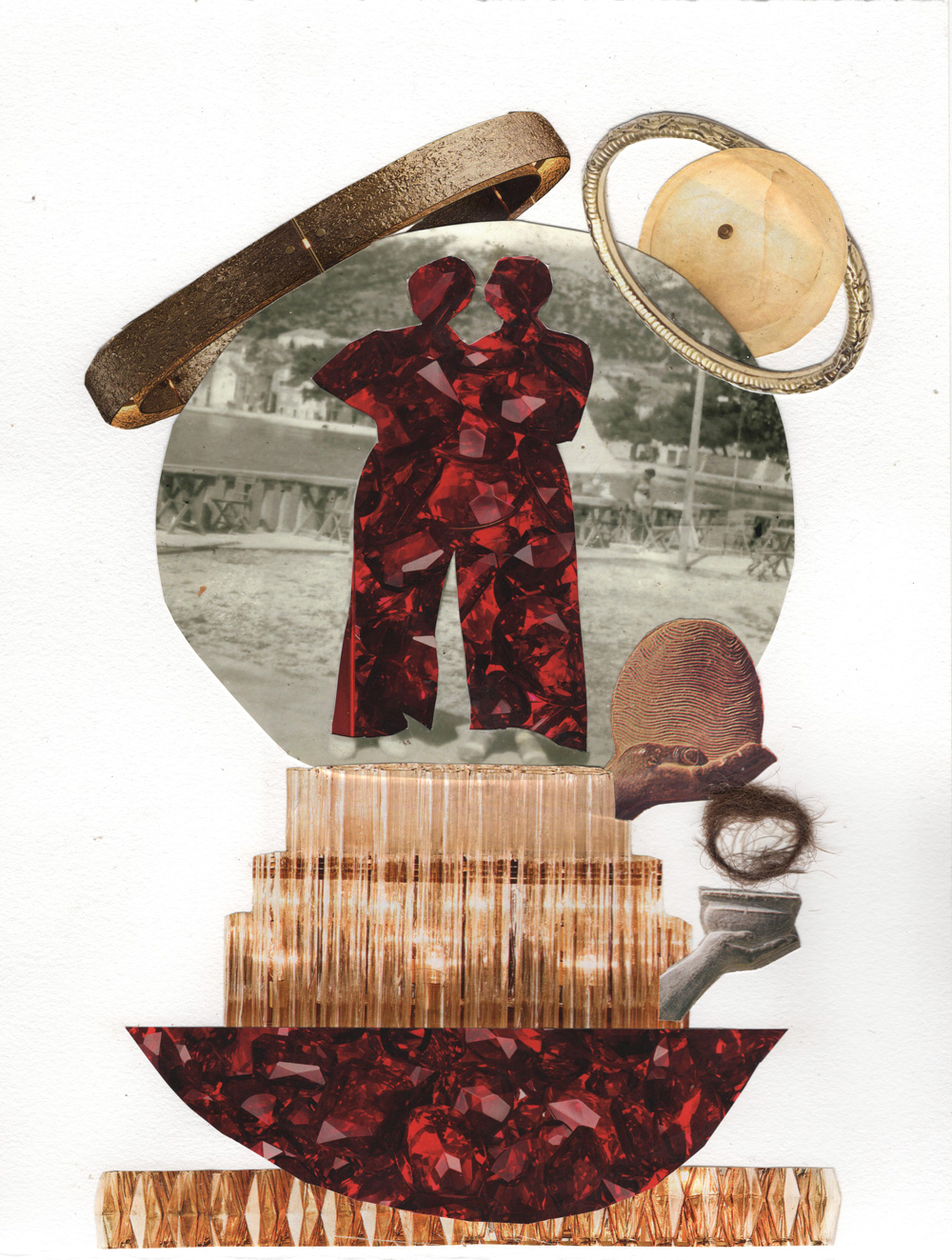
Image: Gifts to Ghosts 1 by Ariya Aladjem Wolf (11″x8.5″; collage on printmaking paper; 2023)
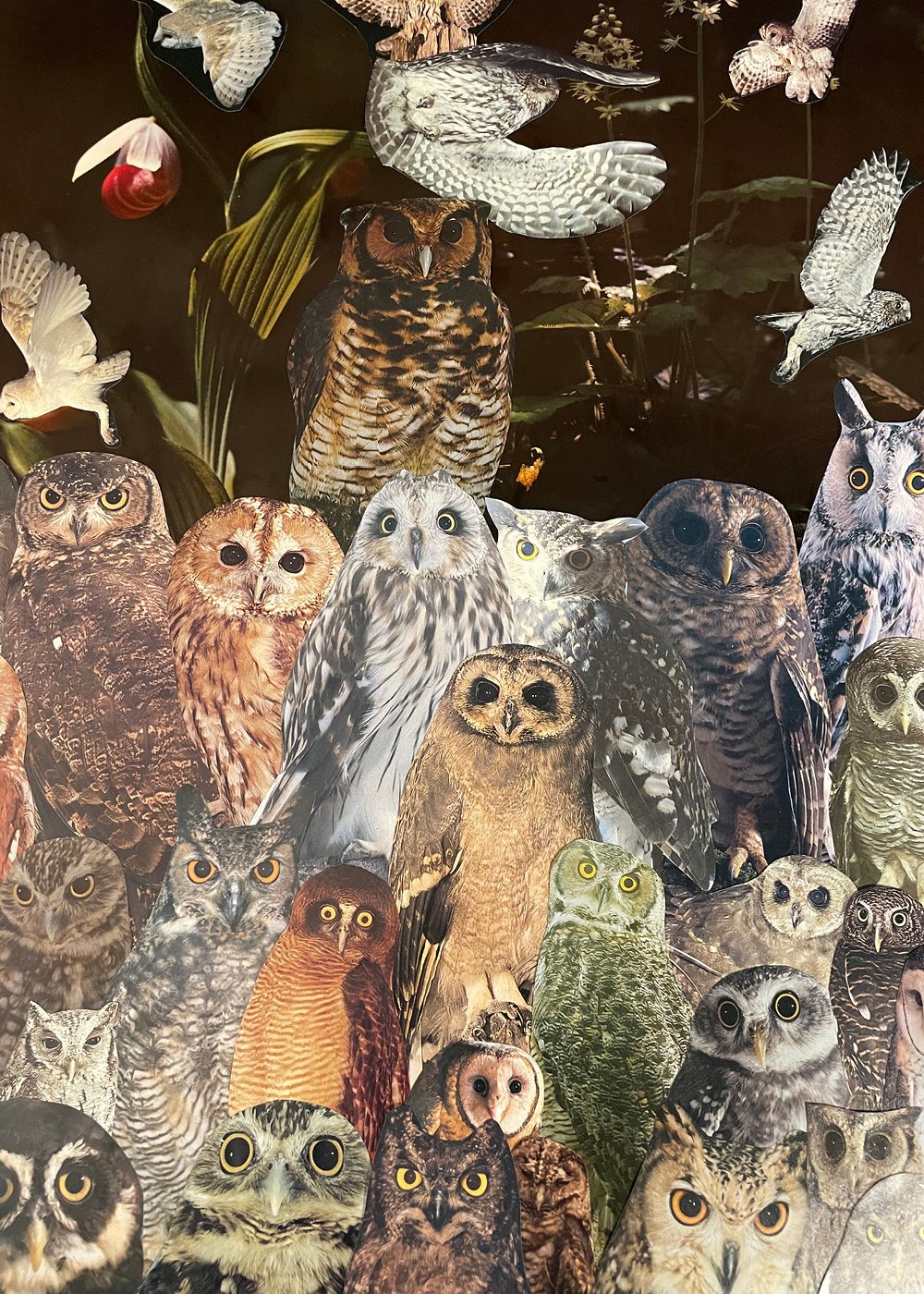
Image: Parliament of Owls by Clare Jones (14″x10″ collage print on 140lb Canson cold press watercolor paper; 2023)
EXHIBITION
Word of Mouth: Folklore, Collage, & Community
At A’ the Airts in Sanquhar, Scotland, United Kingdom. September 2023
In response to the “Mythical Landscape” exhibition, a group of artists made artwork about folklore that was important to them. This work was on view at A’ the Airts in Sanquhar during the month of September 2023. Curator Ric Kasini Kadour said, “In sharing this artwork, our hope is that viewers will develop a sense of how folklore moves through the world and the role it plays in building and maintaining communities. While the art on view is not about Sanquhar, our hope is that by exhibiting the artwork in Sanquhar we can put the rich folklore of Sanquhar in conversation with folklore from around the world.” Participating artists included: Sarah Cowling (London, Ontario, Canada) | Eli Craven (Lafayette, Indiana, USA) | Indira Govindan (Chennai, Tamilnadu, India) | CoCo Harris (Greenville, South Carolina, USA) | Danielle Iemola-Devereux (Austin, Texas, USA) | Clare Jones (Ithaca, New York, USA) | Ric Kasini Kadour (New Orleans, Louisiana, USA & Montreal, Quebec, Canada) | Christopher Kurts (New Orleans, Louisiana, USA) | Okja Kwon (Milwaukee, Wisconsin, USA) | Bella LaMontagne (Shelburne Falls, Massachusetts, USA) | Charlotte K Larson (Brooklyn, New York, USA) | Jennifer Lentfer (Omaha, Nebraska, USA) | Elaine Luther (Forest Park, Illinois, USA) | Carol M Lynch (Metairie, Louisiana, USA) | Claire B Marcus (Bethlehem, Pennsylvania, USA) | Melanie McKenzie (Minneapolis, Minnesota, USA) | Lorraine Pocklington (Aberystwyth, Ceredigion, United Kingdom) | Leanne Poellinger (La Crescent, Minnesota, USA) | Jacoub Reyes (Plantation, Florida, USA) | Kate Sutherland (Toronto, Ontario, Canada) | Lachlan Thompson (Northampton, Massachusetts, USA) | Natalie Vestin (Saint Paul, Minnesota, USA) | Iris Weaver (Santa Cruz, California, USA)
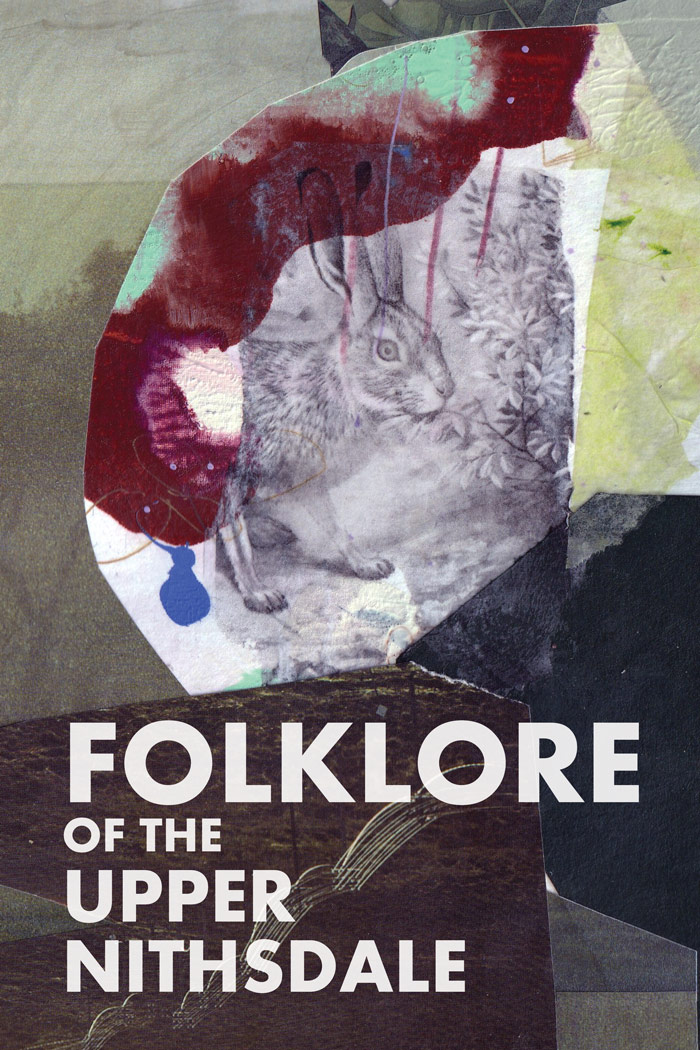
BOOK
Folklore of the Upper Nithsdale
Thirty-three collage artists illustrated stories of witches, ghosts, and other spirits from Sanquhar, Scotland. Using stories collected from William Wilson’s 1904 book, artists reimagined these tales in a 21st Century context and invite us to see folklore as the imagination of the past, understood in the present.
“We present selections of artwork paired with some of Wilson’s original texts,” writes Ric Kasini Kadour in the Introduction. The artists “are operating from a 21st century vantage point, a view informed by nearly a century where folklore was academically studied and taught. The transformation was radical…The artists are directing our gaze to why these stories continue to matter today.”
ARTIST RESIDENCY
Folklore & Collage Virtual Residency
June & July 2023
A virtual residency centered on collage artists who wanted to incorporate history and folklore into their artist practice. Residents made artwork for an exhibition in Sanquhar, Scotland and a book published by Kolaj Institute. Participating Artists included: Charlotte K Larson (Brooklyn, New York, USA) | Claire B Marcus (Bethlehem, Pennsylvania, USA) | Clare Jones (Ithaca, New York, USA) | Danqi Cai (Knoxville, Tennessee, USA) | Indira Govindan (Chennai, Tamilnadu, India) | Iris Weaver (Santa Cruz, California, USA) | Jacoub Reyes (Plantation, Florida, USA) | Jennifer Lentfer (Omaha, Nebraska, USA) | Kate Sutherland (Toronto, Ontario, Canada) | Lorraine Pocklington (Aberystwyth, Ceredigion, United Kingdom) | Okja Kwon (Milwaukee, Wisconsin, USA) | Veronica Poblete Villanueva (Santiago, Chile)
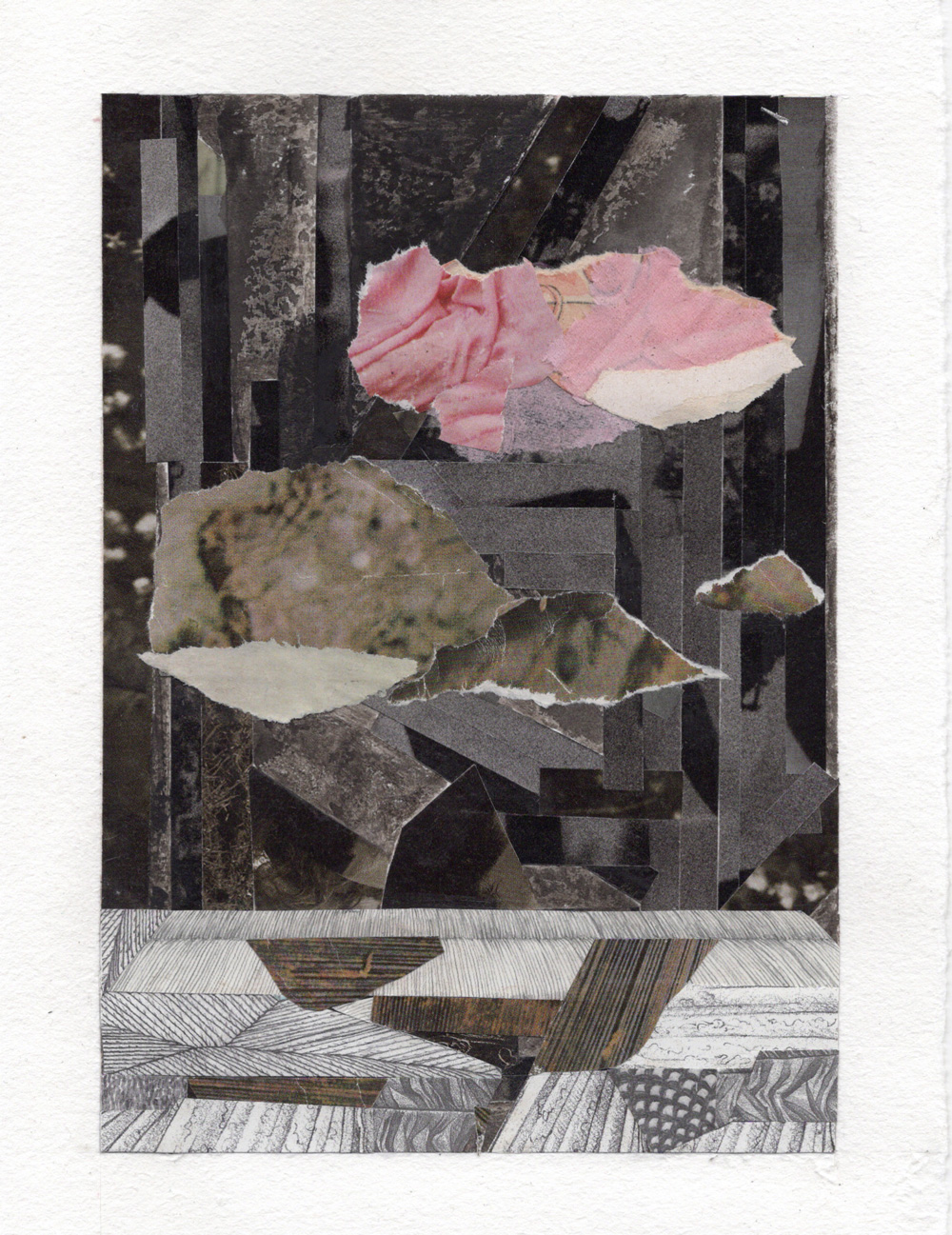
Image: Pink Cloud by Charlotte K Larson (7″x5″; collage ; 2023)
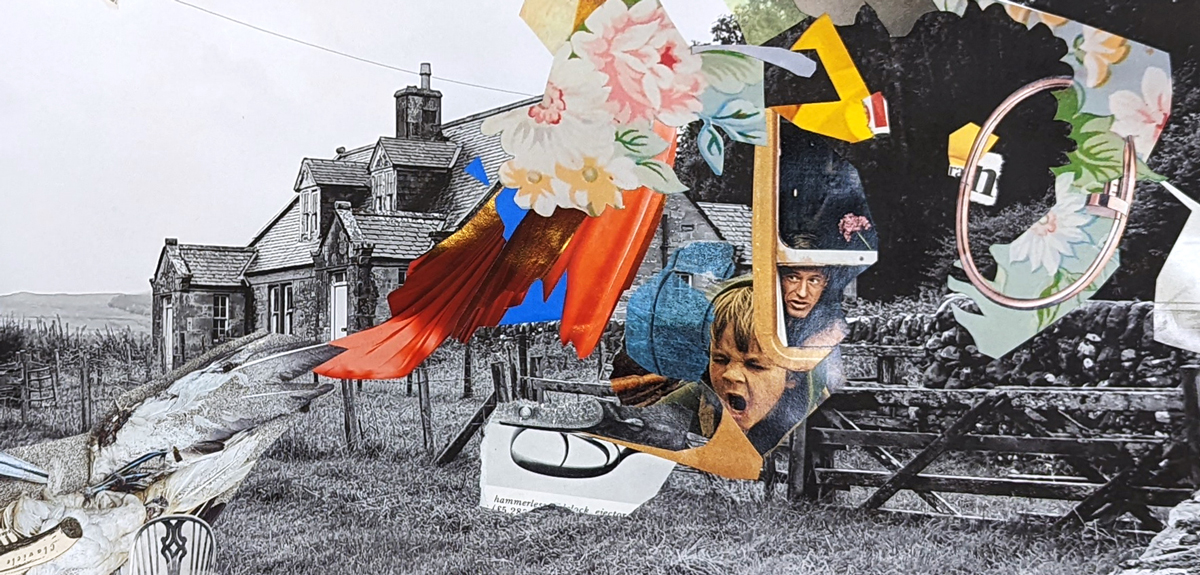
Image: Raking Over the Bones by Frances Ryan (12″x16.5″; collage of magazine cut-outs and printed photographs with pencil and tissue on paper; 2022.)
EXHIBITION
Mythical Landscape: Secrets of the Vale
at the Knoxville Museum of Art in Tennessee, USA
March & May 2023
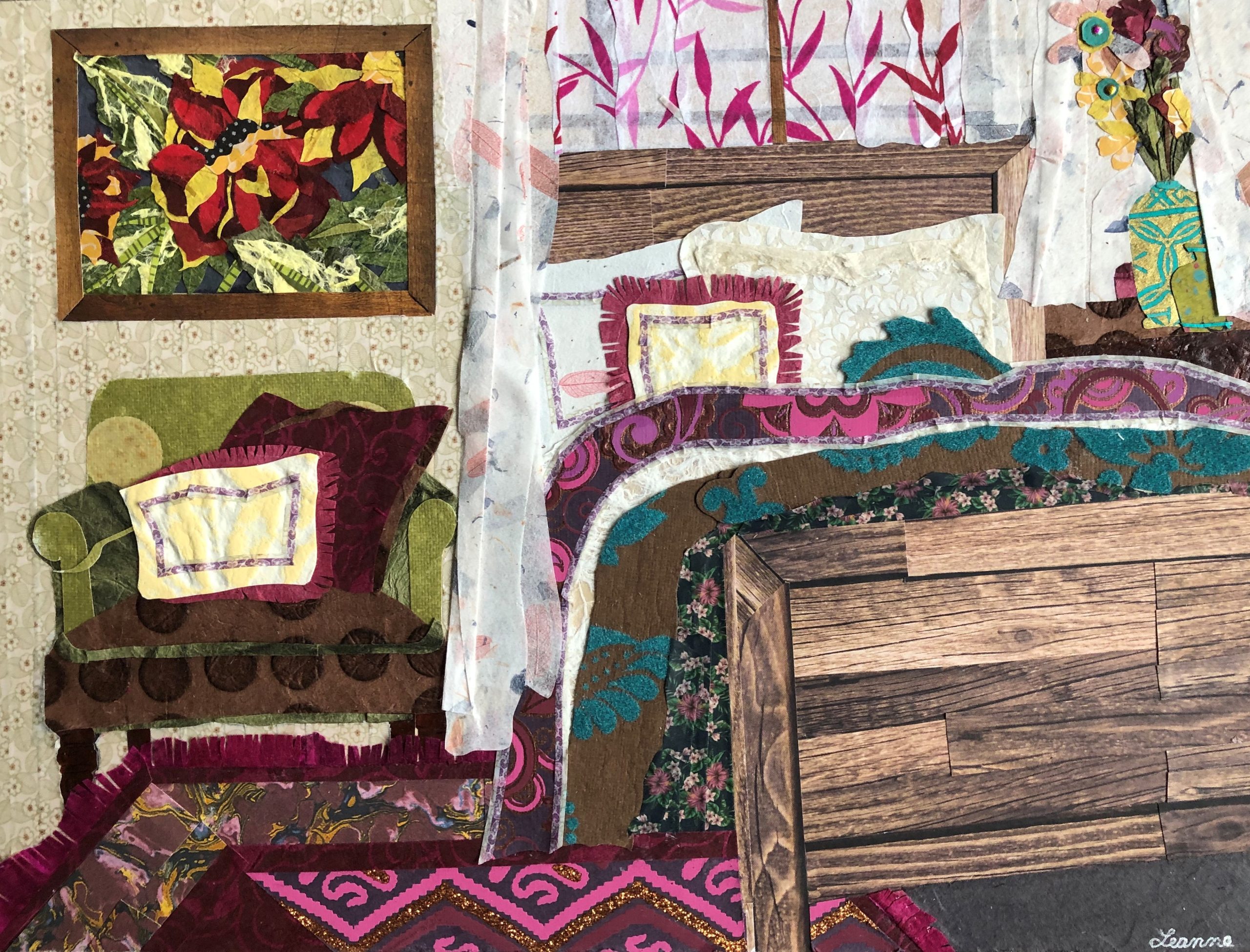
Image: Sanctuary by Leanne Poellinger
(8″x10″; paper collage on cradled wood panel; 2020. Courtesy of the artist.)
ARTIST RESIDENCY
Folklore & Collage Residency at the Knoxville Museum of Art
March 2023
During the Folklore & Collage Residency at the Knoxville Museum of Art, ten artists from Canada and across the United States identified stories from communities and made art which activated those stories. The artists heard from guest artists and folklore specialists. Faculty made presentations about place in art and strategies for incorporating folklore into one’s practice. Residents made artwork (a collage or series of collages) which was shown in exhibition at A’ the Airts in Sanquhar, Scotland in September 2023 as part of the Celebration of Folklore. Artists were also invited to present their work at a panel at Kolaj Fest New Orleans in June 2023. Participating Artists included Sarah Cowling (London, Ontario, Canada); Eli Craven (Lafayette, Indiana, USA); Danielle Iemola-Devereux (Austin, Texas, USA); Bella LaMontagne (Shelburne Falls, Massachusetts, USA); Elaine Luther (Forest Park, Illinois, USA); Carol M Lynch (Metairie, Louisiana, USA); Melanie McKenzie (Cape Coral, Florida, USA); Leanne Poellinger (La Crescent, Minnesota, USA); Lachlan Thompson (Northampton, Massachusetts, USA); Natalie Vestin (Saint Paul, Minnesota, USA)
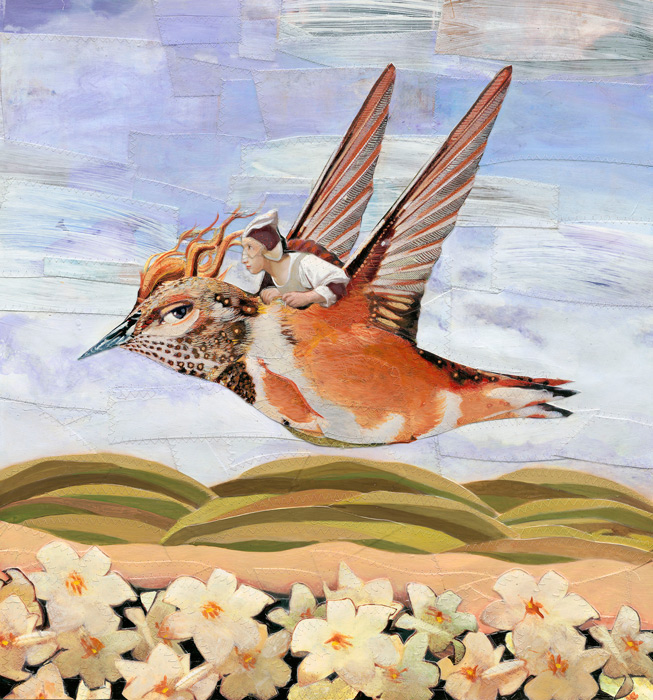
Explore Folklore from Kolaj Magazine
Image: Beyond Reproach by Michael Madzo from his 2014 exhibition at Couturier Gallery, Los Angeles
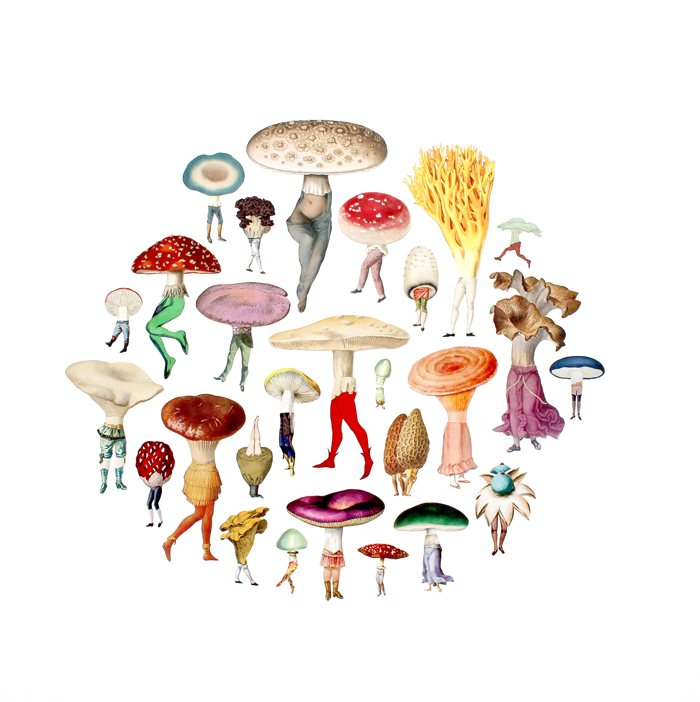
Explore Folklore in the Kolaj Magazine Artist Directory
Image: Mushroom Patch by Amy Ross (20″x20″; collage on paper; 2017)
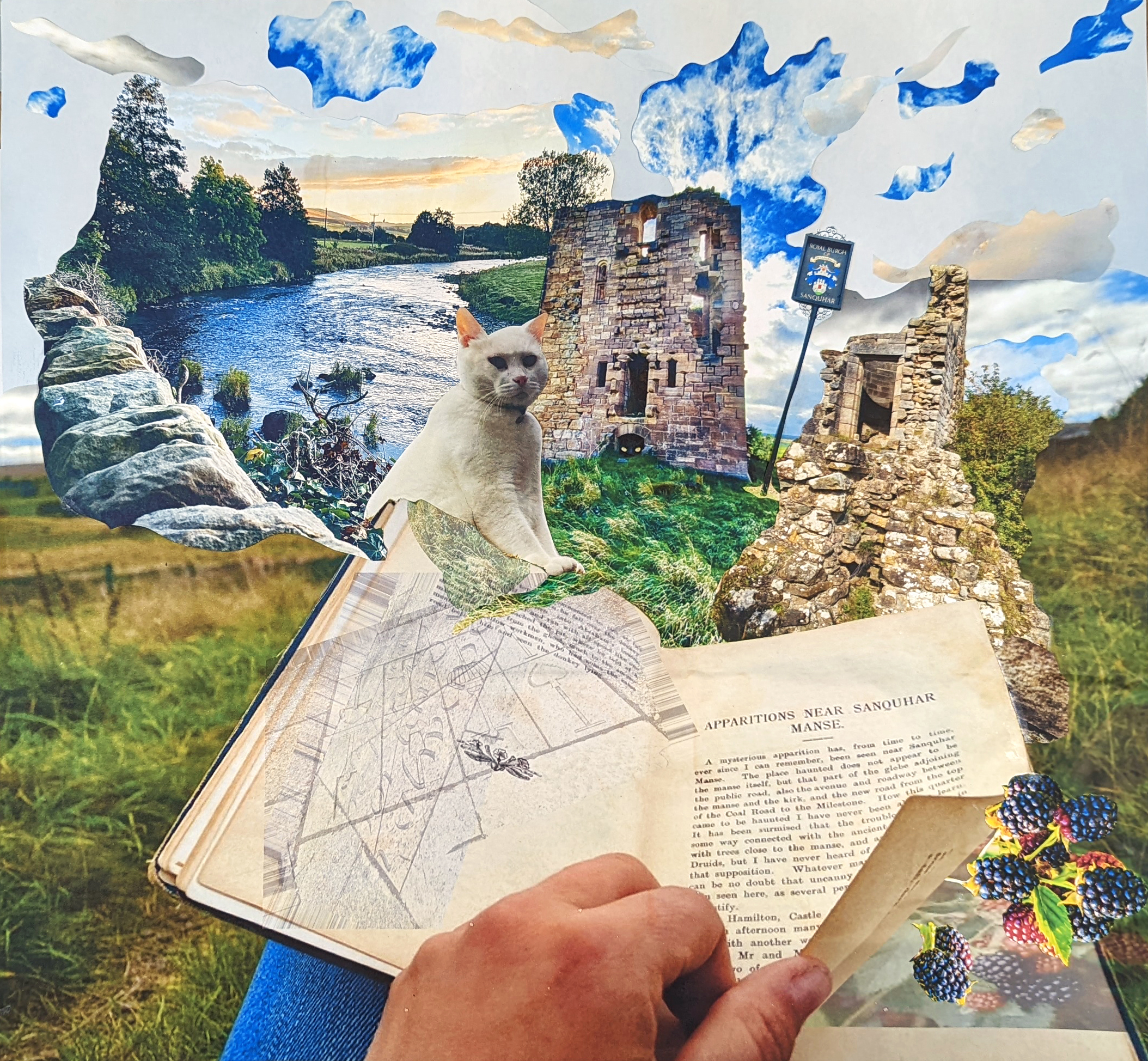
Image: Apparitions Near Sanquhar Manse by Anna Innocenti. (18.5”x25.5”; cut photographs on cardboard; 2022)
ARTIST RESIDENCY
Collage Artist Residency: Scotland
September 2022
Held over three weeks in September 2022, Collage Artist Residency: Scotland-September 2022 was an in-person residency at MERZ Gallery in Sanquhar, Scotland centered on collage artists who want to incorporate history and folklore into their artist practice. Residents made artwork for an exhibition and book.