Politics in Collage is a series of residencies, publications, discussions, and exhibitions examining complex socio-political issues that contemporary society is contending with, in order to spark meaningful dialogue and inspire deeper engagement. Our current focus is on Environmentalism and Collage, Resisting Authoritarianism, and War & Peace Correspondence. The Politics in Collage Project intersects with other Kolaj Institute project such as Trash as Material and Big Orange Monster.
PROJECT OVERVIEW
Collage as a political art form has a particular relevance to today as well as a strong historical context. From its roots in the European anti-fascist and Russian revolutionary movements in the early 20th century to its expressions during the U.S. Civil Rights era to its current manifestations in the fight for social justice in South America, collage is used by artists around the world as an impetus for social and political change. Kolaj Magazine has reported on how collage was used to visualize the 2019-2021 Estallido Social in Chile which incidentally birthed a new collage community. In Fall 2021, Kolaj Institute organized a series of residencies in which artists explored the intersection of politics and collage. Led by G.E. Vogt, the residencies produced a collection of artworks that debuted at Kolaj Fest New Orleans in 2022 as an exhibition at the Domino. In July 2022, Kolaj Institute released Politics in Collage, a book of artwork, and an Online Exhibition. In November 2022, a third residency took place which resulted in a second book, Collage Saves The World. In April 2024, the artist residency and exhibition “Collage the Planet: Environmentalism in Art” took place at Kolaj Institute Gallery in New Orleans. A fifth artist residency in October 2025, Collage the Planet: Trash as Material, resulted in the exhibition, “Trash as Material”, at Kolaj Institute Gallery.
CURRENT LINES OF INQUIRY
PROJECT
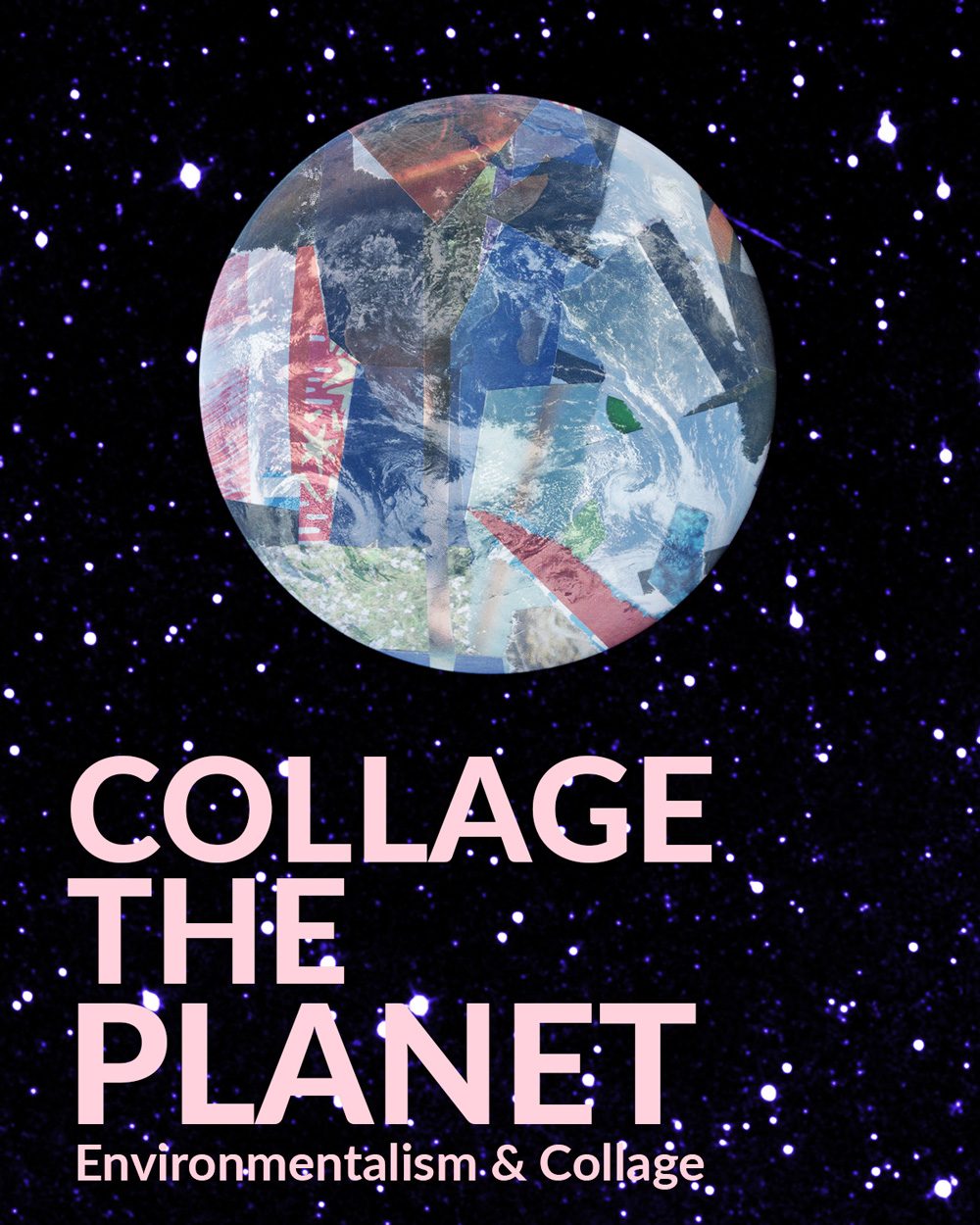
Collage the Planet
Collage the Planet is a series of residencies, publications, discussions, and exhibitions that looks at how artists can use collage to speak to Environmental Issues.
PROJECT
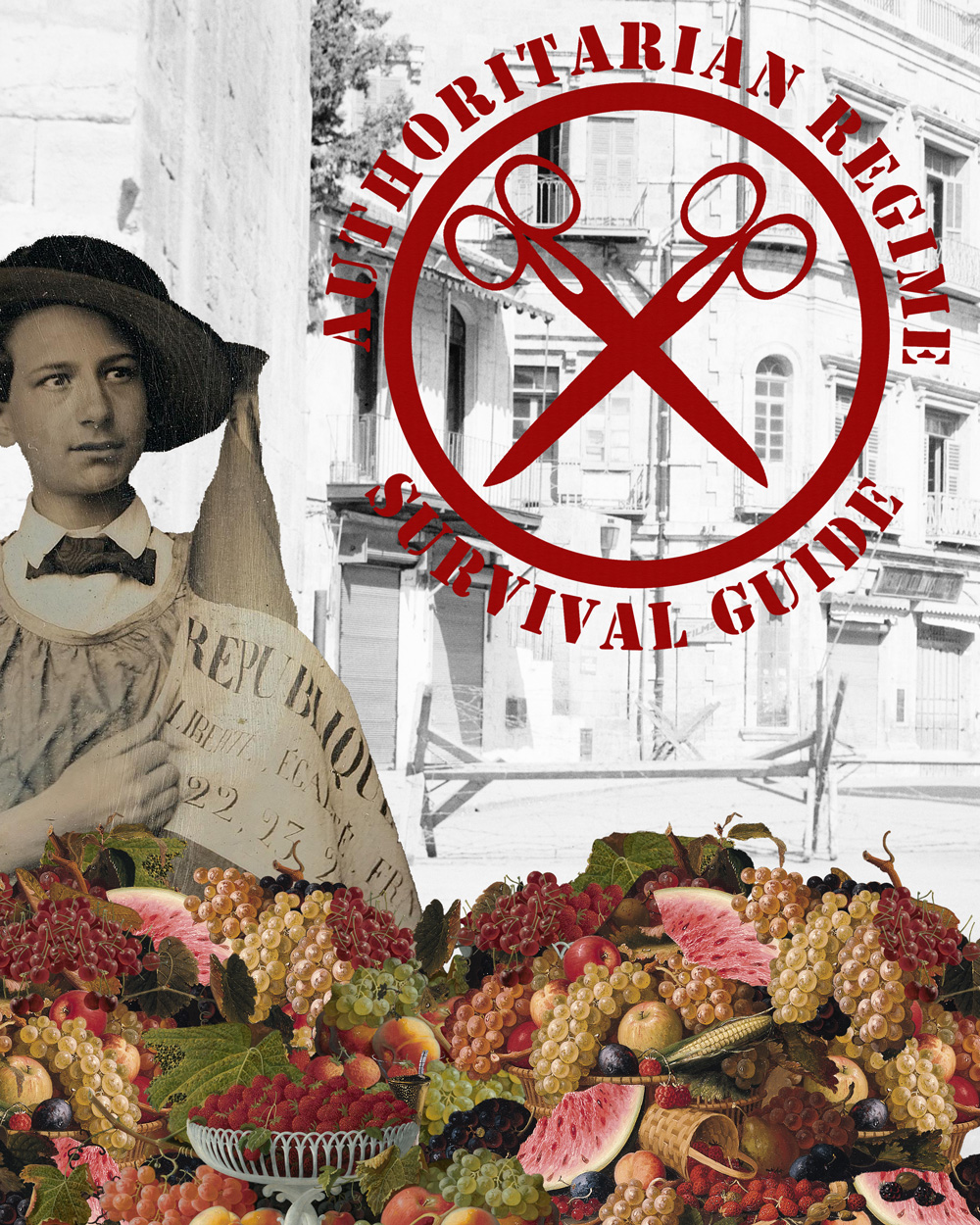
Resisting Authoritarianism
Resisting Authoritarianism considers the role collage artists have played during times of rising authoritarianism.
PROJECT
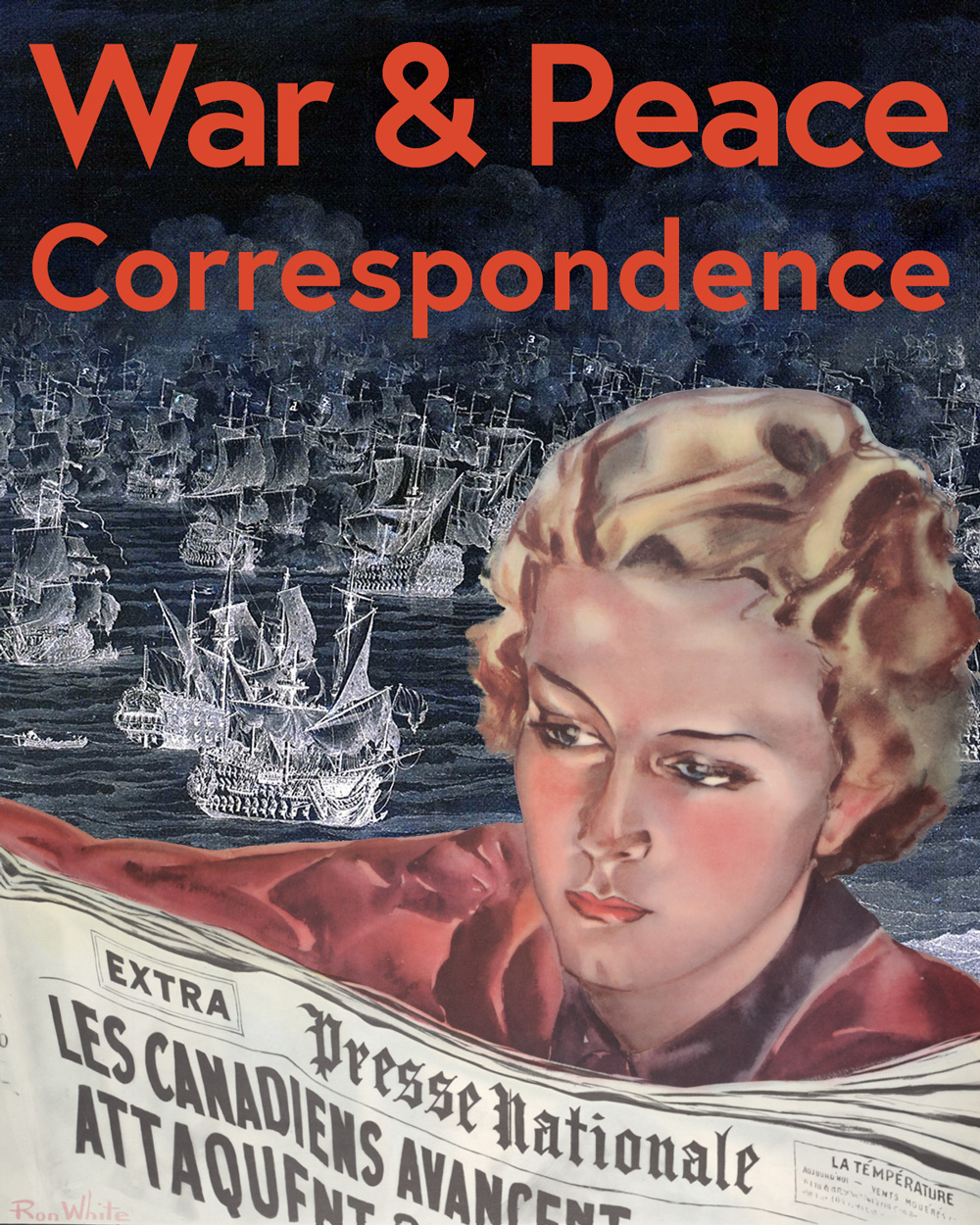
War & Peace Correspondence Project
War & Peace Correspondence Project is a collaboration with the German magazine Wissenschaft & Frieden (Science & Peace), that shows how collage responds to media reporting of war and peace.
CURRENT ACTIVITIES
RESIDENCY
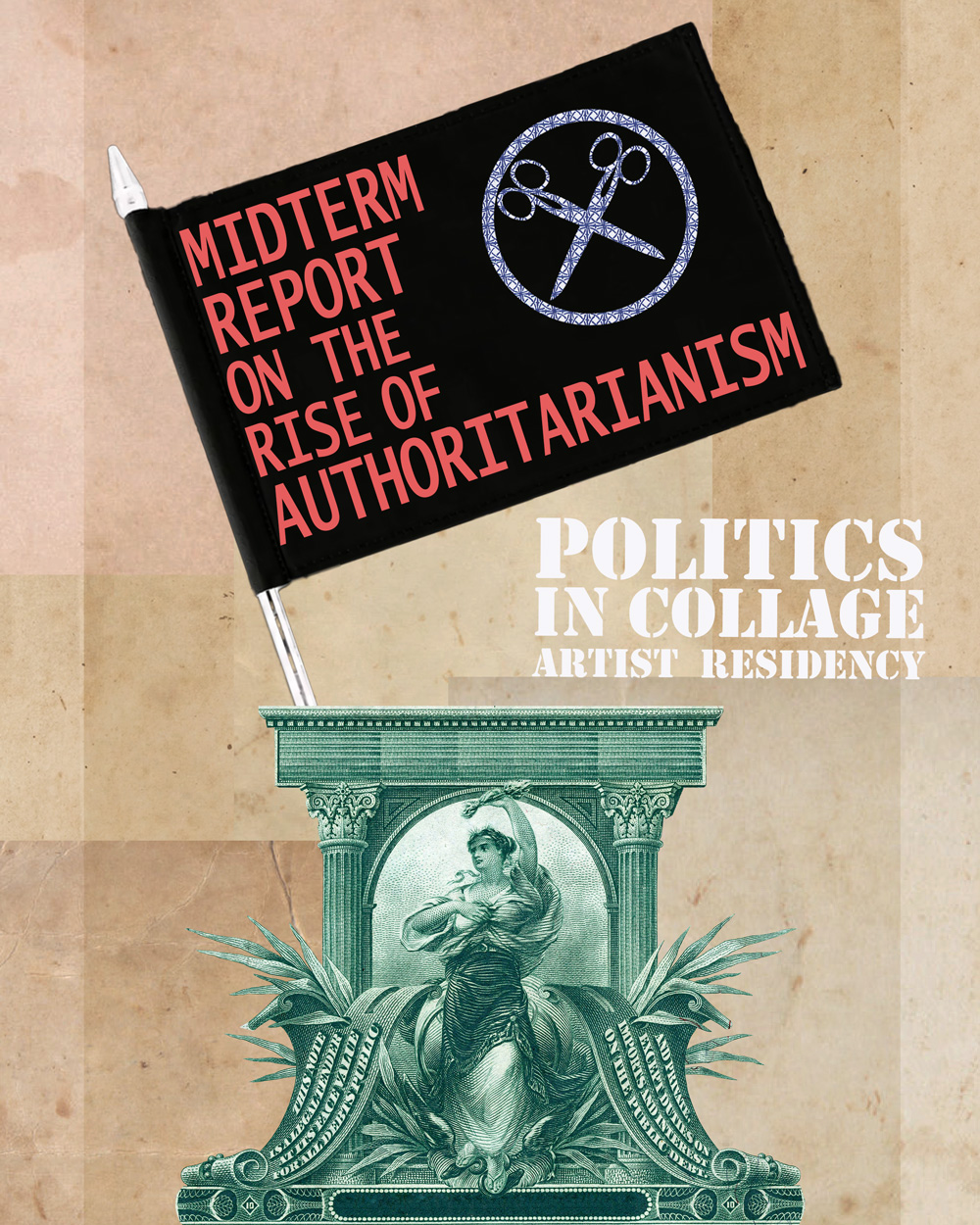
Midterm Report on the Rise of Authoritarianism
A four-week virtual artist residency that met 14 September–5 October 2026. How can collage artists respond to the global rise of authoritarianism? Using The Authoritarian Regime Survival Guide as a starting point, artists learned to recognize and decode authoritarianism and explore strategies for resisting it through art. Led by G.E. Vogt, the residency examined the history of political collage and how contemporary artists can contribute to civic discourse. Participants made and discussed new political collages, developed writing that provided historical and social context for their work, and heard from artists and curators working at the intersection of collage and politics. Artwork created during the residency was published in the zine Mid-term Report on the Rise of Authoritarianism. READ MORE
CALL TO ARTISTS
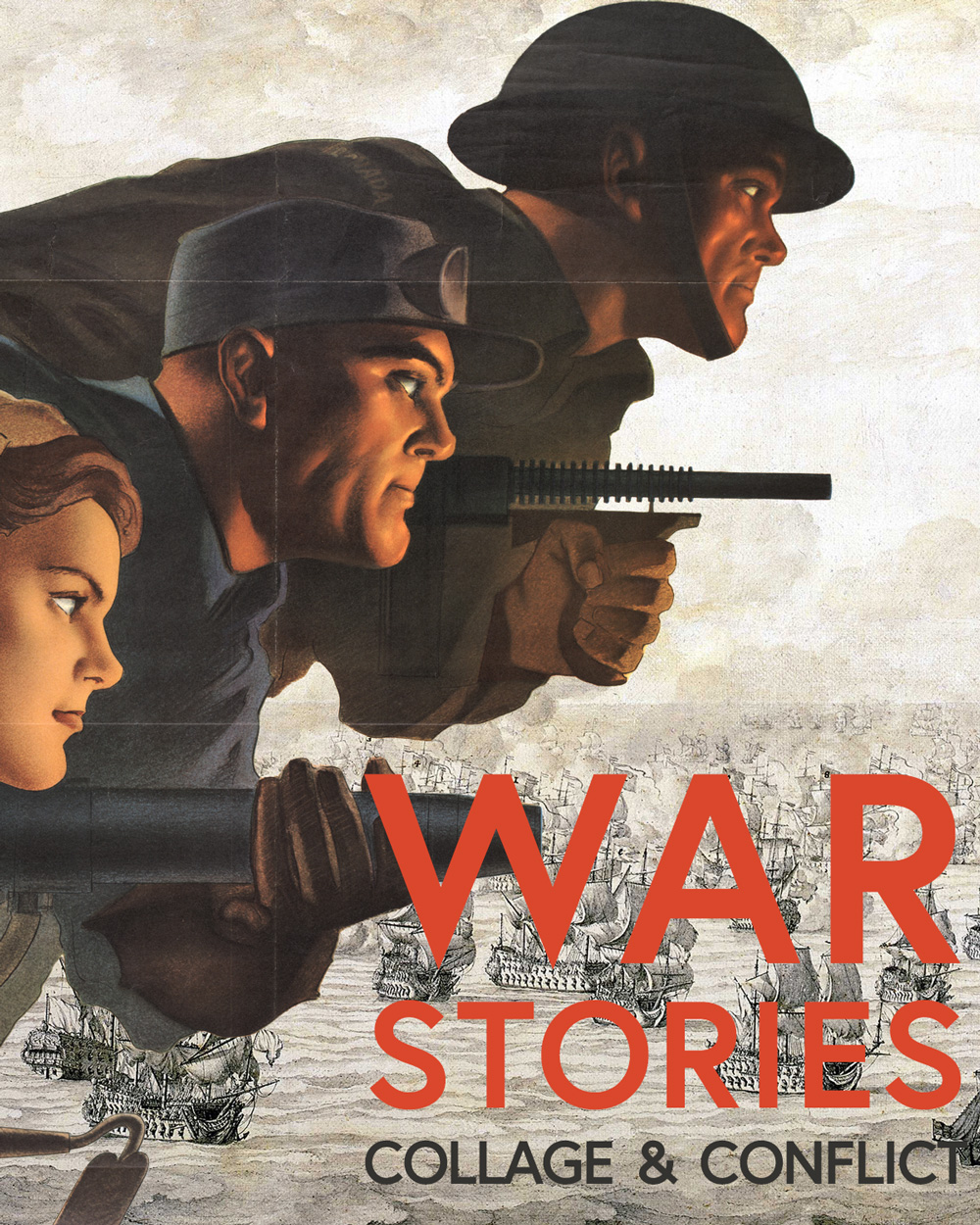
War Stories: Collage & Conflict
Deadline to Apply: Saturday, 12 September 2026. A four-week virtual artist residency taking place in October 2026. How can collage artists respond to the ways war, conflict, and peace are represented in the media? Artists will research historical and contemporary war correspondence, examine the history of political collage—from its roots in European anti-fascist movements to contemporary practice—and consider how art can contribute to civic discourse. Participants will hear from Adrian Paukstat about the German magazine Wissenschaft & Frieden’s forthcoming issue on war and conflict reporting, make and discuss new collages, and develop writing that documents the historical and social contexts of their work.A selection of artwork made during the residency will appear in issue 4/2026 of Wissenschaft & Frieden alongside commentary by project curator Ric Kasini Kadour. Additional artwork will be published as a folio of prints by Kolaj Institute and made available for exhibitions. Artists will also be invited to submit work for the War & Peace Correspondence Project and speak at a Kolaj LIVE Online event in January 2027. READ MORE
COLLAGE ON VIEW
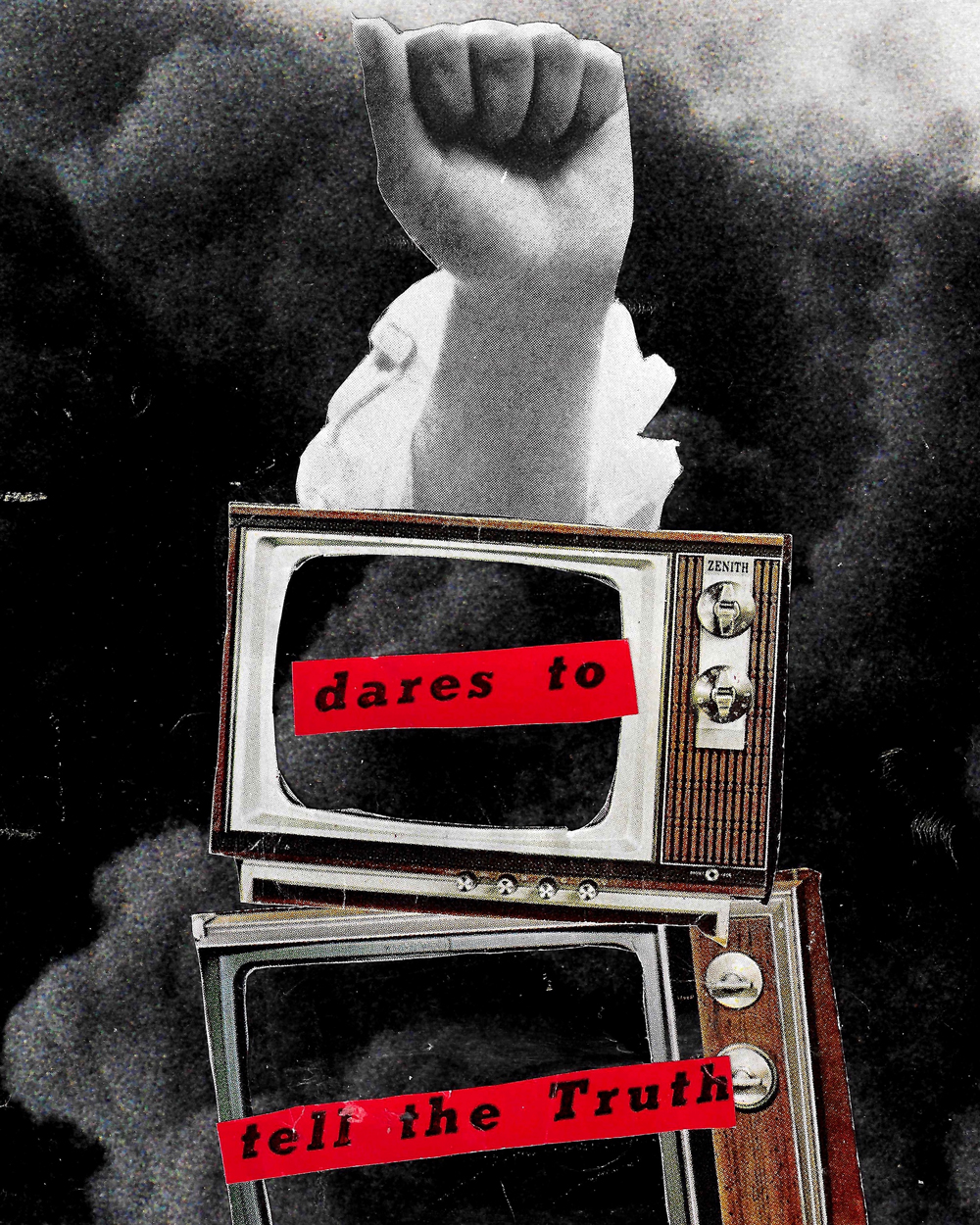
Art to Resist and Survive Authoritarianism
at the Rochester Art Center in Rochester, Minnesota, USA, 8 August-1 November 2026. Rochester Art Center presents works from the folio “Art to Resist & Survive Authoritarianism”, which was created as a result of Kolaj Institute’s virtual residency, Collage in Politics: The Authoritarian Regime Survival Guide, which took place in January and February 2025. Seven artists from Canada and the US created the works in the folio, which also appeared in the book The Authoritarian Regime Survival Guide, with text by Martin Mycieskl. READ MORE
PROJECT
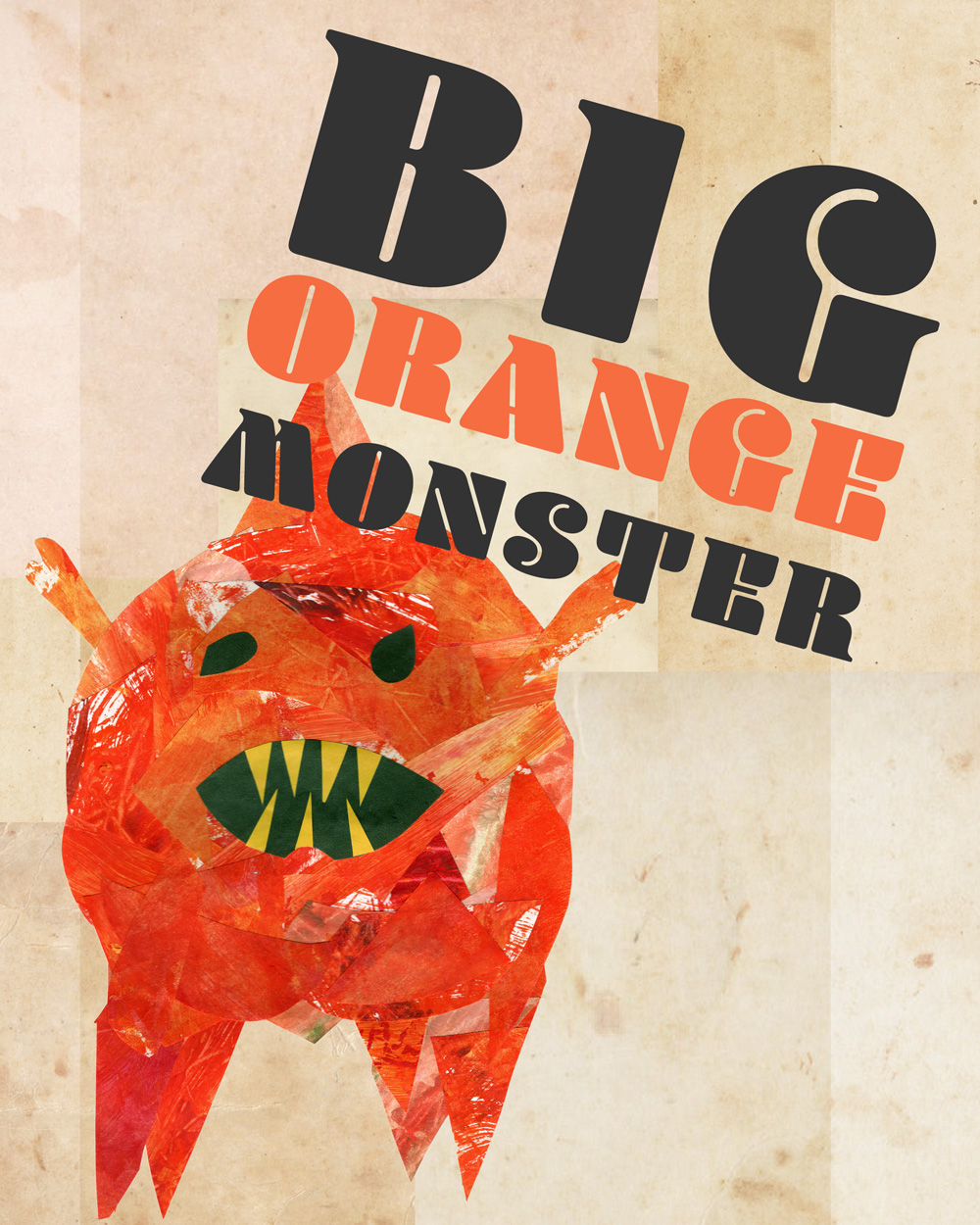
Big Orange Monster
10 September to 18 October 2025 at Kolaj Institute Gallery in New Orleans. At the heart of this exhibition at Kolaj Institute Gallery in New Orleans was collage made and sent to the gallery in response to an open call to artists: “You mix fear (yellow) and anger (red) and you get a Big Orange Monster. What’s the emergency? There are a lot of Big Orange Monsters on the loose. Monsters only have power if you are afraid of them. So let’s create a space where we can slay our fear of Big Orange Monsters. Art helps us exorcise our demons. Monsters can be glorious and wonderful or horrible and evil. Let’s not cast aside the good Big Orange Monsters because some other Big Orange Monsters are well…unpleasant.” Artists sent 128 collages from 13 countries: Australia, Austria, Brazil, Canada, France, Germany, Ireland, Italy, Kazakhstan, Mexico, The Netherlands, United Kingdom, and the United States. Nine artists from New Orleans contributed works to the exhibition. We asked visitors to the gallery to take care and not feed the monsters, some of which were installed behind a protective iron gate for everyone’s safety. We are now working to turn the Big Orange Monster artworks into a book. READ MORE
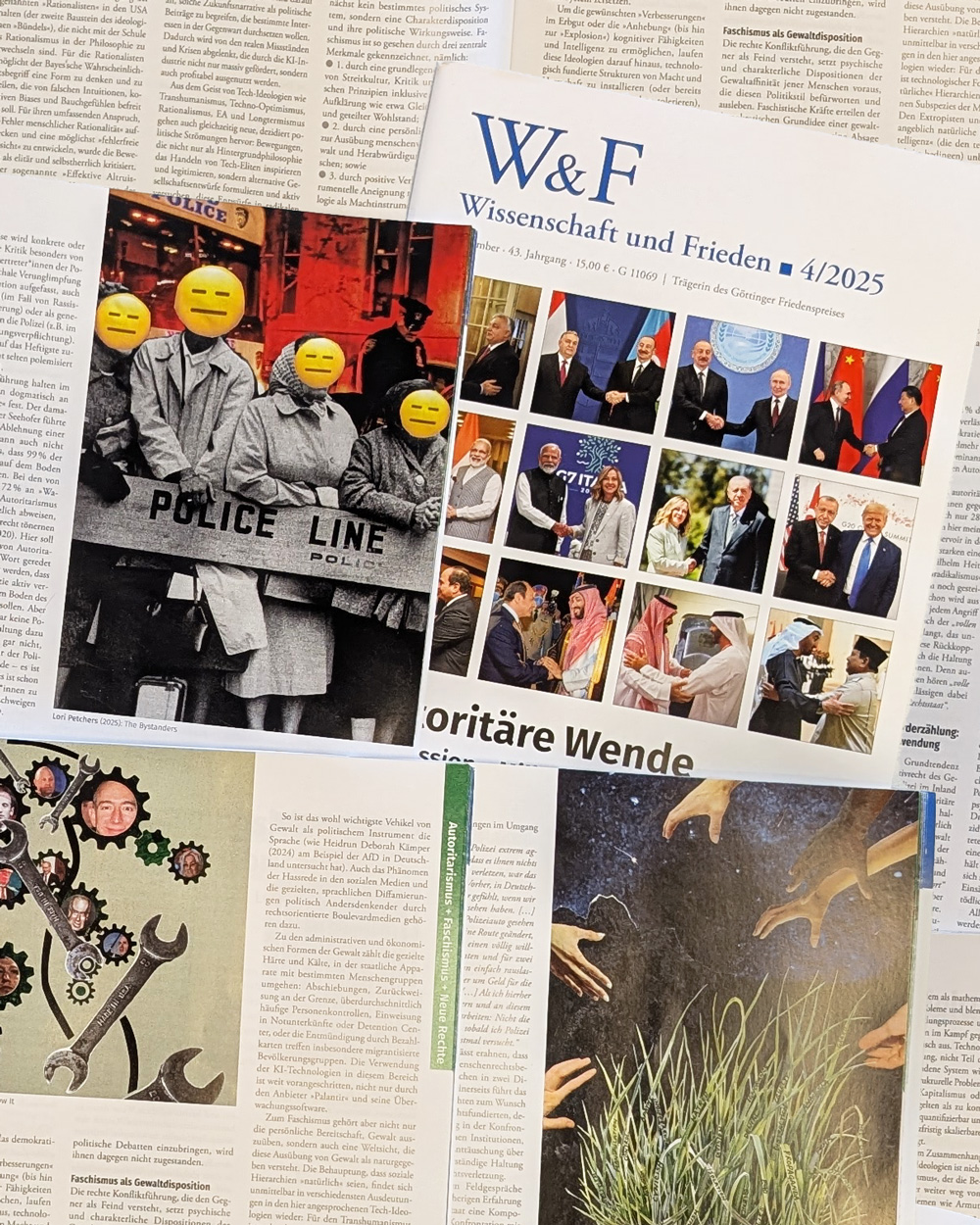
Wissenschaft & Frieden Publishes Political Collage
Kolaj Institute’s Politics in Collage Project was featured in Wissenschaft & Frieden, Issue 4/2025, “the leading interdisciplinary scientific journal for peace research, peace policy and the peace movement” since 1983. Editors reached out to Kolaj Institute after hearing about the Authoritarian Regime Survival Guide, a book and folio published in 2025 and invited us to submit artwork for the issue. Throughout the issue are collages by Andrea J. Lee (Toronto, Ontario, Canada), Heather Wishik (Woodstock, Vermont, USA), Heather Wright (Elgin, Minnesota, USA), Jennifer R Myhre (Sedona, Arizona, USA), Lori Petchers (Fairfield, Connecticut, USA), Slava Kavardak (location redacted), Ginger Sisco-Cook (Paris, Texas, USA), Nola Abboud (Kalamos, Greece), Phyllis Famiglietti (Brookline, Massachusetts, USA), Bryan Robertson (Prescott, Arizona, USA), and Emily Tironi (Saratoga Springs, New York, USA). The collages illustrate articles with topics including Defining Right Wing Groups, Fascist Internationalism, A Non-Eurocentric Understanding of Fascism, Digital Fascism, Opposing “Soft Authoritarianism”, Russian Imperialism as a System, Policing and “Cop Culture”, Antifa: Where Are You Going?, Sensitivity against Authoritarian Tendencies, From Reflex to Resilience, Academic Freedom under Pressure, Women’s Rights under the Taliban, Afghanistan on the Brink, and An Integrated Strategy to End War. Ric Kasini Kadour wrote in an essay about the artwork, “Authoritarians rightfully see art and free expression as a threat to power. As such, they act to control what is presented…The rise of authoritarianism is a campaign for the hearts and minds of the people. Art fundamentally threatens that campaign.” To learn more, visit www.wissenschaft-und-frieden.de (note the website and the publication are published in German only).
GENERAL POLITICS IN COLLAGE PROJECT HISTORY
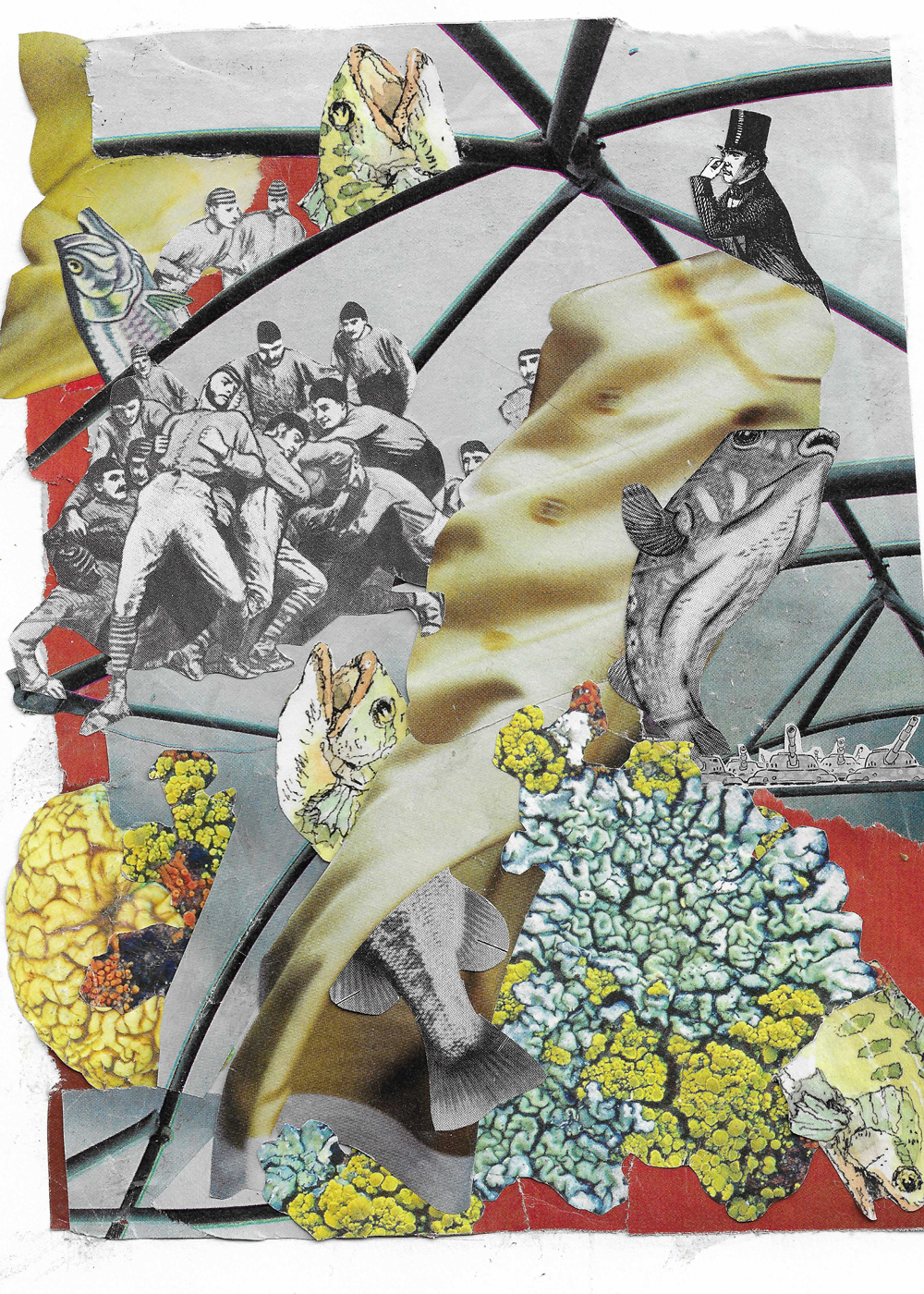
Image above: PU a Coup by Heather Wright
(15″x11″; collage print on 100lb Strathmore Bristol Vellum paper; 2025. Courtesy of the artist.)
EXHIBITION
Art to Resist and Survive Authoritarianism
at Fleming College’s Haliburton School of Art and Design in Haliburton, Ontario, Canada, 27 October-5 December 2025
On view in the Great Hall were the works from the folio “Art to Resist & Survive Authoritarianism”, which was created as a result of Kolaj Institute’s virtual residency, Collage in Politics: The Authoritarian Regime Survival Guide, which took place in January and February 2025.
Kolaj Institute’s Politics in Collage Project is a series of residencies, publications, discussions, and exhibitions examining complex socio-political issues that contemporary society is contending with, in order to spark meaningful dialogue and inspire deeper engagement. In January 2025, Kolaj Institute organized a residency that brought together collage artists to make artwork that responds to a global rise in authoritarianism. They explored the history of political collage and its early 20th century roots in the European anti-fascist movements. They learned how to read and decode authoritarianism, to understand how it operates, and strategies for resisting or countering it. Discussions and presentations centered on how an artist can make work that picks up the unfinished work of history and contributes to the civic discourse.
Participating artists: Heather Wright (Elgin, Minnesota, USA), Heather Wishik (Woodstock, Vermont, USA), Lori Petchers (Fairfield, Connecticut, USA), Suzanne Gore (Boise, Idaho, USA), Andrea J. Lee (Toronto, Ontario, Canada), Jennifer Myhre (Sedona, Arizona, USA), and Olivia Baldacci (New York, New York, USA).
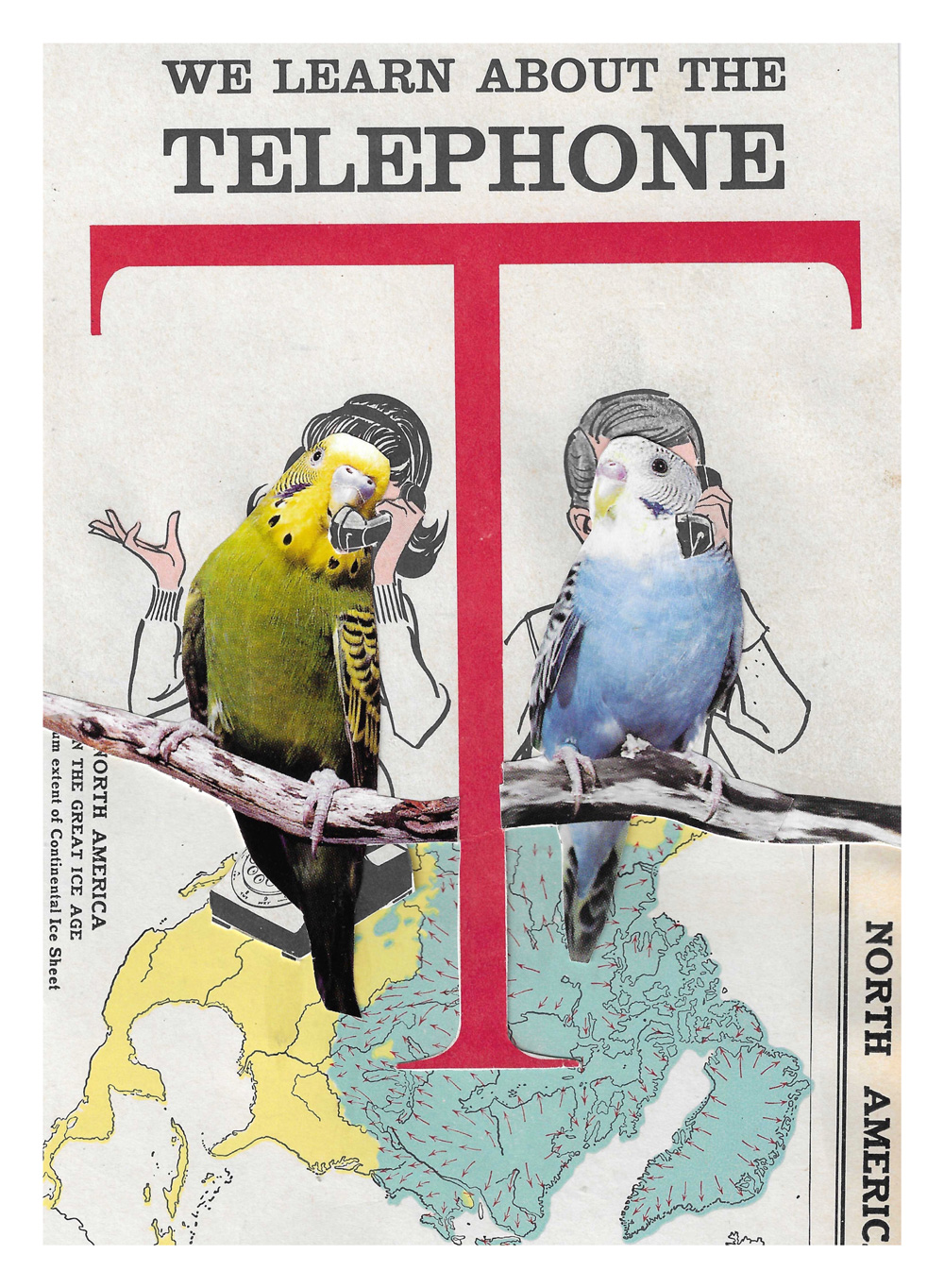
Image above: Polly Wants a Conversation by Lori Petchers. (15″x11″; collage print on 100lb Strathmore Bristol Vellum paper; 2025. Courtesy of the artist.)
RESIDENCY
Politics in Collage 2025: Authoritarian Regime Survival Guide Virtual Artist Residency
Freedom House, “the oldest American organization devoted to the support and defense of democracy around the world…was formally established in New York in 1941 to promote American involvement in World War II and the fight against fascism.” In 2022, they issued a report on the state of global freedom and concluded, “Global freedom faces a dire threat. Around the world, the enemies of liberal democracy—a form of self-government in which human rights are recognized and every individual is entitled to equal treatment under law—are accelerating their attacks. Authoritarian regimes have become more effective at co-opting or circumventing the norms and institutions meant to support basic liberties, and at providing aid to others who wish to do the same.” What can collage artists do to counter rising authoritarianism?
During this residency, collage artists worked together to make artwork that responds to a global rise in authoritarianism. They explored the history of political collage and its early 20th century roots in the European anti-facist movements. They learned how to read and decode authoritarianism, to understand how it operates, and strategies for resisting or countering it. Discussions and presentations centered on how an artist can make work that picks up the unfinished work of history and contributes to the civic discourse.
Artists in the residency worked together to illustrate and elucidate The Authoritarian Regime Survival Guide. Based on the Polish experience, The Authoritarian Regime Survival Guide offers its readers information and tools for recognizing and resisting authoritarianism. In a clear series of lists, the Guide lays out what to expect in a society being led by an authoritarian regime, rules for surviving such a regime, and strategies for engaging with authoritarian supporters.
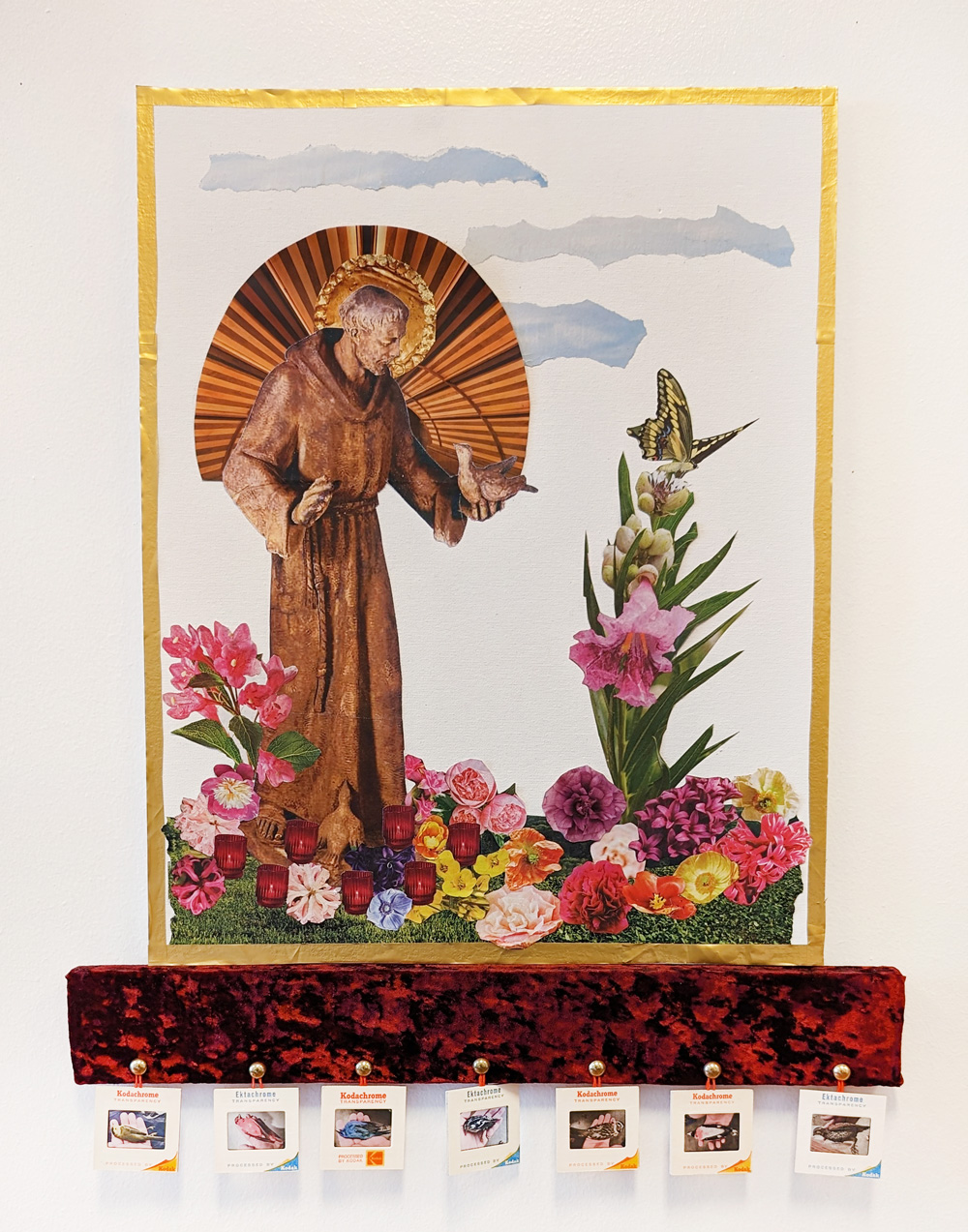
Image above: Evidence of a Failed Offering by Krystal Anton (25.75″x19.5″; magazine and printed collage fragments, gold streamer, cardboard, velvet, brass tacks, collaged odak slides on canvas board; 2024. Courtesy of the artist.)
ARTIST RESIDENCY & EXHIBITION
Collage the Planet: Environmentalism in Art
APRIL 2024
The premise of the “Collage the Planet: Environmentalism in Art” was that science has the capacity to tell us how to care for the planet, but those solutions are meaningless if humanity doesn’t care enough to evolve and change. Art is a unique technology that can distill complexity into simple human gestures that, when experienced, facilitate a deeper understanding of our world. In short, art can be a tool for caring. Artwork by New Orleans artist Jill Stoll and Detroit, Michigan artist Jonilyn Paige spoke to themes of Trash as Material.
JULY 2023
ZINE
Collage Saves The World
We are living in an explosively political time, faced with crises that are not only deepening individually, but becoming increasingly intersectional in relation to each other. There is a strong history of collage art being used to tackle complex socio-political issues during some of the most difficult eras, but how can it meet this moment and spark meaningful dialogues about our varied, contemporary issues? In November 2022, G. E. Vogt led twelve artists in a month-long virtual residency with the goal of creating work that examines complex socio-political issues that contemporary society is contending with, in order to spark meaningful dialogue and inspire deeper engagement. Each artist chose specific issues to explore through the medium of collage. Their artwork allows viewers an opportunity to reflect on various forms of racism, colorism, ableism, and sexism; the war in Ukraine; climate change and the importance of permaculture; beauty standards and women’s autonomy. Their work makes its way into the world in this book and as a traveling exhibition. LEARN MORE
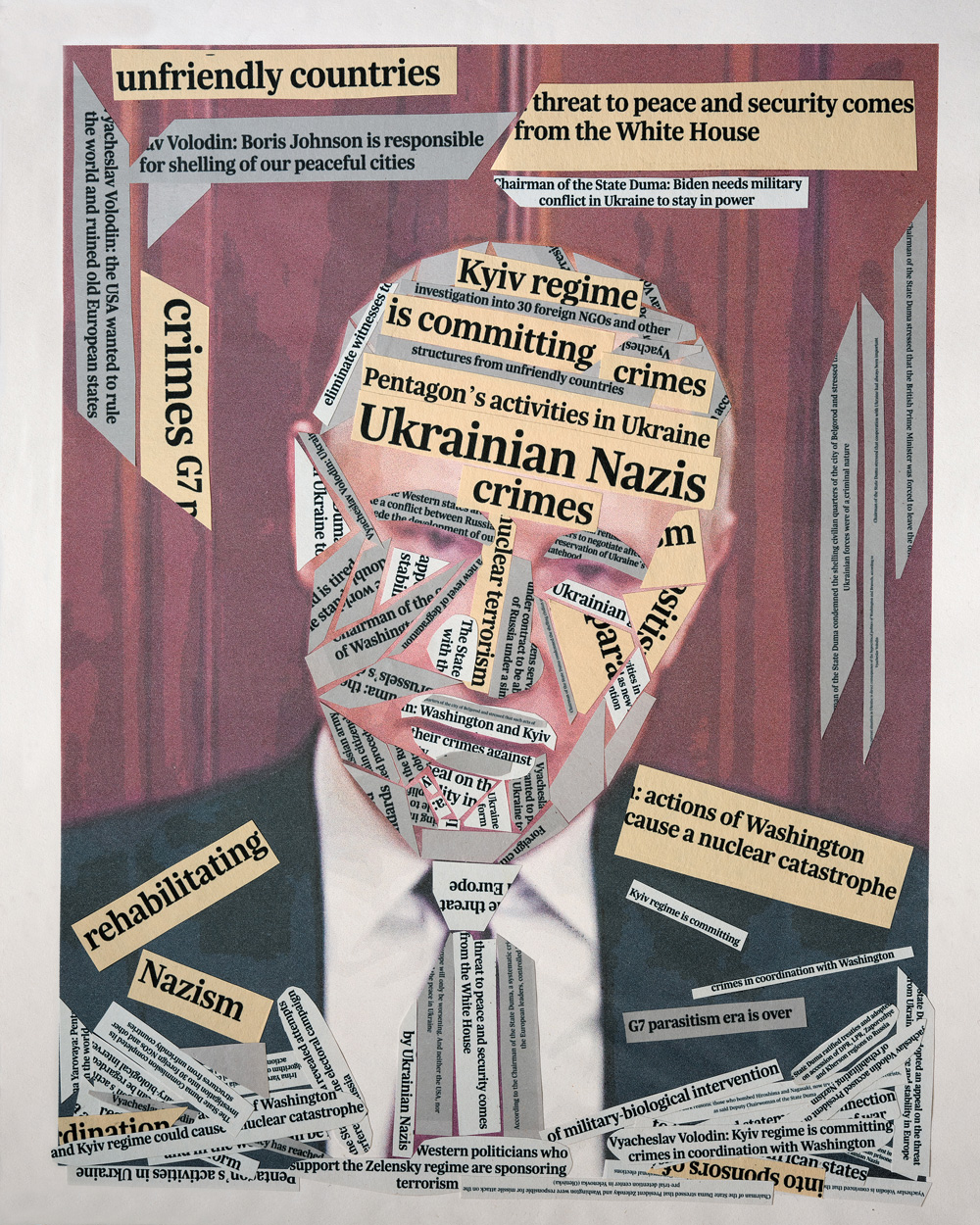
Image above: Putin’s War by Anna Sellen (10″x8″; analogue collage; 2023)
NOVEMBER 2022
RESIDENCY
Politics in Collage Residency Fall 2022
Kolaj Institute was pleased to announce the twelve artists selected to participate in the 2022 Politics in Collage Residency. During the residency, they discussed the history of political collage and important political collage artists, explored how to curate and exhibit this crucial art form, and, most importantly, challenged themselves to push our own artistic practice further in the creation of political collage. Artists heard from a variety of guest speakers specializing in different aspects of this form. Through ongoing online discussions and regular collage exercises in between meetings, the artists learned how to articulate complex political subjects in their work and explored how to inspire engagement with difficult socio-political topics through collage.
Teresa HR Lane (Matauri Bay, Kaeo, New Zealand) | Amanda Lynch (Castle Cary, Somerset, England) | Anna Sellen (Aberaeron, Ceredigion, Wales) | Ava Paterson Werner (Los Osos, California, USA) | Diego Bexar (Missoula, Montana, USA) | KVSS Varshini (Ahmedabad, Gujarat, India) | Liz Aukamp LaGarde (Frederick, Maryland, USA) | Ginger Sisco-Cook (Paris, Texas, USA) | Kim Rae Taylor (West Palm Beach, Florida, USA) | Rachel Thomas (Southfield, Michigan, USA) | LaVonna Varnado-Brown (New Orleans, Louisiana, USA) | Karina Walter (Charlotte, North Carolina, USA)
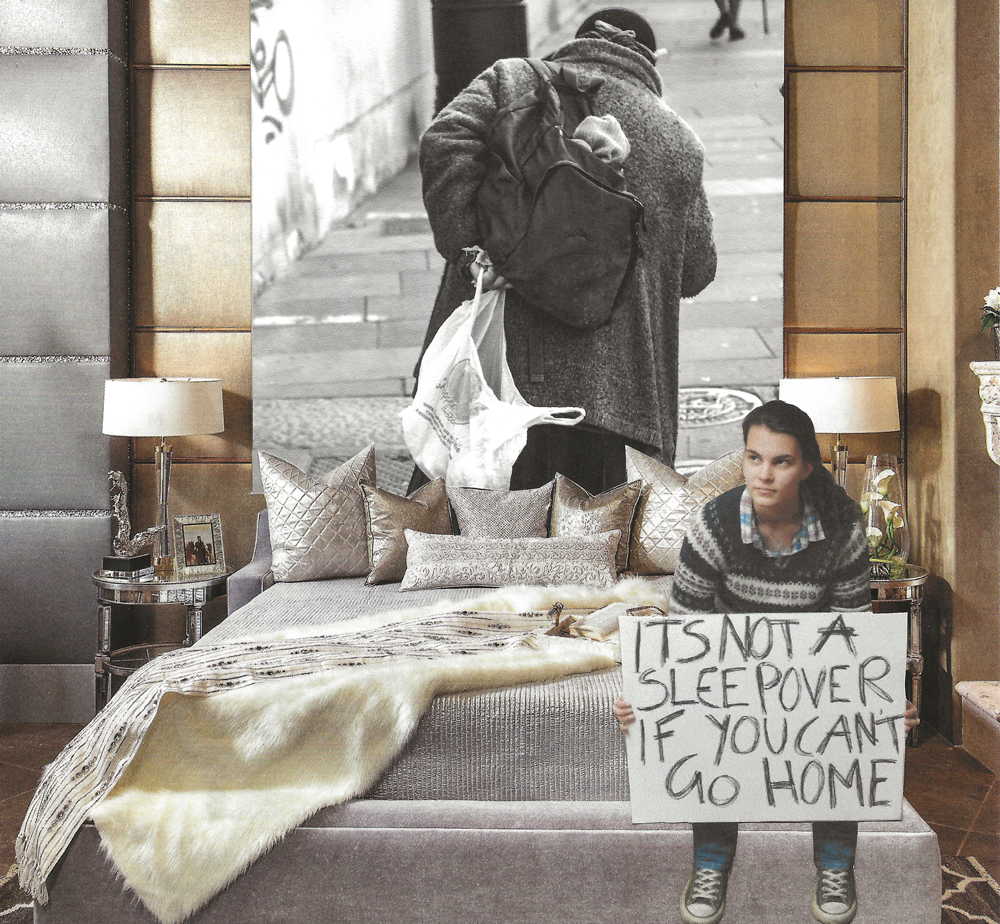
Image above: Not a Sleepover from the “comfort capitalism complicity” series by MaryHope Lee (6.68″x6.27″; hand-cut collage using found images; 2021)
JULY 2022
ONLINE EXHIBITION & BOOK
Politics in Collage
In a time where the challenges facing us as individuals and communities have grown to seemingly insurmountable levels, further exacerbated by the increasing toxicity of the political climate, artists are using their work to confront these challenges by engaging their viewers in a higher level of discourse. Through a virtual residency, twenty-five artists created collage works examining complex socio-political issues that contemporary society is contending with, in order to spark meaningful dialogue and inspire deeper engagement.
Although the main thread running through Politics in Collage is “political” in its broadest definition, each artist chose specific issues to explore through the medium of collage. Their artwork allows viewers an opportunity to reflect on various forms of racism, ableism, sexism, and xenophobia; the consequences of colonization and capitalism; the effects of contemporary media; and the eco-grief or anxiety associated with climate change. By using collage, a form composed of juxtaposing a variety of disparate elements together, the artists are able to tell nuanced stories about their highly complex topics, inviting the viewers to regard a potentially overwrought issue from a fresh angle.
JULY 2022
KOLAJ LIVE ONLINE
Politics in Collage Book & Exhibition Launch
Kolaj Institute was joined by G.E Vogt, and four of the exhibiting artists—Phyllis Famiglietti (Massachusetts, USA), Mary Hope Lee (Arizona, USA), Alexander Helmintoller (California, USA), Penny Mateer (Pennsylvania, USA), and Amanda Lynch (England, United Kingdom)—in a discussion surrounding the residency, their artwork, and the need for more complex works engaged in political dialogue.
ABOUT KOLAJ LIVE ONLINE
Kolaj LIVE Online is a series of virtual programs in the form of forums, panels, workshops, artist talks, studio visits, and other activities that allow people to come together, learn and talk about collage, and connect in real time to the collage community. Our goal is to bring the community together in a spirit of mutual support and fellowship.
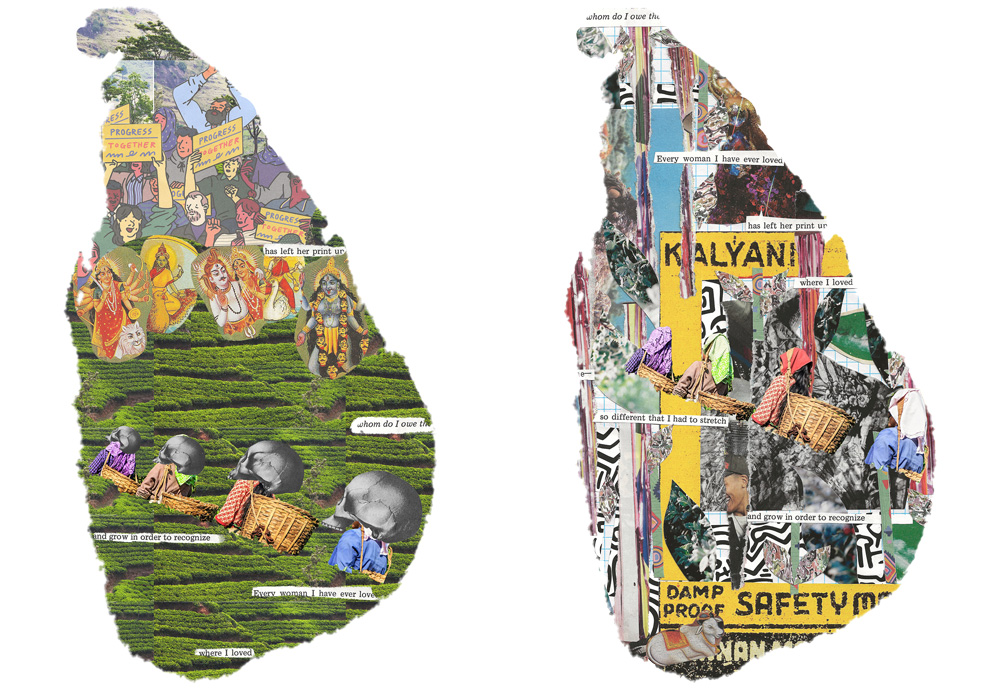
Image above: Whose Island and Our Island from the “Tamilscapes” series by Gayathiri Kamalakanthan (diptych: 11.7”x8.5”; found paper, graph paper, tinsel, digital; 2021) B296GK22ART & B295GK22ART.
JUNE & JULY 2022
EXHIBITION
Politics in Collage Exhibition at Kolaj Fest New Orleans
at The Domino in New Orleans, Louisiana, USA, 14 June-20 July 2022. Although the main thread running through this exhibition was “political” in its broadest definition, the artists each chose specific issues to explore through the medium of collage. There were examinations of various forms of racism, ableism, sexism, and xenophobia; the consequences of colonization and capitalism; the effects of contemporary media; and the eco-grief or anxiety associated with climate change. By using collage, a form composed of juxtaposing a variety of disparate elements together, the artists were able to tell nuanced stories about their highly complex topics, inviting viewers to regard a potentially overwrought issue from a fresh angle.
“Collage as an art form, is ideally situated for this political work due to its inherent nature of distilling and juxtaposing various elements from the overload of information and sources we’re exposed to on a regular basis, into one cohesive story or statement. Collage allows us to make sense of increasingly complex and interconnected social & political subjects through this selected juxtaposition”
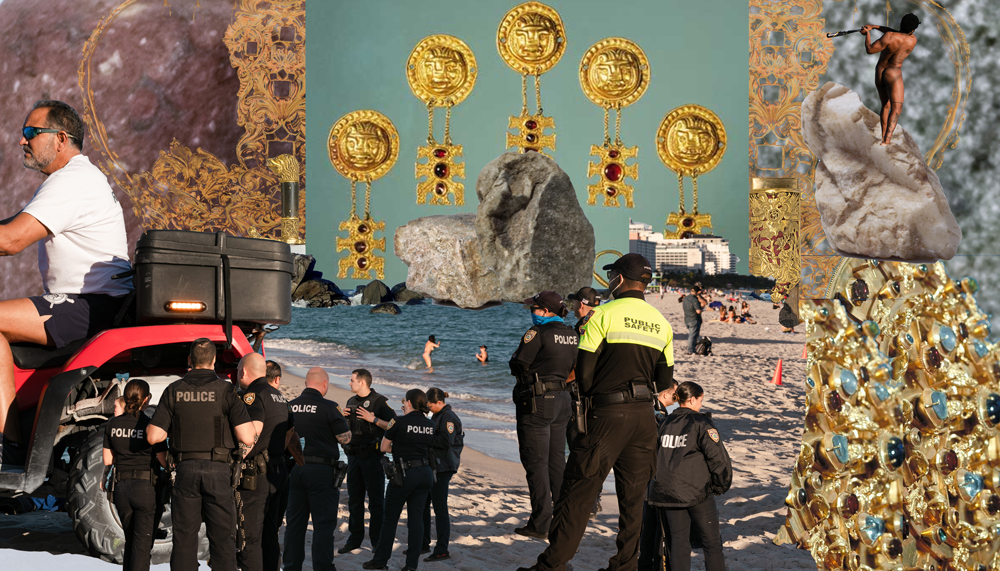
Image above: from Sisyphus and the Myth of the New World by Xxavier Carter. (12″x21″; digital collage; 2022)
RESIDENCY
Politics in Collage Residencies 2021
Collage as a political art form has a particular relevance to today as well as a strong historical context. Kolaj Institute organized its Politics in Collage Residencies in 2021. Led by G.E. Vogt, artists heard from Ginger Sedlarova, John J Heartfield, Wendy Parker, Teri Henderson, and Liucija Dervinytė. Guest speakers spoke about the historical context of this genre and how to articulate complex political subjects in their work. Artists worked together to explore how we can continue to inspire meaningful engagement with difficult topics through collage.
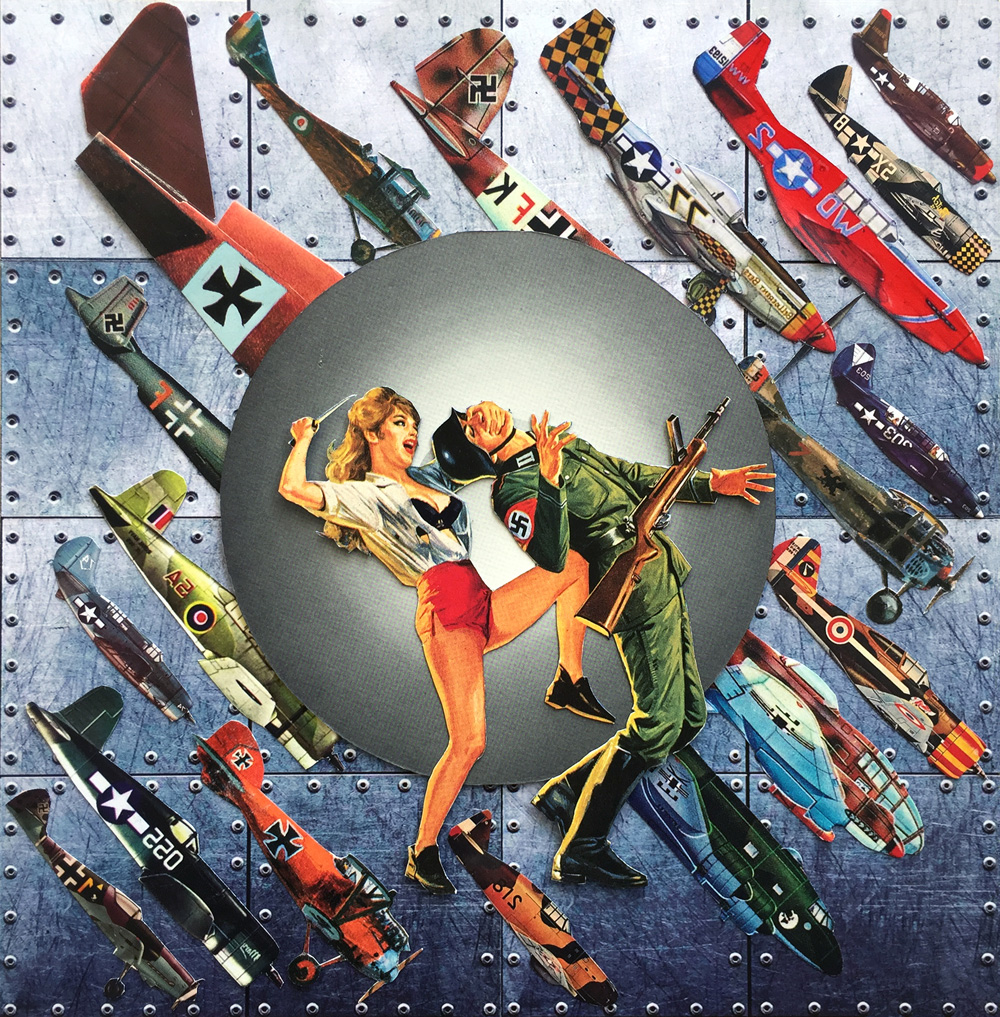
Image above: Nazi Killer by Kike Congrains (11.8″x11.8″; paper, glue; 2021. Courtesy of the artist.)
SEPTEMBER 2021
RESIDENCY
Politics in Collage Residency
Twelve artists were selected to participate in the first virtual Politics in Collage Residency.
Nola Abboud (Cambridge, Cambridgeshire, England) | Jana Zimmer (Santa Barbara, California, USA) | Kike Congrains (Lima, Peru) | Phyllis Famiglietti (Brookline, Masssachusetts, USA) | MaryHope Lee (Phoenix, Arizona, USA) | Jordan Fobbs (Goleta, California, USA) | Bryan Robertson (Prescott, Arizona, USA) | Emily Tironi (Cambridge, New York, USA) | Gayathiri Kamalakanthan (London, England) | Stephanie Todhunter (Medford, Massachusetts, USA) | Susana Belen (Thornton, New South Wales, Australia) | Penny Mateer (Pittsburgh, Pennsylvania, USA)
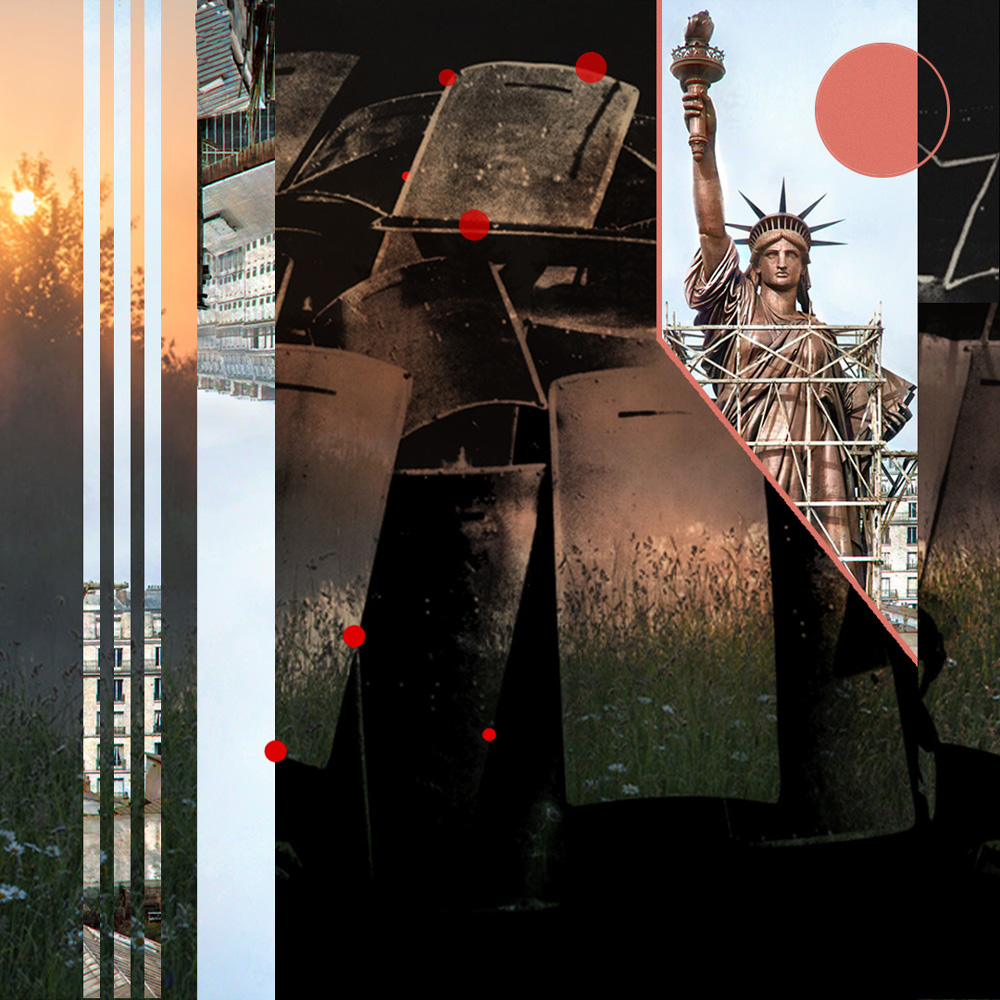
Image above: Liberty by Alexander Helmintoller (digital collage; 2020. Courtesy of the artist.)
NOVEMBER 2021
RESIDENCY
Politics in Collage Residency
Thirteen artists were selected to participate in a second Politics in Collage Residency.
Alexander Helmintoller (Carlsbad, California, USA) | Xxavier Carter (Dallas, Texas, USA) | Patricia Figueiredo (Rio de Janeiro, Brazil) | Lilith Frakes (Ellensburg, Washington, USA) | Jenn Arras (New York, New York, USA) | Simone Löhndorf (Lund, Sweden) | Carmen Angela Yandoc (Muntinlupa, Metro Manila, The Philippines) | Mori Anderson Hitchcock (Chester, Pennsylvania, USA) | Casey Rocheteau (Detroit, Michigan, USA) | Dawn Conry (Phoenix, Arizona, USA) | Cathy Greenhalgh (London, England) | Amanda Lynch (Castle Cary, Somerset, England) | Neha Luhar-Trice (Jacksonville, Florida, USA)