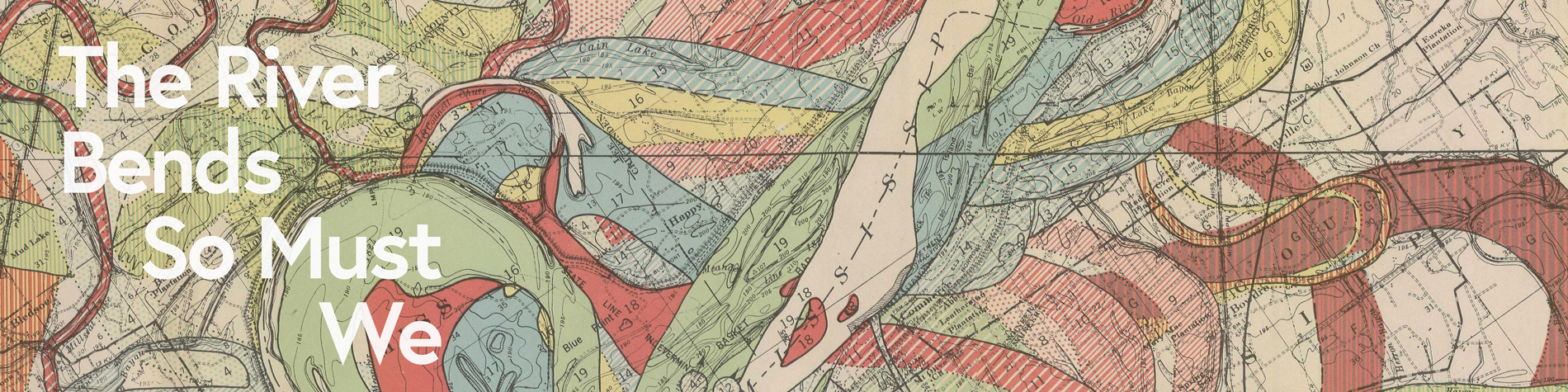
“The River Bends and So Must We” is a project of Kolaj Institute that reflects on the Mississippi River as a dynamic force of culture. In 2026 and 2027, we will bring together artists from the International Collage Community to make artwork that imagines and speaks to what lessons the River can teach us about our own humanity. The project unfolds as a series of exhibitions, events, articles, artist residencies, and culminates in a book and folio of artwork.
PROJECT OVERVIEW
The River Bends & So Must We
Rivers are cornerstones of human civilization. Rivers sustain life and connect us to one another. Fifty-two billion gallons of water pass through New Orleans each day via the Mississippi River. The river shapes the city’s history, its culture, its soul. The country sends its goods down river and New Orleans sends its culture up. New Orleans would not be without its river. Rivers transcend time. They exist in a perpetual state of change. Heraclitus wrote, “No man ever steps in the same river twice, for it’s not the same river and he is not the same man.”
“The River Bends and So Must We” is a project of Kolaj Institute that reflects on the Mississippi River as a dynamic force of culture. In 2026 and 2027, we will bring together artists from the International Collage Community to make artwork that imagines and speaks to what lessons the River can teach us about our own humanity. We will consider the history of the River in New Orleans from primordial times, pre-Columbian civilization, and to the present moment. We will examine how the River is an economic force, a tool of power, a natural wonder, and source of magic. We will take up Maya Angelou’s (1928–2014) invitation in her poem, “On the Pulse of Morning”, and “Speak to humankind today. Come to me, here beside the River.”
The project will unfold in three phases. In Summer 2026, we will invite artists to use as a point of reference Harold Fisk’s 1944 Mississippi River Meander Belt Maps which document “the nature and origin of the Alluvial Valley of the Lower Mississippi River.” A geologist and cartographer working for the US Army Corps of Engineers, Fisk used aerial photography and geological study to make visible the River’s long, shifting history. Artists will collage these maps with materials found in other archives to make visible the Mississippi River as a force of culture. Artwork will be exhibited on the iron fence of the U.S. Mint in New Orleans’ French Quarter as part of NOLA River Fest 2026 on 12 September 2026, an annual event that “celebrates the cultural, economic, environmental & inspirational impacts and contributions of the Mississippi River to the Crescent City.”
Kolaj Institute will host virtual Artist Labs in 2026 and 2027 and an in-person Artist Lab, 9-13 September 2026, where artists will develop artwork for the project. Through a series of presentations, site visits, and walks, artists will explore using archives and history; the role of artist research; develop strategies of making, exhibiting, and publishing collage art that speaks to a sense of place and history; hear about Kolaj Institute Projects and how artists can make art for books and exhibitions around photography and collage, architecture, trash as materials, folklore, poetry, and place as archive. In early 2027, Kolaj Institute will invite Solo Artists in Residence to visit New Orleans to conduct research and make artwork.
Projects developed during the Artist Labs and Solo Artist Residencies will be considered for exhibition at Kolaj Institute Gallery. Kolaj Institute will create a book about the project. The project aims to demonstrate how collage artists can pick up the unfinished work of history and contribute to the civic discourse of the community.
Current & Upcoming Activities
CALL TO ARTISTS
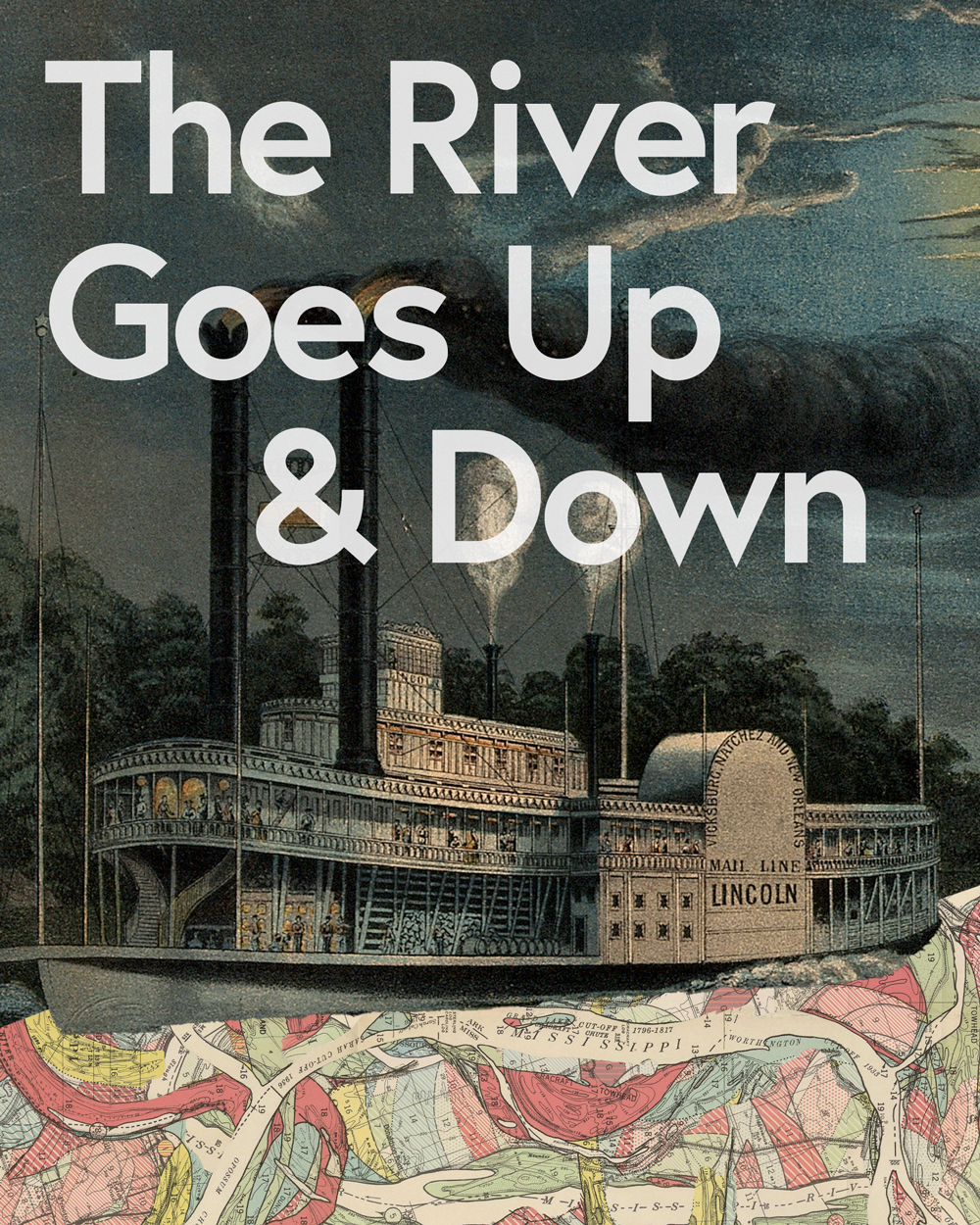
The River Goes Up & Down Virtual Artist Lab
Early Deadline to Apply: Sunday, 11 October 2026. In this four-week virtual artist lab in November and December 2026, artists will explore historical materials about the Mississippi River and reflect on how other artists have identified stories and made artwork about the River. During the Lab, artists will make artwork for an outdoor exhibition at the New Orleans Healing Center in 2027 that will be the focus of a program at Kolaj Fest New Orleans, 23-27 June 2027. These artworks will also be published as a folio of prints. They will also develop projects for an exhibition that will take place at Kolaj Institute Gallery in September 2027 and a publication about the project. Once registered to the project, the artwork will be considered for other diffusion strategies. LEARN MORE
EXHIBITION
“Come to me, here beside the River”
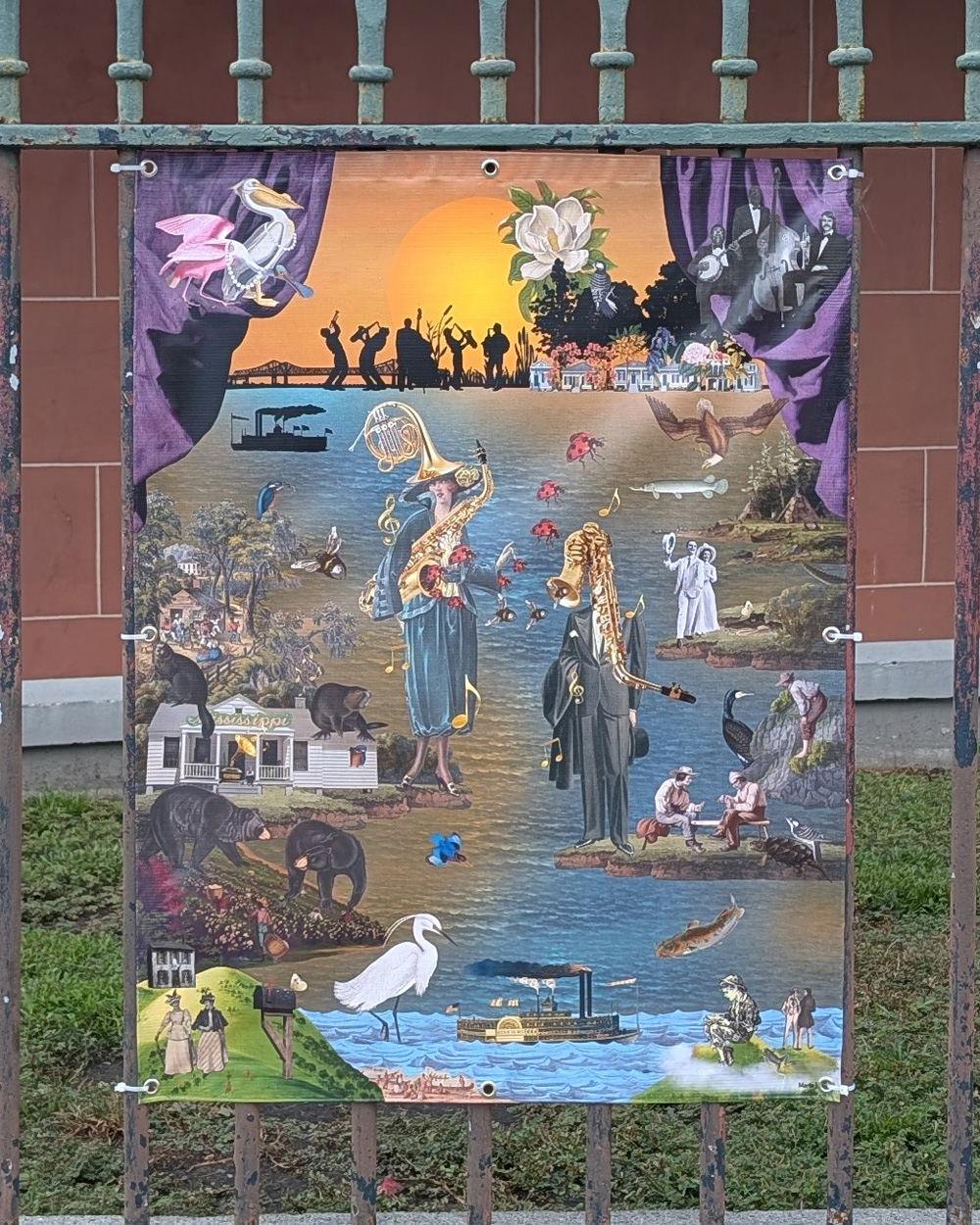
“Come to me, here beside the River” brings together nine International Collage Artists, each of whom offers a unique take on the Mississippi River as a dynamic force of culture. The exhibition will take place 8-22 September 2026 on the iron fence of the U.S. Mint, home of the New Orleans Jazz Museum. Participating Artists include: Anthony D Kelly (Castlebar, County Mayo, Ireland), LaVonna Varnado Brown (New Orleans, Louisiana, USA), Marta Janik (Warsaw, Poland), Lilya Chavaga (Brussels, Belgium), Matthew Hendricks (Cape Town, South Africa), Allison Spence (Tallahassee, Florida, USA), Jeanna Penn (Oakland, California, USA) Ric Kasini Kadour (New Orleans, Louisiana, USA & Montreal, Quebec, Canada). After the exhibition at the New Orleans Jazz Museum, the exhibition will travel to the New Orleans Healing Center where it will be on view during Kolaj Fest New Orleans, 23-27 June 2027.
Online Exhibition
EXHIBITION
“Come to me, here beside the River”
8-22 September 2026
New Orleans Jazz Museum [map]
The artwork inspires curiosity or wonder; tells stories about the River’s history; speaks to how the River fits into contemporary life; and encourages the viewer to reflect upon the The River as a source of poetry and spirituality. The title of the exhibition is a reference to Maya Angelou’s (1928–2014) invitation in her poem, “On the Pulse of Morning” where she wrote, “Speak to humankind today. Come to me, here beside the River.”
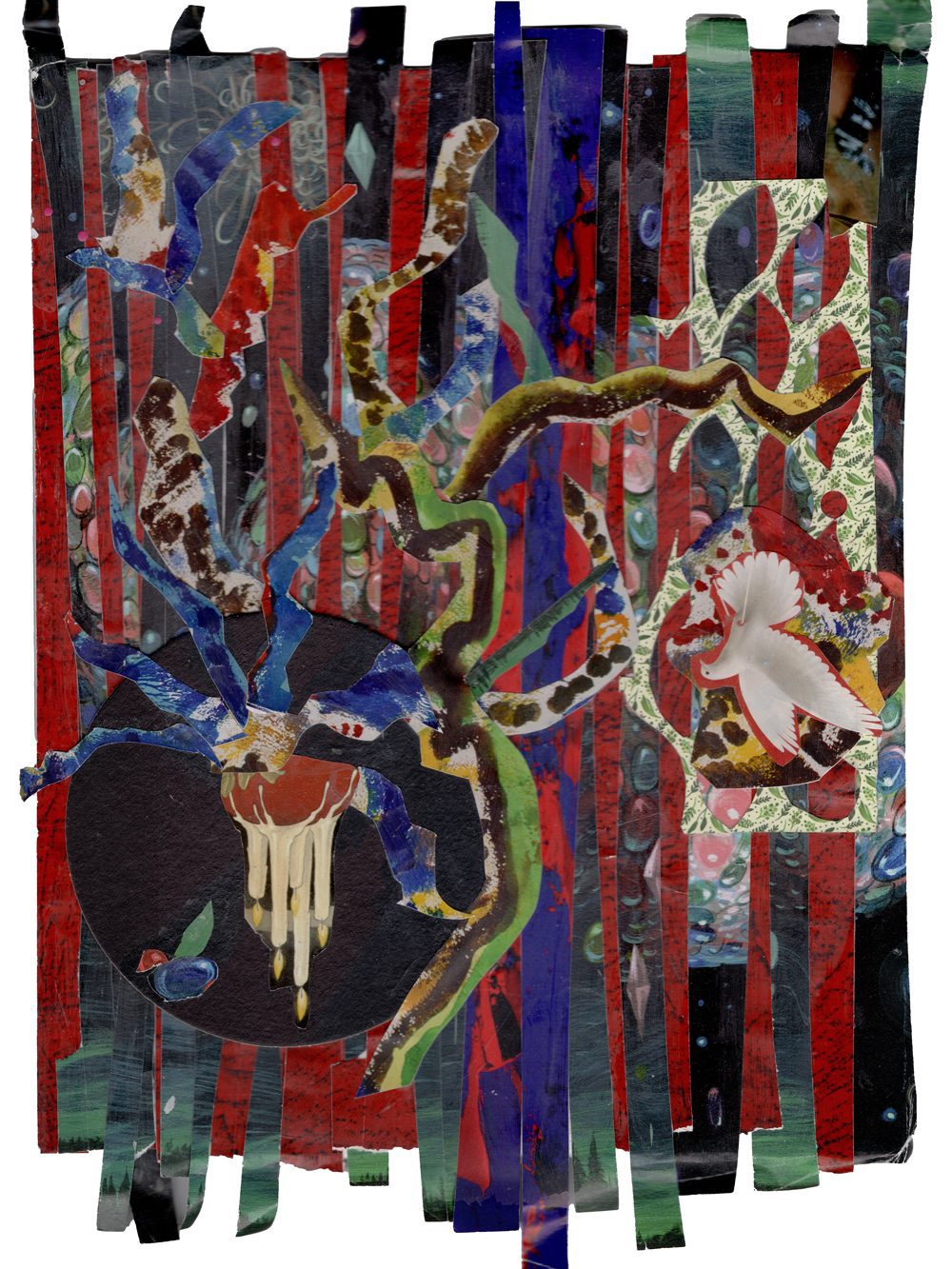
LaVonna Varnado Brown
New Orleans, Louisiana, USA
Inspired by oral storytelling sessions with Leon Waters, Nana Anoa, Lakeesha Harris, and LaToya Papillion, Memory uses the fragility of paper to evoke the fragility of our systems. “Visually, I want to conjure thoughts about the lore, specifically generational lore that perpetuates fear and scarcity, thinking about the layers of culture, layers of sediment, layers of earth and grief. The dove and candles are positioned upside down as an ode to the balance between the spiritual and visceral elements of River culture.
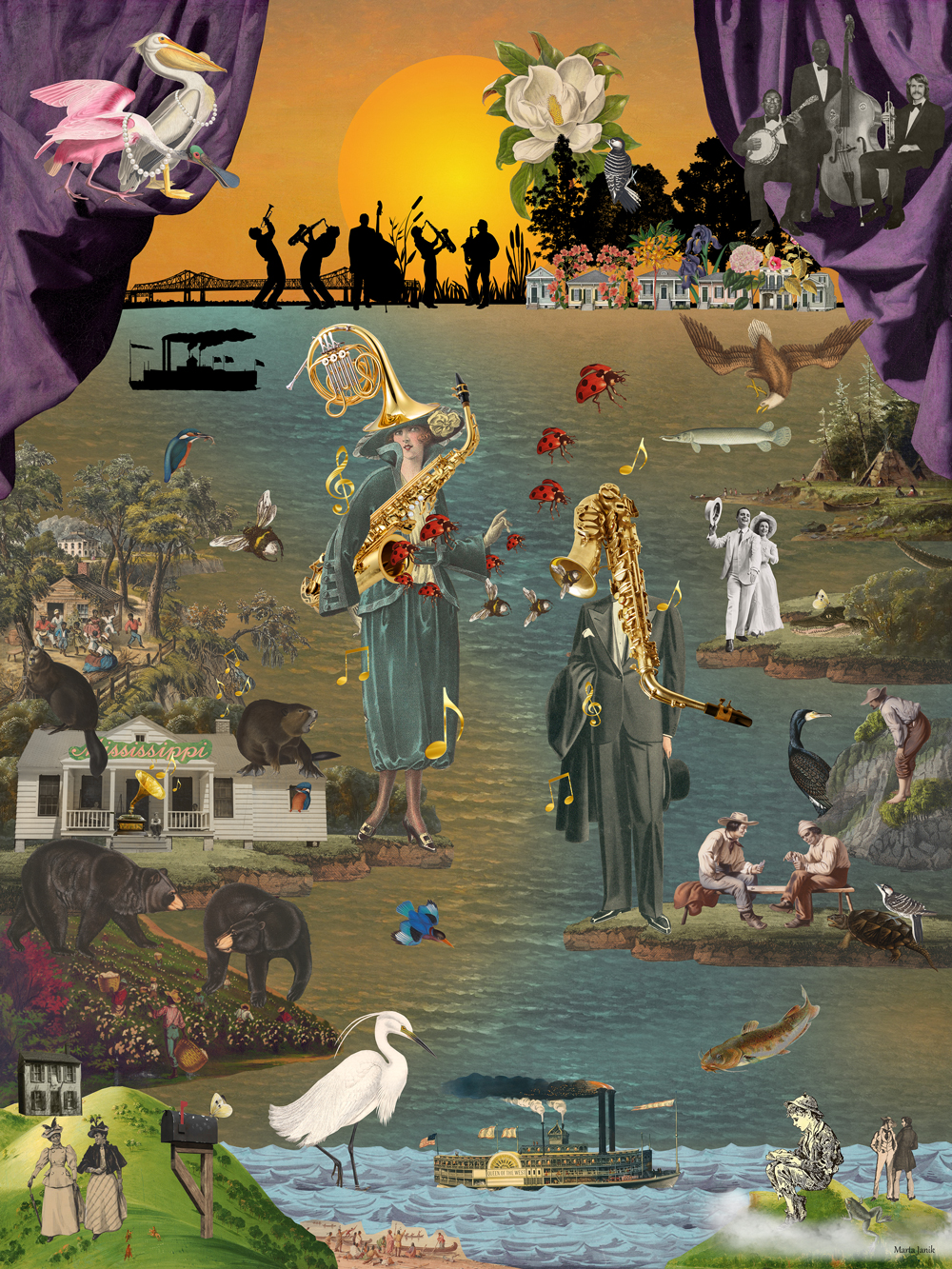
Marta Janik
Warsaw, Poland
In A River That Becomes a Stage, the Mississippi becomes a river-theatre. “The river flows through history and culture, connecting the natural world with the human one. It is at once a stage, a protagonist and a force that constantly transforms its surroundings…Its current leads all the way to New Orleans, where the narrative changes its rhythm. Musicians, jazz and music appear—as if the river, having travelled all this way, were transforming into sound.”
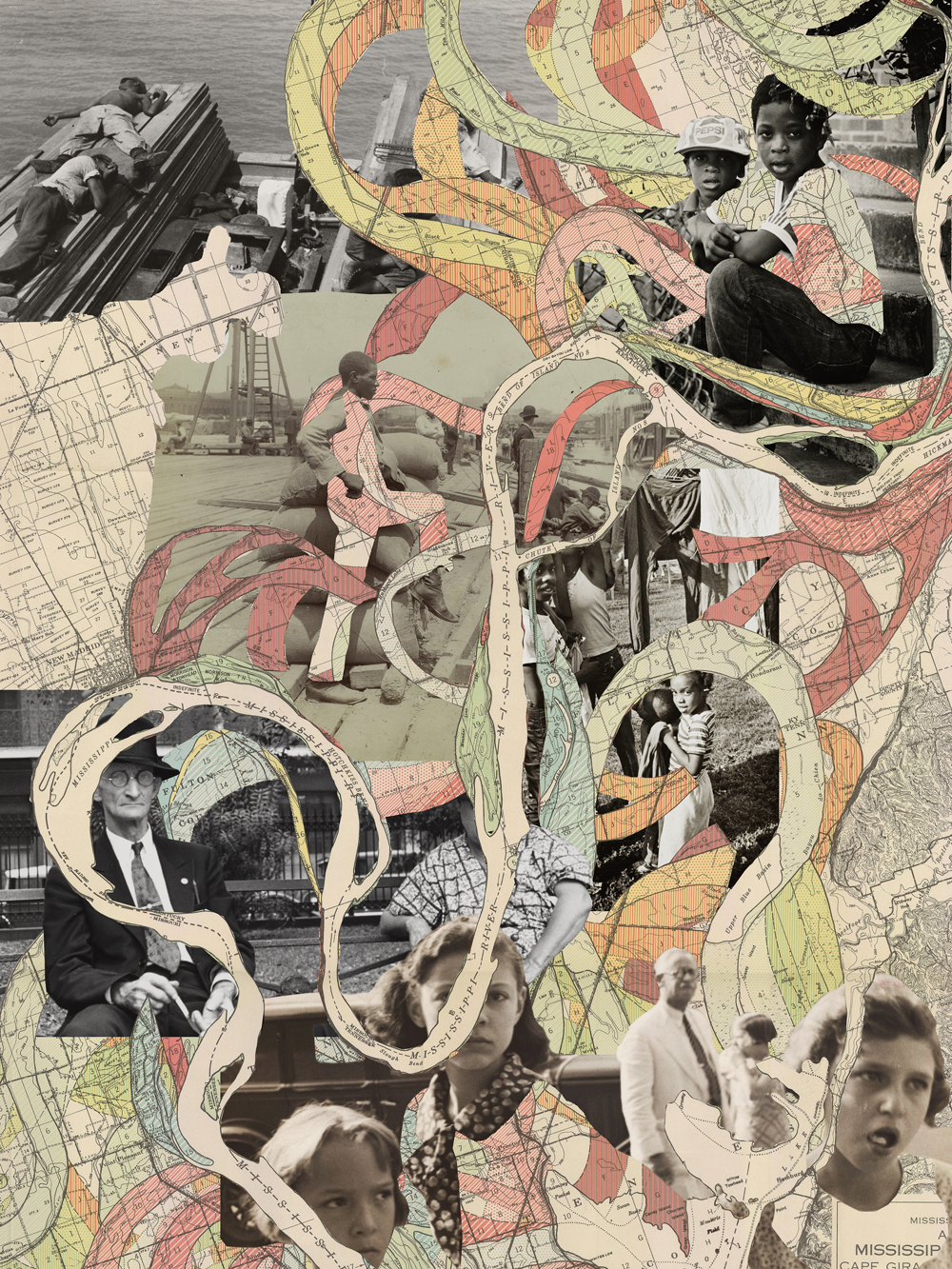
Lilya Chavaga
Brussels, Belgium
River as Memory by Ukrainian artist Lilya Chavaga offers a view of the Mississippi River as a carrier of collective memory: “A living space shaped by the people and generations who have lived along its banks. Its flow becomes a metaphor for the passage of generations: each generation leaves its own mark on the landscape, while remaining connected to those who came before.” What mark will we leave on the riverscape?
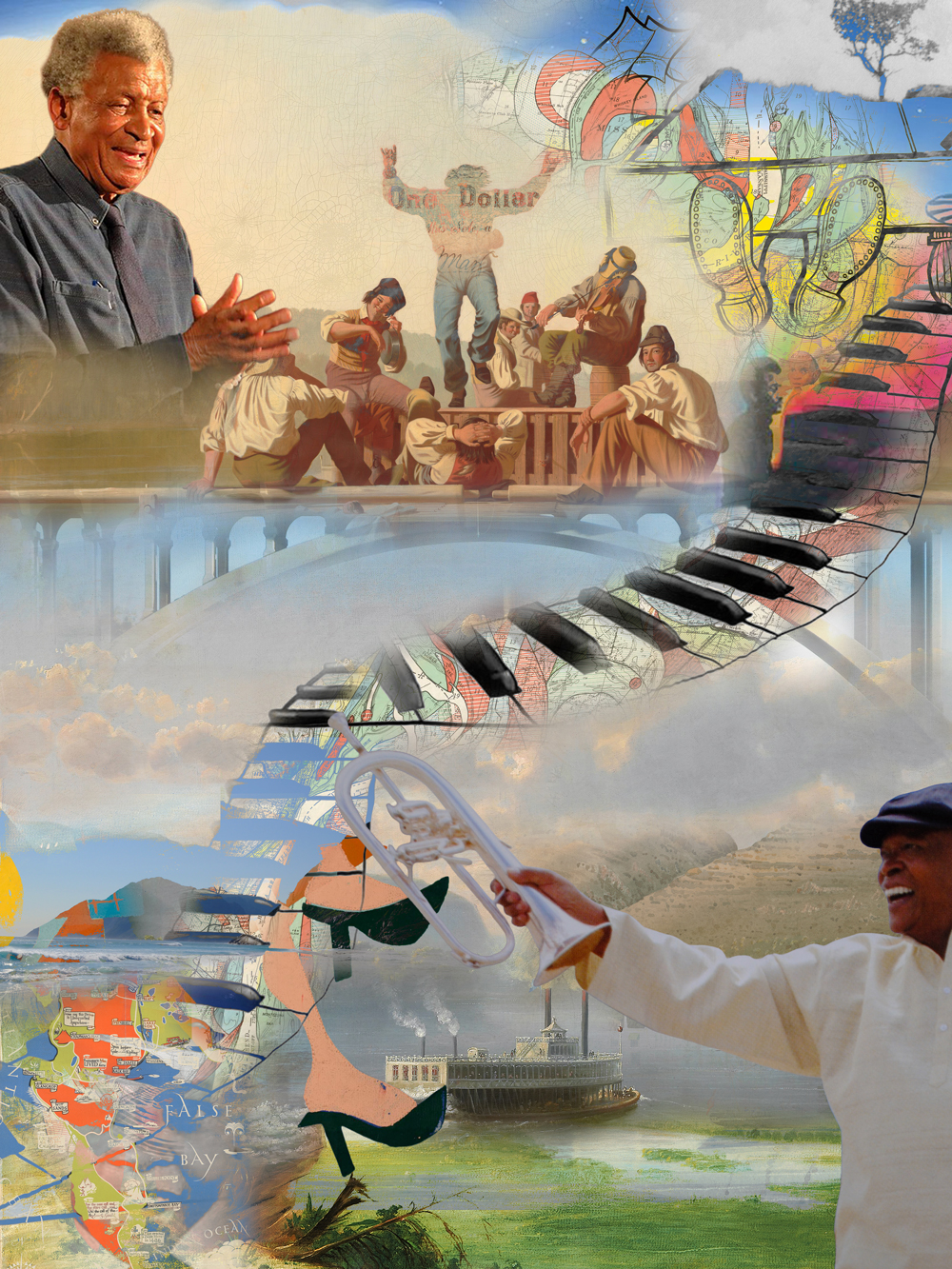
Matthew Hendricks
Cape Town, South Africa
Matzikama pays homage to one of South Africa’s greatest jazz musicians. The title is a Khoisan (indigenous South African group) word meaning “a place that gives water” and a song by South African jazz artist Abdullah Ibrahim (1934–2026) aka Dollar Brand, who, along with Hugh Masekela (1939–2018), were founding members of the Jazz Epistles, the pioneering South African ensemble whose 1960 recording, Jazz Epistle, Verse 1, is widely recognized as the first full-length jazz LP by Black South African musicians, in spite of being targeted by the apartheid state. “Masekela jokingly introduced himself by claiming he had been born in Memphis, Tennessee, and that when he was two years old he fell into the Mississippi River, was carried by the current into the Gulf of Mexico and out to sea, and eventually washed ashore in Cape Town, South Africa.”
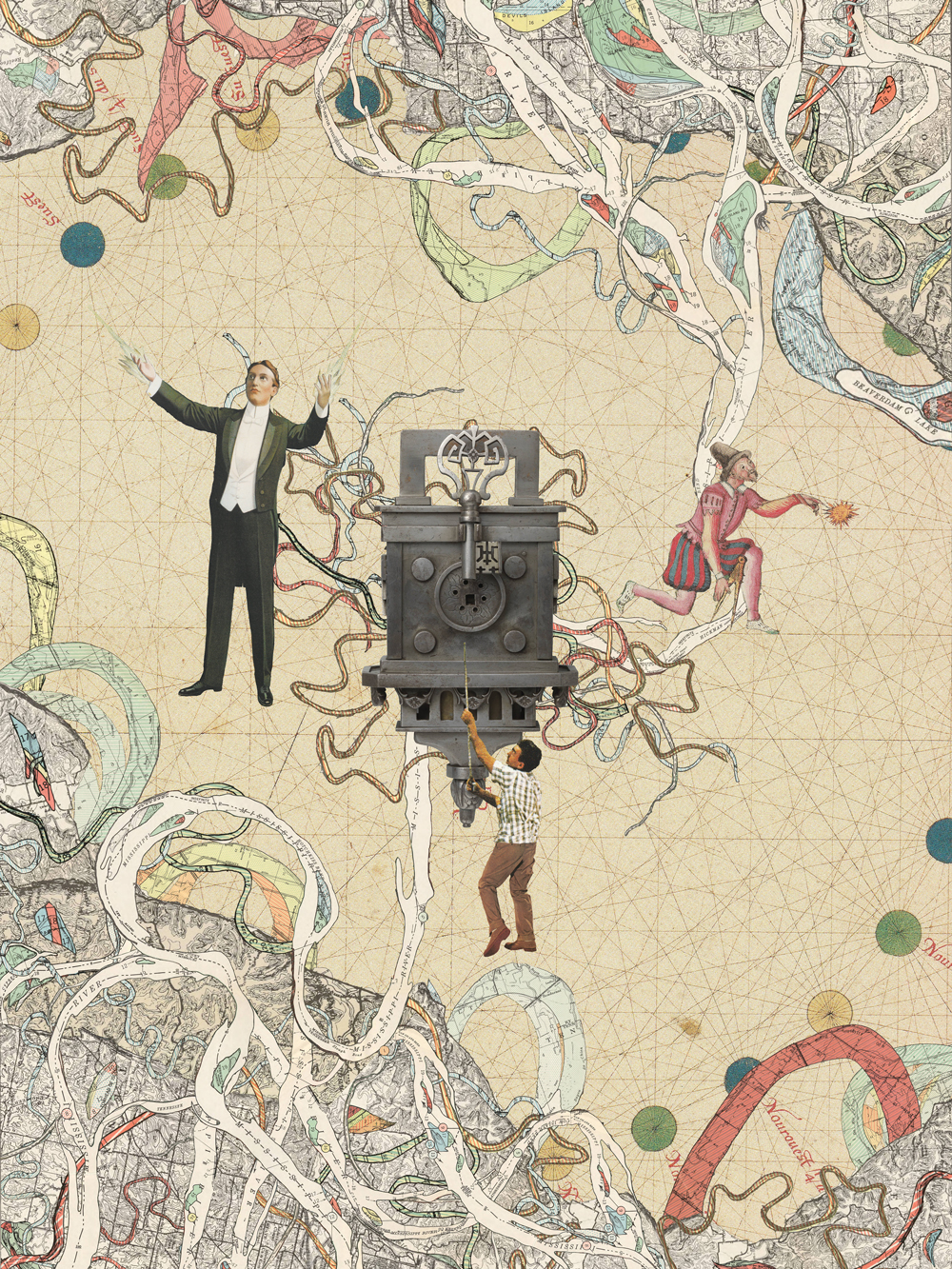
Anthony D Kelly
Castlebar, County Mayo, Ireland
Illusory Channelization of a God regards the Mississippi River as a form of powerful living deity with its own mysterious designs and plans. “The Mississippi watershed alone spans forty percent of the continental United States and throughout its history, this wandering god has etched an incredible number of indelible pathways through the landscape while seeking its way towards the gulf.”
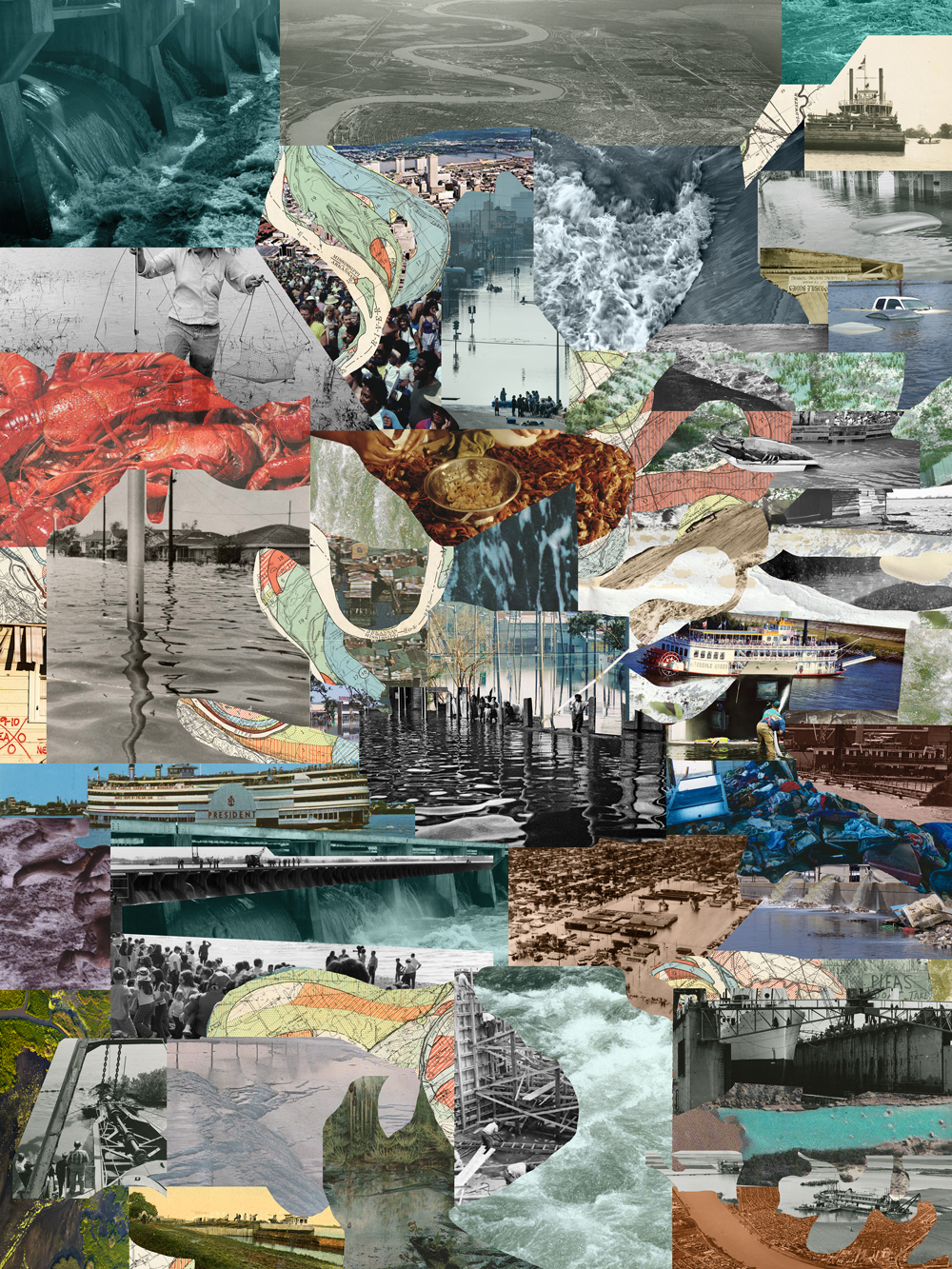
Allison Spence
South Bend, Indiana, USA
The abstract collage, Accretion, uses historic materials to speak to the natural, organic growth of the river and its importance in culture over time and its contributions to food, industry, travel, destruction, tourism, and community.
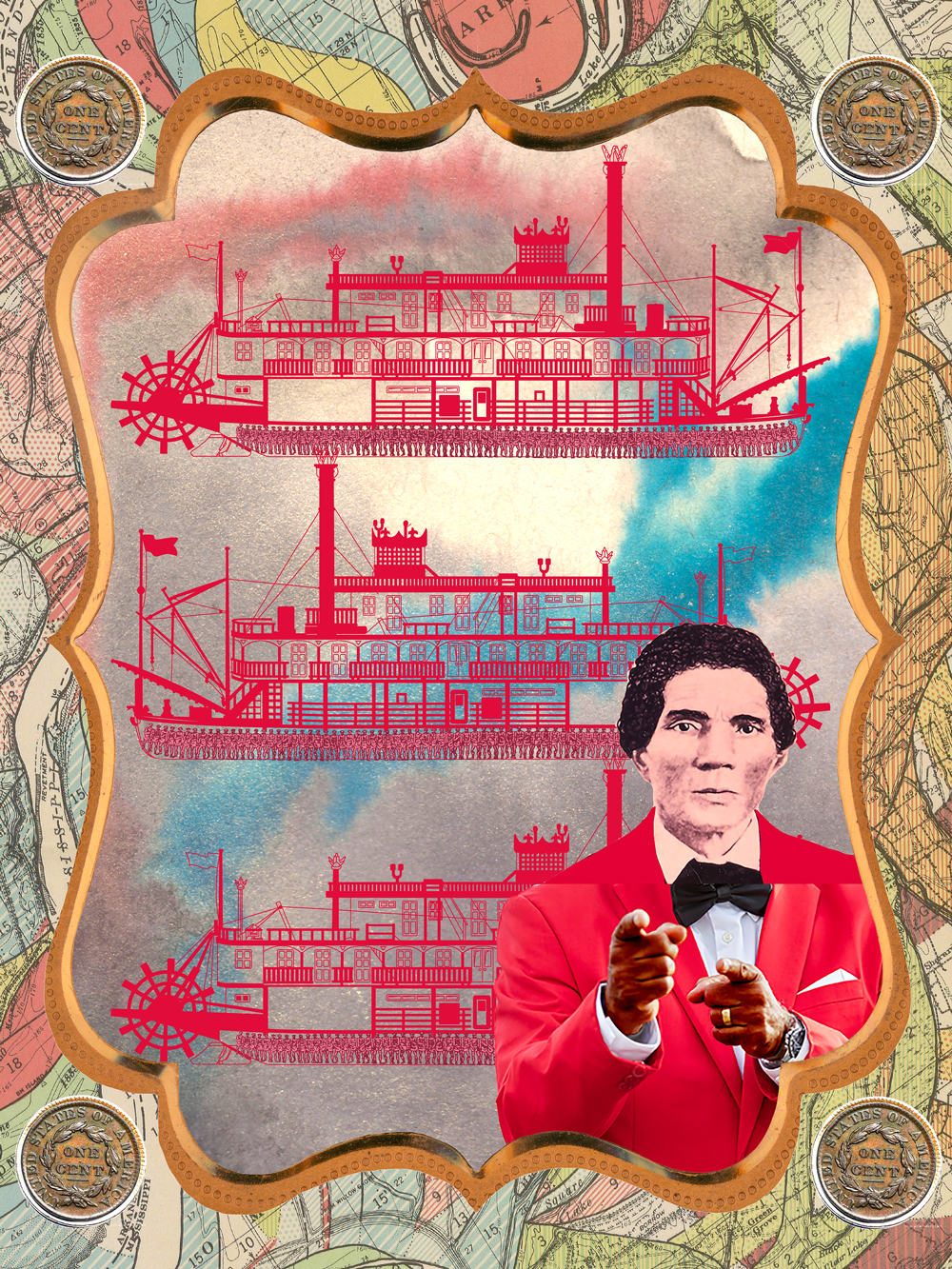
Jeanna Penn
Oakland, California, USA
In Sweetwater Stays Sour, Penn draws inspiration from the artist’s great-great-great-grandfather, James, who served as a bartender aboard a Mississippi steamboat traveling between Cincinnati and New Orleans in the 1840s. The collage “explores the contradictions embodied by the Mississippi River in the 19th century. This major waterway fueled prosperity while simultaneously supporting the system of enslavement which that very prosperity depended upon.” The man in the collage is an actual photograph of Penn’s ancestor.
Ric Kasini Kadour
New Orleans, Louisiana, USA & Montreal, Quebec, Canada
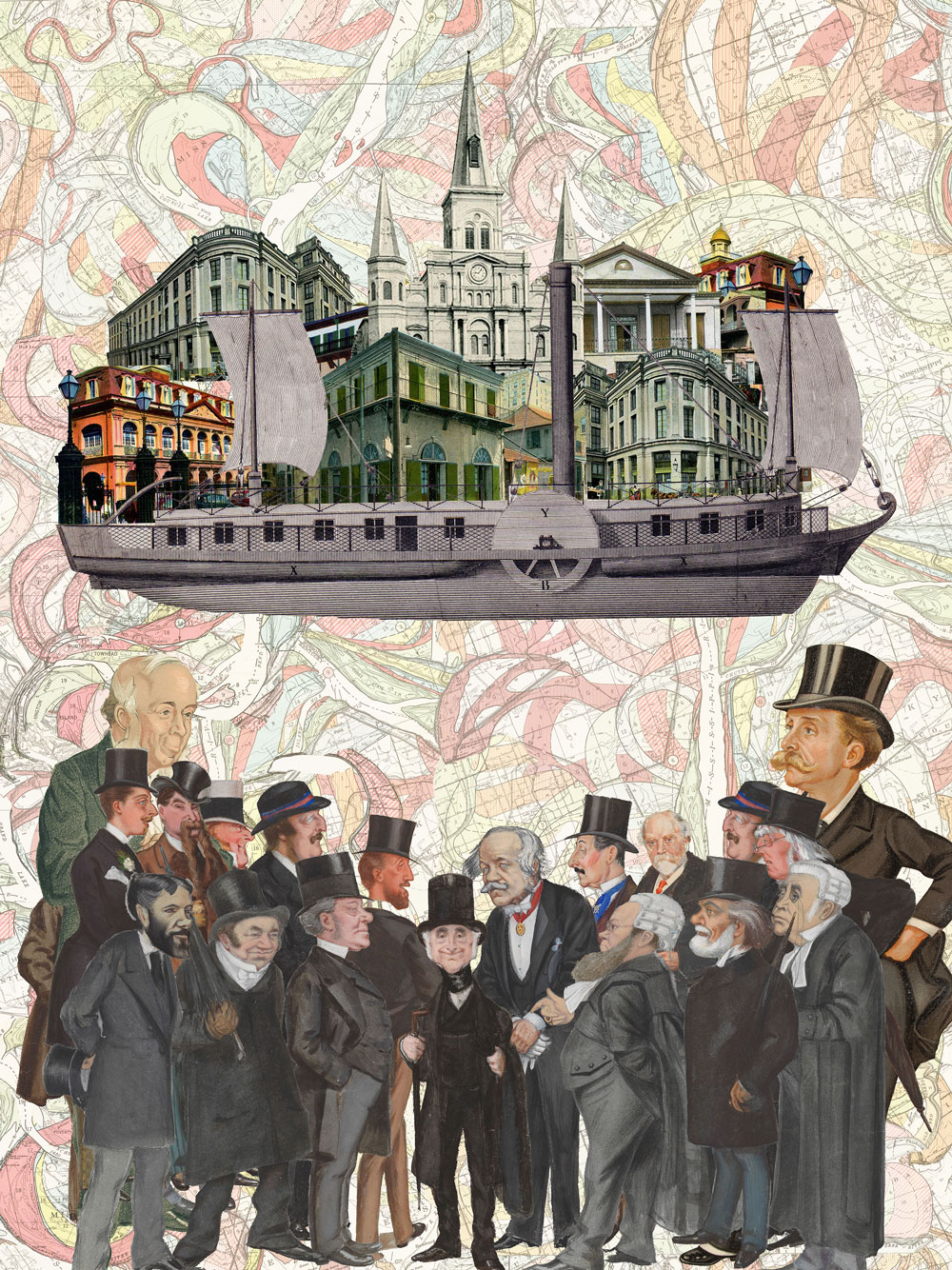
In How Do We Build a City That Floats with These Guys Hanging Around?, Kadour invites us to think about who benefits from the story of New Orleans as a failed place that must be abandoned. “The first steamboat launched in 1811 was called the New Orleans and it represented humanity’s ability to use technology to live with the River, to make it work for humanity. Its invention made the City what it is today, a vibrant crossroads that continues in the spirit of Bulbancha that rose from this land as the Ishak/Atakapa, Chitimacha, Coushatta, Natchez, Caddo, Tunica-Biloxi, Houma, Choctaw, Creek, Chickasaw, Coasati, Alabama, Mikasuki, Apalachi, Biloxi, Chacato, Pakana, Pascagoula, and Taensa traversed, gathered, traded, hunted, worshiped, and danced on it.”
Project History
ARTIST LAB
The River Bends & So Must We
Kolaj Institute was host to an in-person artist lab in New Orleans, 9-13 September 2026. The Mississippi River has shaped New Orleans’ history, culture, economy, environment, and sense of place. Artists explored what the River can teach us about history and our shared humanity through research, site visits, presentations, discussions, and collaborative collage making. They investigated archives and historical materials, considered social, economic, and environmental issues, and developed new work informed by place. Participants visited NOLA River Fest and the Williams Research Center at The Historic New Orleans Collection. Work developed through the Lab was included in the “Place as Archive” exhibition at Kolaj Institute Gallery in October 2026 and considered for future exhibitions and publications. The public was invited to meet the artists at an Open House during Second Saturday on 12 September 2026.
Participating Artists: Andi Vicente (Verdun, Quebec, Canada) | Giana Anansi-Shakur (New York, New York, USA) | Jennella Young (Brooklyn, New York, USA) | Johanna Merfeld (Great Barrington, Massachusetts, USA) | Maya Sosland (New Orleans, Louisiana, United States) | Mirzam Perez (New Orleans, Louisiana, USA) | Patrick Irwin (Nashville, Tennessee, USA)
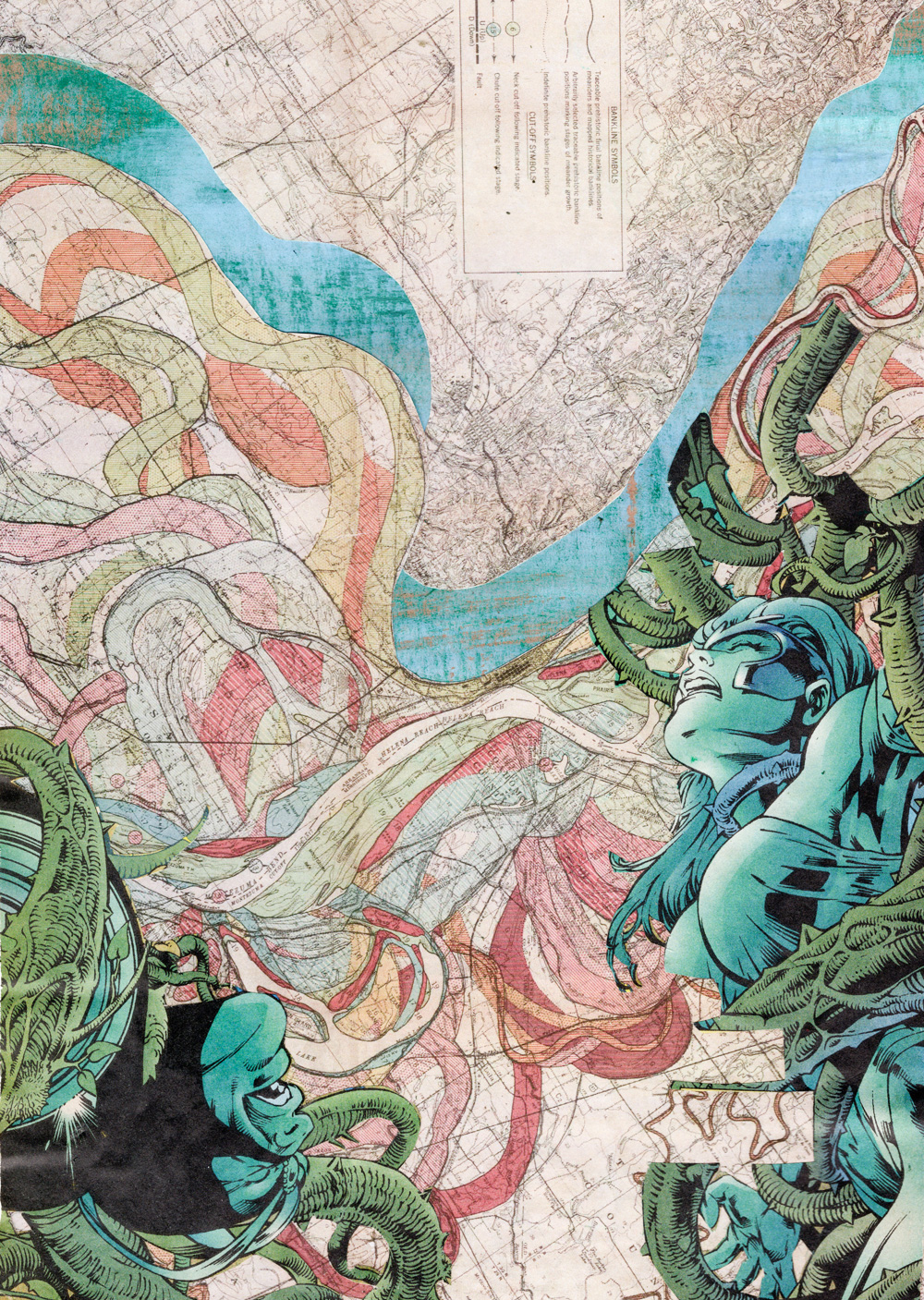
Image: Mississippi Sirens by Jennella Young 11.5″x8″; cardboard, acrylic paint, collage papers; 2026.
Courtesy of the artist.
ARTIST & CURATOR TALK
NOLA River Fest
Saturday, 12 September 2026, 3PM
New Orleans Jazz Museum
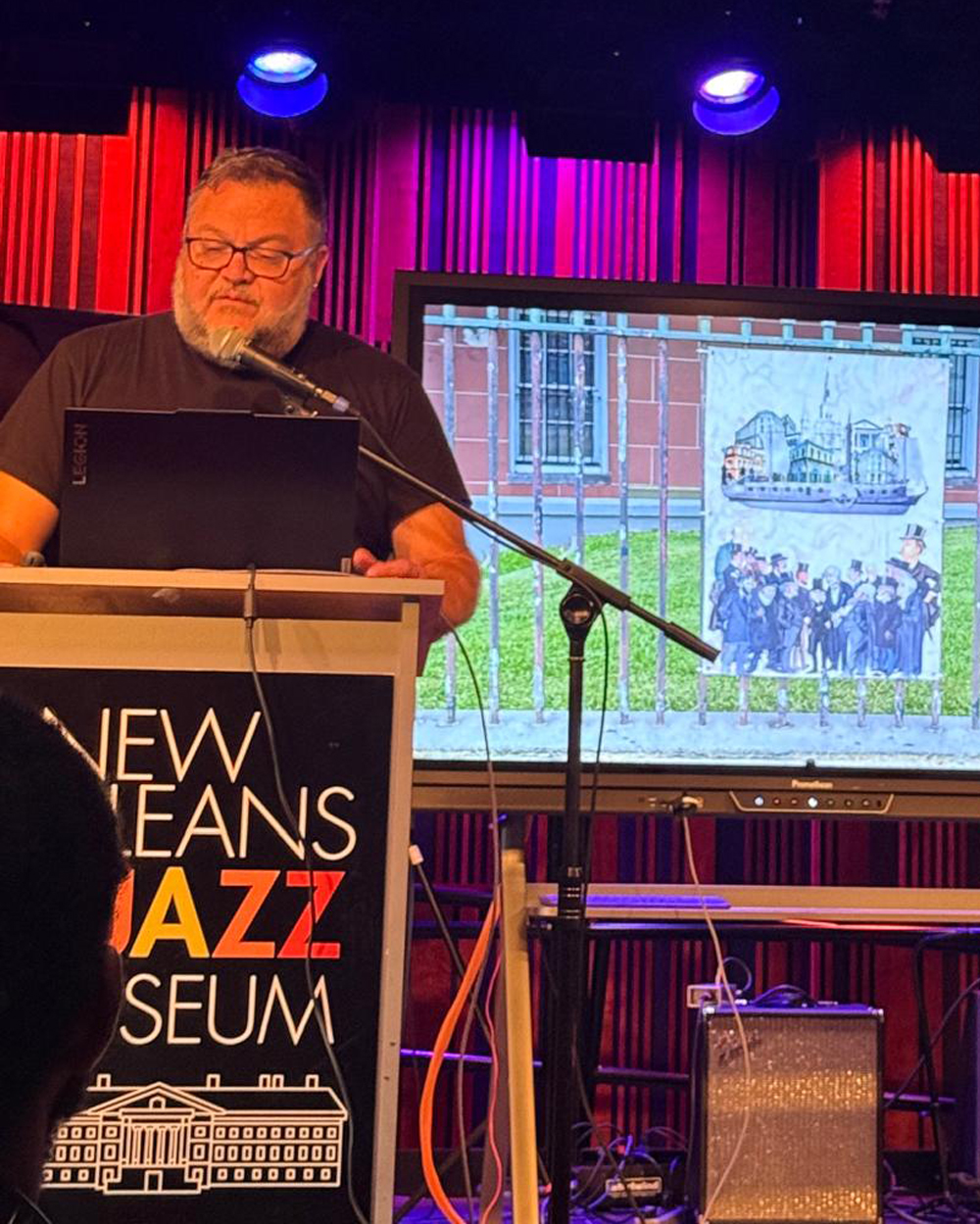
Project Curator and Kolaj Institute Director Ric Kasini Kadour will lead an Artist and Curator Talk on Saturday, 12 September 2026 along with Seth Ter Haar and LaVonna Varnado Brown, who will speak about her work in the project. The event is part of NOLA River Fest, an annual event presented by the New Orleans Jazz Museum that “remember(s) and celebrate(s) the influences of the Mississippi River on New Orleans’ geography, economy, and culture.”
KOLAJ LIVE ONLINE
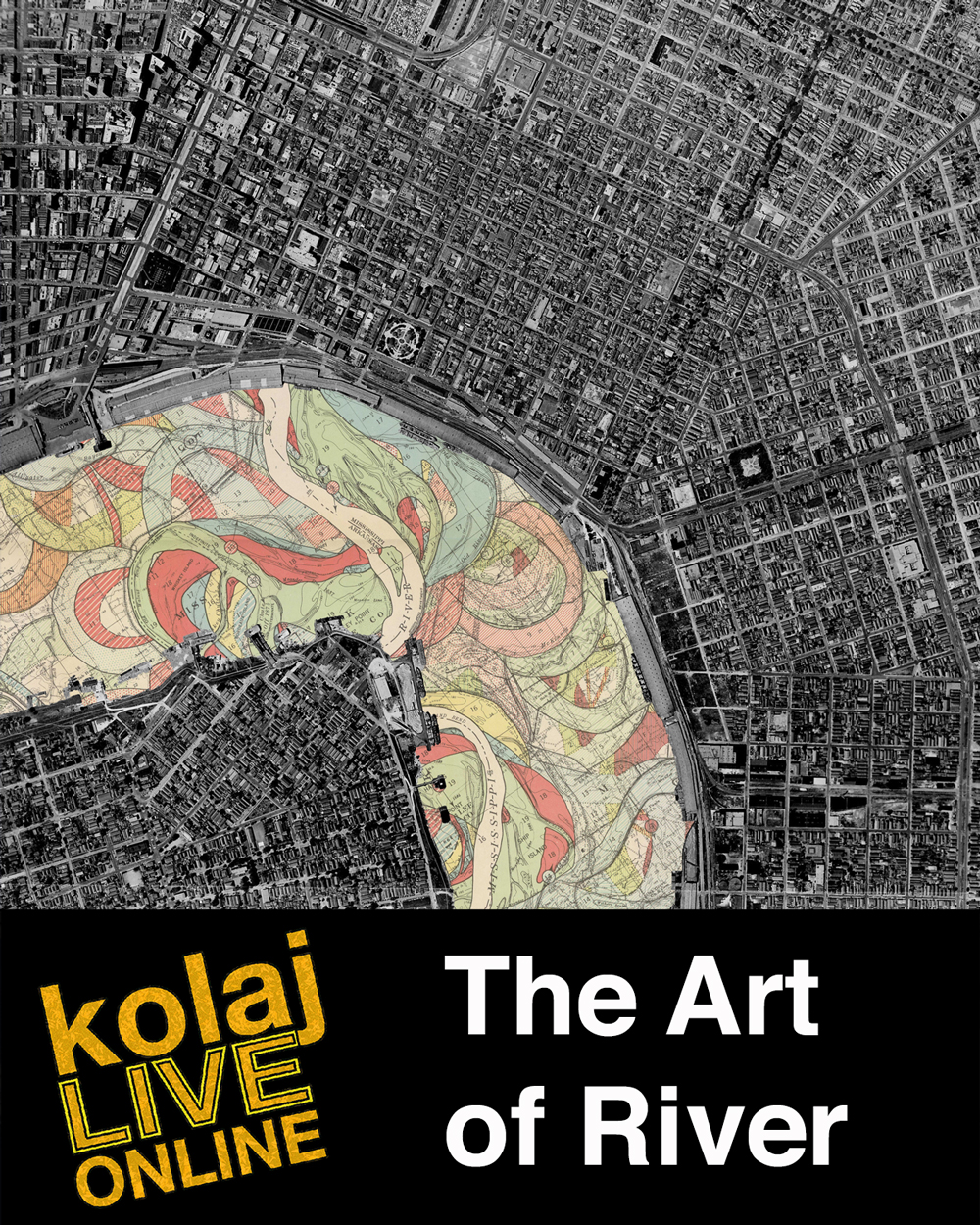
The Art of River
Saturday, 19 September 2026, 1PM EDT
During this Kolaj LIVE Online, we will hear from artists whose work appears in the exhibition “Come to me, here beside the River.” Artists collaged Harold Fisk’s 1944 Mississippi River Meander Belt Maps along with materials found in archives and their personal material collections to make artwork that invites us to consider the role the Mississippi River has played in shaping history and community. RSVP & LEARN MORE
AUGUST 2022
EXHIBITION
And a River Runs Through It…
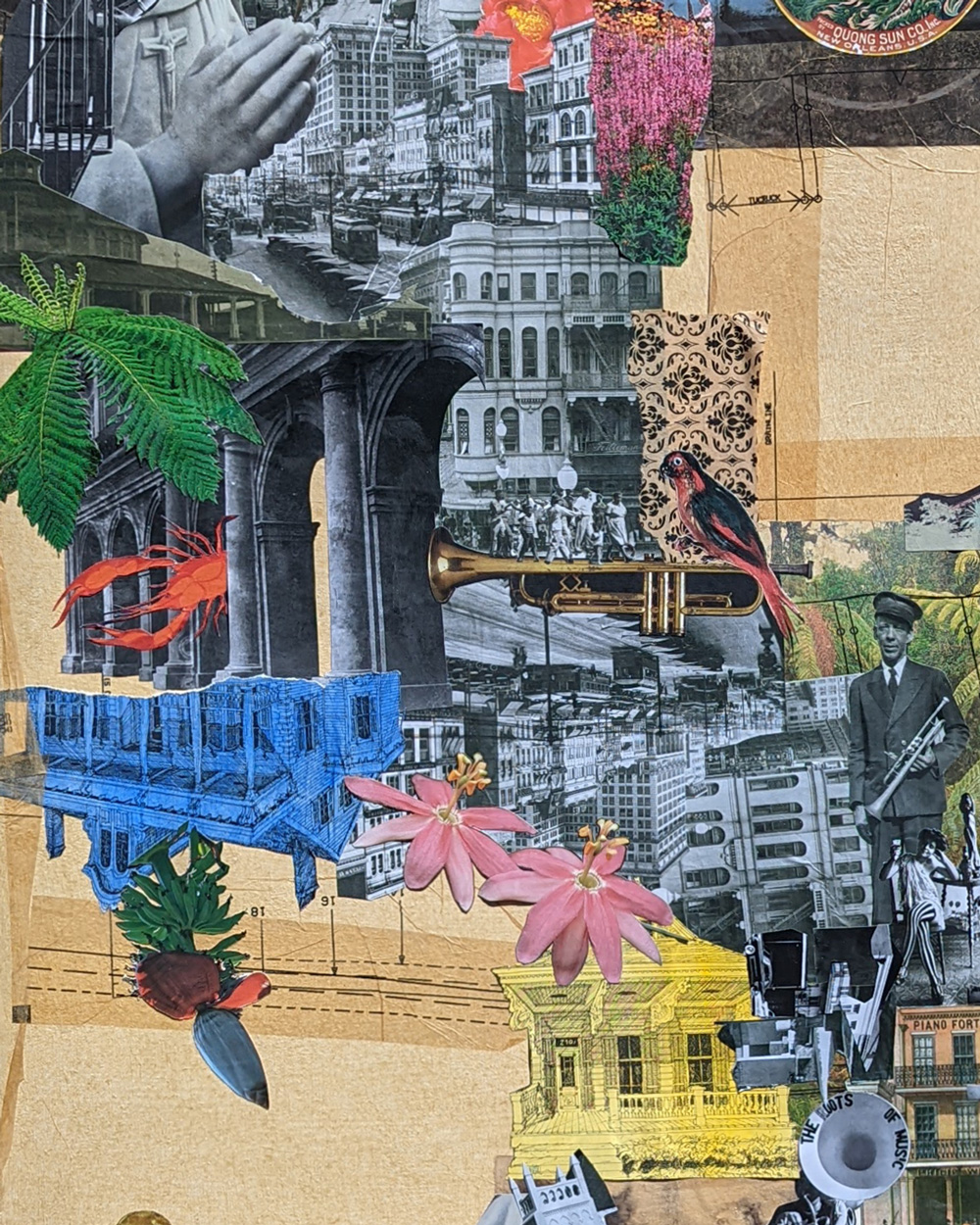
In “Many Americas: Art Meets History” at the Wilson Museum at the Southern Vermont Arts Center in Manchester, Vermont, August to November 2022. In March 2022, Kolaj Institute invited a group of artists to explore the archives and exhibitions of The Historic New Orleans Collection and to make a collaborative collage that offered the viewer a sense of New Orleans. Composed as a river making its way through its geography, the collage weaves a number of elements into a single artwork. READ MORE