PROJECT
War & Peace Correspondence Project
War & Peace Correspondence Project is a collaboration with the German magazine Wissenschaft & Frieden that shows how collage responds to media reporting of war and peace.
Wissenschaft & Frieden (which translates to Science & Peace) “is the leading interdisciplinary academic journal for peace research, peace policy, and the peace movement. Published since 1983, W&F addresses issues of peace policy, military strategy, and armaments technology, examines the causes and relationships of violence, and explores pathways and possibilities for civilian conflict resolution, the protection of human rights, and securing the future.” WEBSITE
COMING SOON
CONTRIBUTORS
David D’Agostino
(Albuquerque, New Mexico, USA)
For over 25 years, David D’Agostino has pursued a nomadic multi-disciplinary contemporary visual art practice across the Iberian Peninsula, North Africa, Southeastern Europe, and the Chihuahua Desert in Mexico. He also has maintained full-time studios in Atlanta Contemporary and the Townhouse Gallery, Cairo, Egypt. Much of his work is collaborative, including helping sustain and participate in the New Mexico-based Bestiary Collective, and the avant-garde XXL group in Sofia, Bulgaria. His work has been shown in solo and group exhibitions in Bulgaria, Egypt, Japan, North Macedonia, Romania, and across the US. WEBSITE
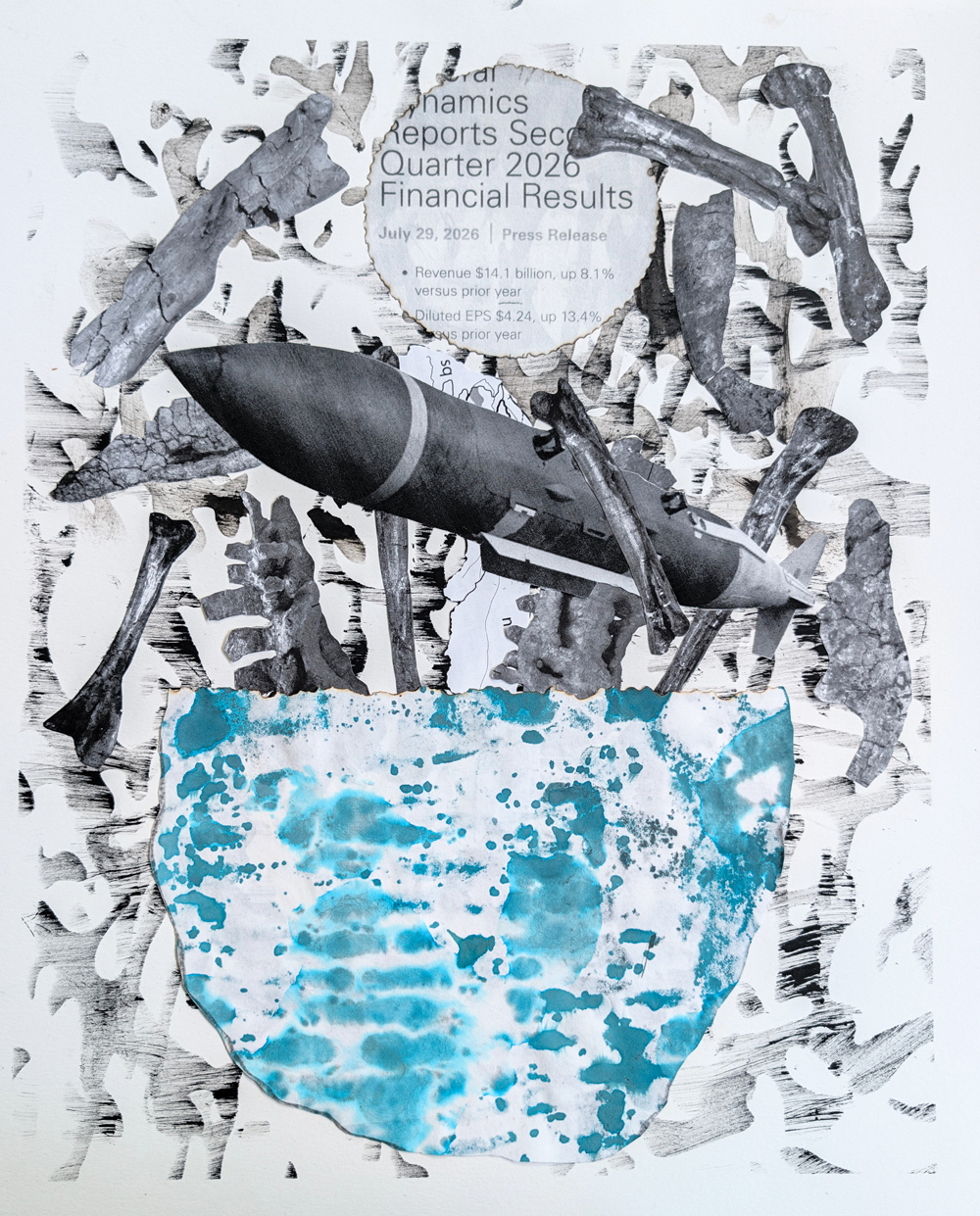
Dominion by David D’Agostino
14″x17″; analog photo collage, ink based monotype on hanji paper, cut-out bones from dinosaur text book, fragment of General Dynamics quarterly earnings press release; 2026
Talon
(Sacramento, California, USA)
Talon began her artistic journey professionally in October 2024. She participated in Kolaj Institute’s Poetry and Collage Residency in January 2025. Her collage work has been shown in more than 25 group exhibitions, 10 photography group exhibitions, and four literary publications. Her current series “North/Ness” is about the North Pole and North Korea, incorporating the iconography of Santa Claus and the North Pole and North Korean propaganda posters of the 1950s through the 1980s, drawing on the similarities of both locations.
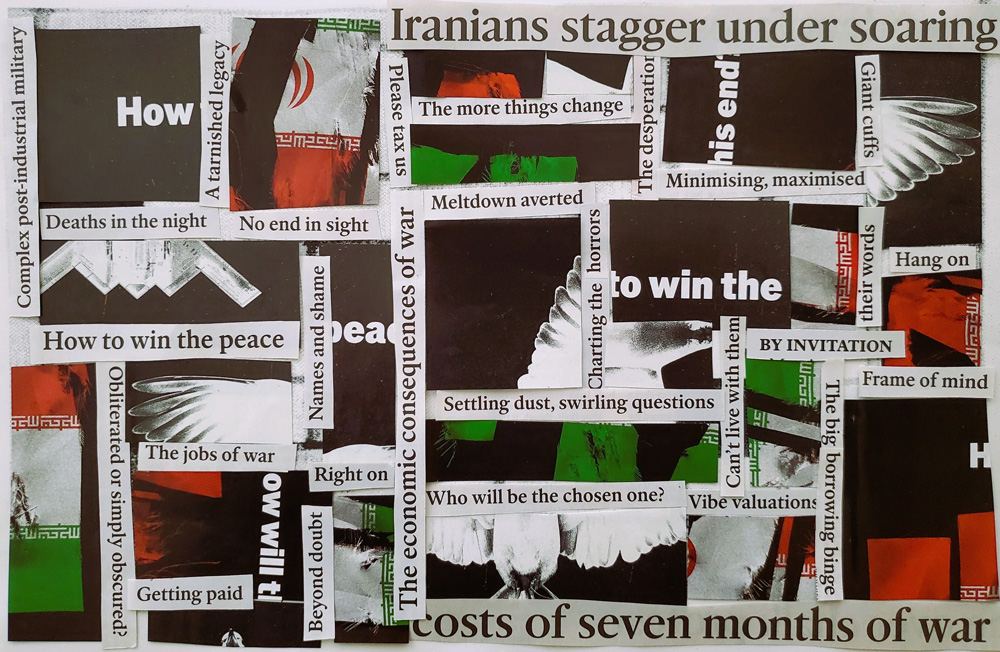
Peace Bojagi by Talon
8.5″x14″; analog paper collage: headlines from the Sacramento Bee (4 October 2026) and June and July 2025 issues of The Economist and their covers; 2026.
Ric Kasini Kadour
(New Orleans, Louisiana, USA & Montreal, Quebec, Canada)
Ric Kasini Kadour is a writer, artist, and culture worker. He holds a BA in Comparative Religion from the University of Vermont. He was a 2020-2021 Curatorial Fellow at The Andy Warhol Foundation for the Visual Arts and has curated exhibitions in Ireland, Louisiana, New Mexico, Ontario, Scotland, Wisconsin, and Vermont. He is the author of twenty-five books and zines, as well as the co-founder of Kolaj Magazine and has been its editor-in-chief since 2012. His art practice includes collage, installation, photography, printmaking, sculpture, painting and art products. His work has been shown across North America and in Scotland and is in private collections in Australia, Canada, India, the United Kingdom, and the United States. WEBSITE
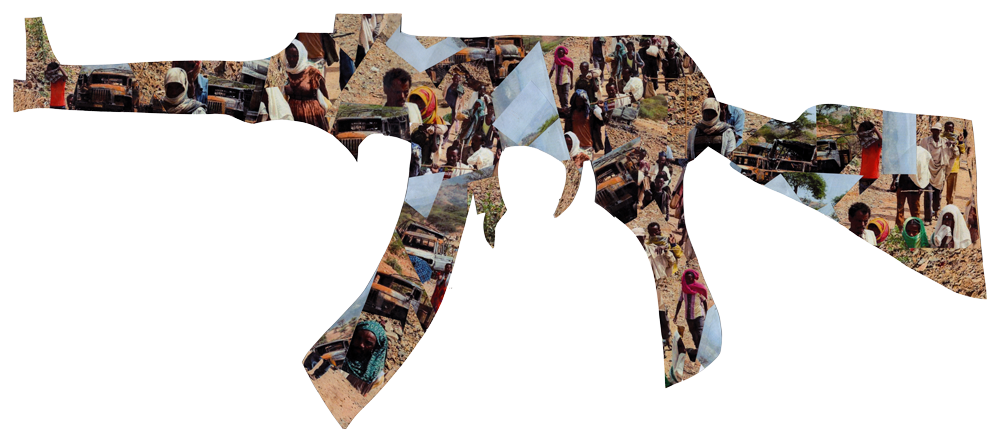
War Toys: Ethiopia by Ric Kasini Kadour
12.25″x36.25″; laser-printed photograph by Giulia Paravicini on paper; 2026
Morgane Clément-Gagnon
(Montreal, Quebec, Canada)
Morgane Clément-Gagnon holds a Master’s degree with high distinction in Visual and Media Arts from the Université du Québec à Montréal (UQAM). Recognitions include the Institutional Support for Success Scholarship and the UQAM Faculty of Arts Fund award. She has shown her work in solo shows at artist-run centers across Canada and has participated in artists residencies in Alberta, Iceland, Norway, and Quebec. WEBSITE
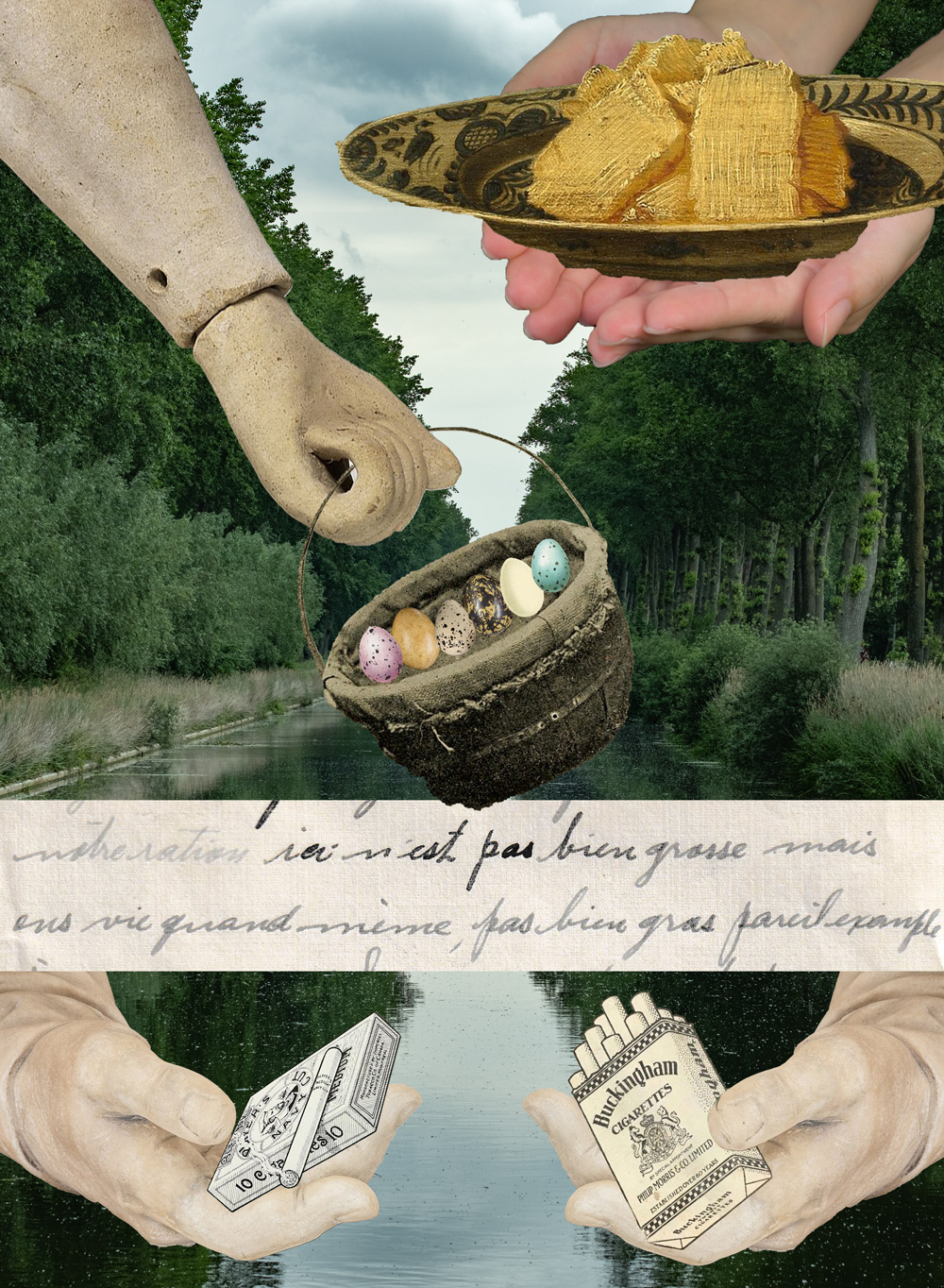
Cigarettes for Eggs and Butter
by Morgane Clément-Gagnon
15″x11″; digital collage: letter from the artist’s grandfather, artist photograph taken in Belgium, public domain images; 2026.
ABOUT KOLAJ INSTITUTE’S POLITICS IN COLLAGE PROJECT
Politics in Collage is a series of residencies, publications, discussions, and exhibitions examining complex socio-political issues that contemporary society is contending with, in order to spark meaningful dialogue and inspire deeper engagement. Our current focus is on Environmentalism and Collage, Resisting Authoritarianism, and War & Peace Correspondence. The Politics in Collage Project intersects with other Kolaj Institute project such as Trash as Material and Big Orange Monster.
PROJECT OVERVIEW
Collage as a political art form has a particular relevance to today as well as a strong historical context. From its roots in the European anti-fascist and Russian revolutionary movements in the early 20th century to its expressions during the U.S. Civil Rights era to its current manifestations in the fight for social justice in South America, collage is used by artists around the world as an impetus for social and political change. Kolaj Magazine has reported on how collage was used to visualize the 2019-2021 Estallido Social in Chile which incidentally birthed a new collage community. In Fall 2021, Kolaj Institute organized a series of residencies in which artists explored the intersection of politics and collage. Led by G.E. Vogt, the residencies produced a collection of artworks that debuted at Kolaj Fest New Orleans in 2022 as an exhibition at the Domino. In July 2022, Kolaj Institute released Politics in Collage, a book of artwork, and an Online Exhibition. In November 2022, a third residency took place which resulted in a second book, Collage Saves The World. In April 2024, the artist residency and exhibition “Collage the Planet: Environmentalism in Art” took place at Kolaj Institute Gallery in New Orleans. A fifth artist residency in October 2025, Collage the Planet: Trash as Material, resulted in the exhibition, “Trash as Material”, at Kolaj Institute Gallery.
OTHER PROJECTS
RESIDENCY
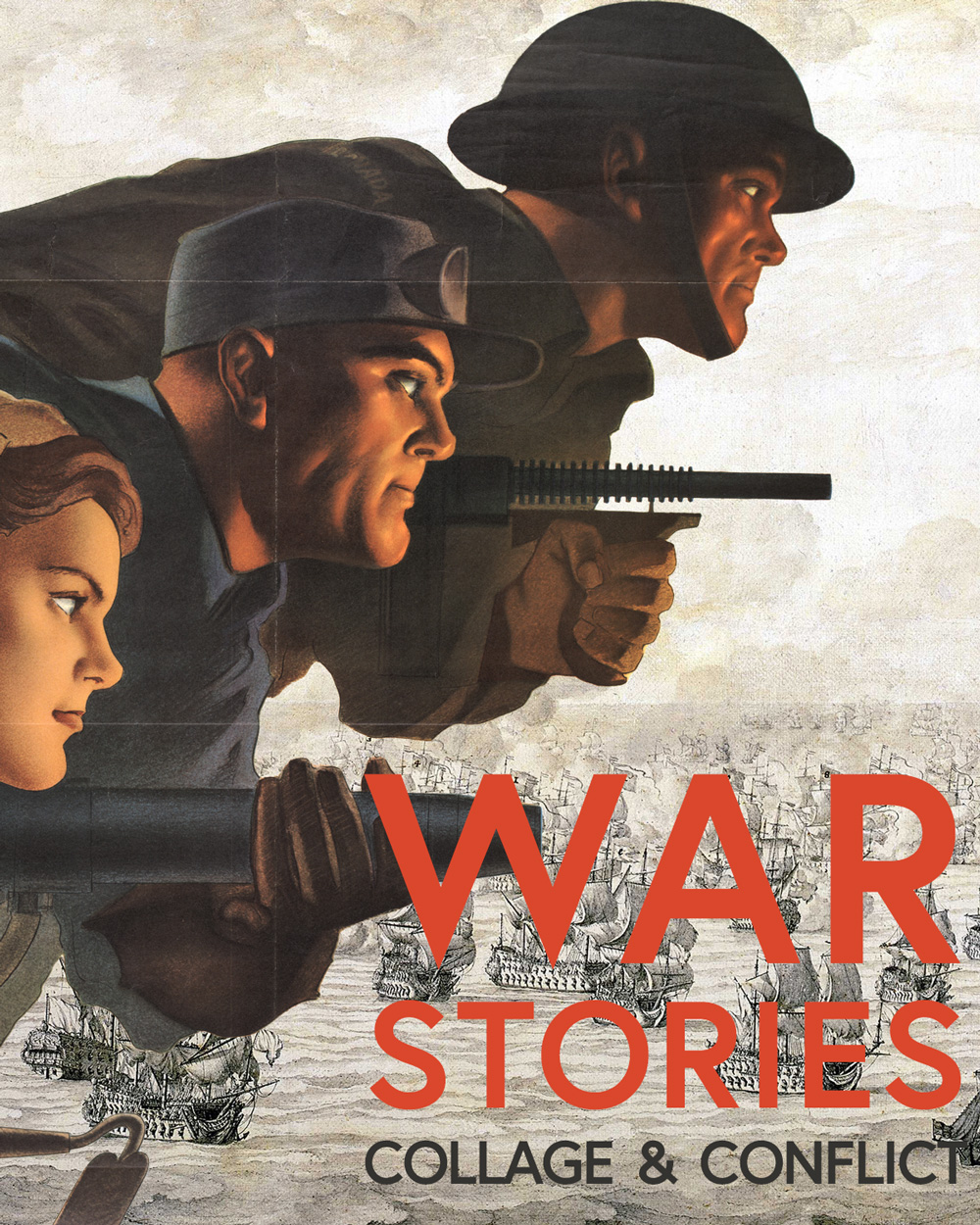
War Stories: Collage & Conflict
A four-week virtual artist residency in October 2026. How can collage artists respond to the ways war, conflict, and peace are represented in the media? Artists researched historical and contemporary war correspondence, examined the history of political collage—from its roots in European anti-fascist movements to contemporary practice—and considered how art can contribute to civic discourse. Participants heard from Adrian Paukstat about the German magazine Wissenschaft & Frieden’s forthcoming issue on war and conflict reporting, made and discussed new collages, and developed writing that documented the historical and social contexts of their work.A selection of artwork made during the residency appeared in issue 4/2026 of Wissenschaft & Frieden alongside commentary by project curator Ric Kasini Kadour. Additional artwork was published as a folio of prints by Kolaj Institute and made available for exhibitions. Artists were also invited to submit work for the War & Peace Correspondence Project and speak at a Kolaj LIVE Online event in January 2027. Participating artists: Morgane Clément-Gagnon (Montreal, Quebec, Canada), David D’Agostino (Albuquerque, New Mexico, USA), and Talon (Sacramento, California, USA) READ MORE
PROJECT
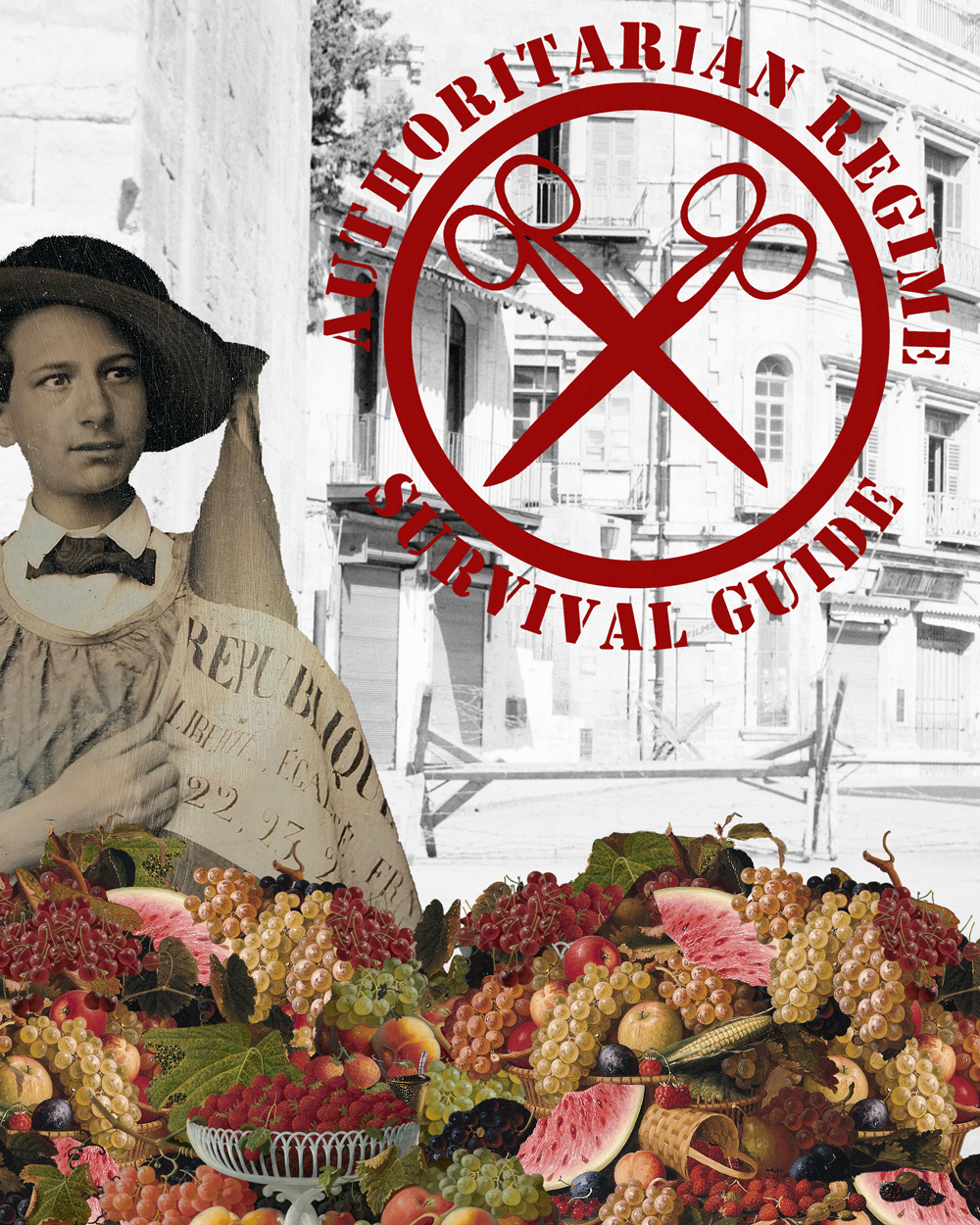
Resisting Authoritarianism
Resisting Authoritarianism considers the role collage artists have played during times of rising authoritarianism.
Wissenschaft & Frieden Publishes Political Collage
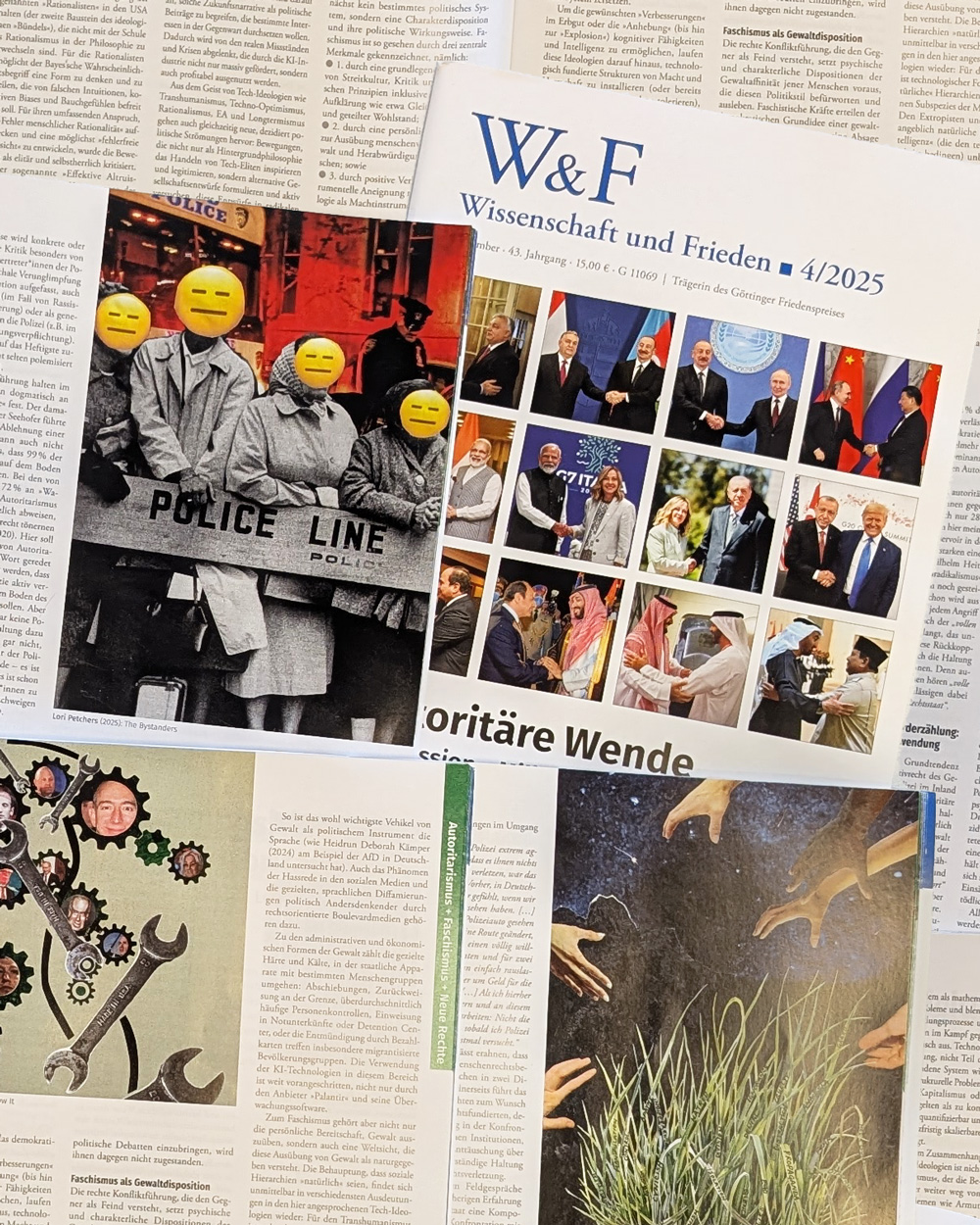
Kolaj Institute’s Politics in Collage Project was featured in Wissenschaft & Frieden, Issue 4/2025, “the leading interdisciplinary scientific journal for peace research, peace policy and the peace movement” since 1983. Editors reached out to Kolaj Institute after hearing about the Authoritarian Regime Survival Guide, a book and folio published in 2025 and invited us to submit artwork for the issue. Throughout the issue are collages by Andrea J. Lee (Toronto, Ontario, Canada), Heather Wishik (Woodstock, Vermont, USA), Heather Wright (Elgin, Minnesota, USA), Jennifer R Myhre (Sedona, Arizona, USA), Lori Petchers (Fairfield, Connecticut, USA), Slava Kavardak (location redacted), Ginger Sisco-Cook (Paris, Texas, USA), Nola Abboud (Kalamos, Greece), Phyllis Famiglietti (Brookline, Massachusetts, USA), Bryan Robertson (Prescott, Arizona, USA), and Emily Tironi (Saratoga Springs, New York, USA). The collages illustrate articles with topics including Defining Right Wing Groups, Fascist Internationalism, A Non-Eurocentric Understanding of Fascism, Digital Fascism, Opposing “Soft Authoritarianism”, Russian Imperialism as a System, Policing and “Cop Culture”, Antifa: Where Are You Going?, Sensitivity against Authoritarian Tendencies, From Reflex to Resilience, Academic Freedom under Pressure, Women’s Rights under the Taliban, Afghanistan on the Brink, and An Integrated Strategy to End War. Ric Kasini Kadour wrote in an essay about the artwork, “Authoritarians rightfully see art and free expression as a threat to power. As such, they act to control what is presented…The rise of authoritarianism is a campaign for the hearts and minds of the people. Art fundamentally threatens that campaign.” To learn more, visit www.wissenschaft-und-frieden.de (note the website and the publication are published in German only).